

What Happens When the Coating Is Damaged?
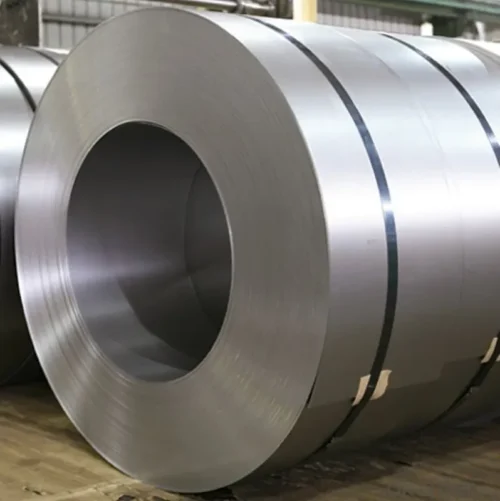
A scratch and a bare patch arrive in the same complaint, although they deserve different answers. Coating damage falls into four grades. Each grade carries its own consequence, since a line and an area fail differently. Jiangsu Zhongtong Weiye Special Steel Co., Ltd. grades them below, using a crgo sheet as the example.
The Short Answer
Damage matters by area and by location, rather than by count. A scratch on a coated face may pass, while a patch at the edge condemns the stamping. Hence the first question asks where, and the second asks how much. The stamping note covers where damage begins.
Grade One — A Line on the Face
A scratch cuts a narrow channel through the film, while that channel stays narrow. Current finds a short path across it, although the surrounding film limits the area. Many shops accept a light line, provided the sheet rotates so the line never aligns. Hence a scratch gets managed, rather than rejected. The stack note covers that rotation.
Grade Two — A Patch of Bare Metal
A patch exposes an area, and that area behaves like a plate, rather than a channel. Eddy current spreads across the plate, so loss rises faster than a scratch of equal length causes. A patch also lifts at its rim, because the film edge curls under a punch. Therefore, a patch needs a measurement, rather than a glance. The loss note shows where that extra watt lands.
Grade Three — Peel at the Edge
Peel at the cut edge is the worst common grade, since every sheet in a stack shares that edge. When bare edges align, they form a column running through the whole stack. A column of that kind carries current across hundreds of sheets, so a small peel reads as a large loss. Hence edge peel earns a rejection sooner than a face scratch does. The burr note explains why that edge is weak.
Grade Four — Loss Across the Sheet
A sheet with damage across a wide share of its face cannot be saved. No stacking trick hides an area that large, and no rotation helps either. That grade belongs to scrap, and to a claim, rather than to a repair. A sheet cannot be brought back. Hence a mill should record the cause, because a wide failure usually starts in the line, not in handling.
What the Damage Costs Later
Three costs follow a damaged sheet, and they arrive in sequence. Loss rises first, since the short adds a path. Corrosion follows where metal shows, because a bare spot carries no barrier, as the rust note describes. A claim comes last, because the second party measures loss and finds the cause. Hence the sequence moves from watts to rust, and then to paperwork.
How a Shop Should Sort It
Judge location first, since an edge beats a face each time. Measure area second, because a patch needs a number. Rotate the sheet third, so a line meets a coated face inside the stack. That trick costs nothing, and it saves coils. Record the finding last, so a repeat offender turns visible. The film note explains the barrier that damage removes.
What a Claim Needs
A claim runs on evidence, and three items carry it. The delivery date proves the window, a photograph shows the location, and a resistance reading shows the effect. Without those three, a supplier can only guess, and a guess stalls. Hence a buyer should collect all three on the day the damage appears.
What Goes Wrong
One buyer rejects a coil for a face scratch, when a rotation would fix it. Another passes a peeled edge, then finds a hot spot at first test. A third files a claim after the window closes, because the coil sat for two months. Those three errors arrive monthly.
What We Do Not Do
We do not melt or roll steel. We do not re-coat a damaged sheet, because a film cannot be restored by hand. Nor do we accept a claim that lands after the window.
Those limits keep the answer honest, and they keep a grading habit useful.
Specify Your Order
Give the coating class, the location of the damage, the area involved, and the intended process. Those four fields then set the grade. Add photographs when damage sits near a threshold, because a picture settles a dispute faster than a paragraph. A grain oriented sheet then ships with its film described. A silicon steel sheet covers a thicker duty. That reply usually takes a day.
Related Reading
Our coating choice note sets the film before damage appears. The standard note lists the test methods behind a claim. A hub page answers six basic questions.
Frequently Asked Questions
Peel at the edge, since every sheet in the stack shares it.
No, since a rotated stack hides a line, and rotation is routine.
Because a patch spreads current across a plate, which is worse than a channel.
No, since a film cannot be restored by hand, and a patch is permanent.
Thirty days in most contracts, and the clock starts at delivery.
- Email: vera.liang@ztwysteel.com
- Location: Xishan District, Wuxi, Jiangsu, China
- Supply range: CRGO and CRNGO 0.20–0.65 mm, four coating classes
- Slitting: 20–1,250 mm, ±0.05 mm, burr under 0.02 mm
- Documentation: MTC EN 10204 3.1 with grade, thickness and loss basis, 3.2 on request








 English