

C3, C5 or C6 — Which Coating Should I Take?
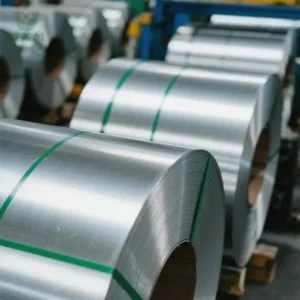
Three codes arrive in the same quotation, while each one looks like a grade. Silicon steel coating codes read like grades. In truth the number marks a film type, while each choice trades one property for another. Jiangsu Zhongtong Weiye Special Steel Co., Ltd. sets out those trades below, using a crgo sheet as the example.
The Short Answer
An inorganic film wins on resistance and heat, although a semi-organic film wins on punching. A coating with resin cannot survive an 800 degree anneal, even though it survives a press far better. Therefore, the next process picks the coating, while the price list does not. The insulation note explains why a film exists at all.
What the Code Actually Says
A letter C with a number follows a table for insulation coatings. That number marks a family, rather than a rank. Mills sometimes add their own letters beside it, so a bare number cannot answer a question. Hence a buyer should ask for the film description, rather than the code alone. The standard note groups those tables.
Trade One — Resistance Against Punchability
An inorganic film holds interlamination resistance high, because the oxide blocks current well. That same hardness wears a die quickly, since the film abrades the punch edge. A stamper who runs millions of hits therefore pays twice, once for coating and once for tool life. Hence the trade is real, and it lands on the maintenance sheet.
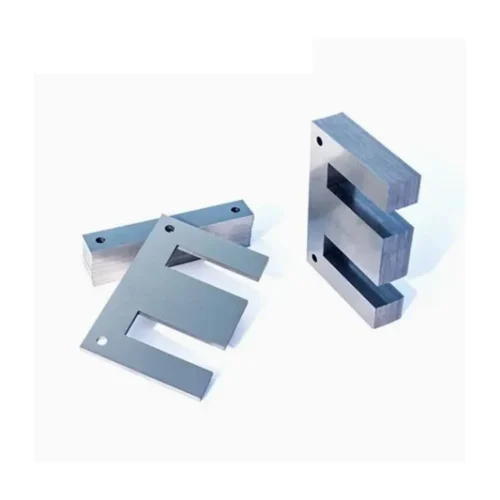
Trade Two — Punchability Against Heat
A semi-organic film carries resin, which lubricates the punch and lowers burr height. That resin also caps service temperature near 180 degrees, because it breaks down above that. A core that must survive a stress relief anneal therefore needs the inorganic type. Hence the second trade caps the process, rather than the steel.
Trade Three — Film Against Stacking Factor
Every film adds thickness to each sheet, and those additions reach the stack. A 10 micrometre build on 1,000 sheets adds 10 mm to a nominal 270 mm block. That growth drops the packing ratio to about 96 percent. A designer absorbs the loss in flux density, and the design stage is where that happens. Therefore, a heavier film quietly costs magnetic headroom. The stacking note works the correction.
Trade Four — Bond Against Insulation
A self-bonding film glues sheets together, so staples disappear. That bond is thin, so it removes some insulation margin, and it needs a cure cycle. A welded core avoids the cure, although weld heat damages the film beside the nugget. That damaged zone widens as current rises. Hence the fourth trade belongs to the assembly line, and to nobody else. The weld note covers that heat.
How to Choose in Four Questions
First, ask whether the core will be annealed, since that answer removes the resin films. The second question covers hit count, and it prices the hard coat. Resistance comes third, because it sets the film thickness. Finally, ask how the stack is held together, so the bond gets picked last. Four answers settle the coating before any price talk.
What a Certificate Should Name
A film deserves three fields on the paper, and a bare code is not one of them. The first field names the film type, the second gives the resistance class, and the third states the anneal compatibility. Without those three, a buyer cannot plan the next process from the document. Hence a short description beats a long code.

What Goes Wrong
One buyer orders a resin film, then anneals the core, so the insulation departs with the resin. Another picks a hard film for a thin gauge, then burns through a die inside a month. That is fast, even for a hard coat. A third counts nominal thickness only, so the stack runs tall, while flux density runs low. Those three errors arrive monthly.
What We Do Not Do
We do not melt or roll steel. We do not apply a coating in house, because the film comes from the line. Nor do we promise die life from a coating code.
Those limits keep the answer honest, and they keep a tool budget realistic.
Specify Your Order
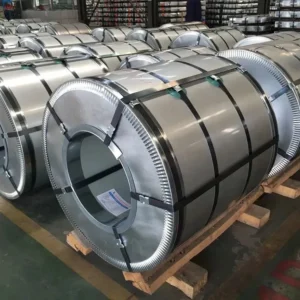
Give the anneal plan, the hit count, the resistance target, and the bond method. Those four fields then fix the film. Add the service temperature when the core runs hot, because 180 degrees caps the resin. A grain oriented sheet then ships with its film named. A CRGO coil covers the other family. That reply usually takes a day.
Related Reading
Our core type note shows which build takes which film. The anneal note sets the heat ceiling for a core. A hub page answers six basic questions.
Frequently Asked Questions
No, since the code marks a family, not a rank.
The inorganic type, since resin films break down in the furnace.
Because the oxide abrades the punch edge, and that edge sets burr.
About 10 mm across 1,000 sheets, at ten micrometres a sheet.
Yes, although heat near the nugget damages the film beside it.
- Email: vera.liang@ztwysteel.com
- Location: Xishan District, Wuxi, Jiangsu, China
- Supply range: CRGO and CRNGO 0.20–0.65 mm, four coating classes
- Slitting: 20–1,250 mm, ±0.05 mm, burr under 0.02 mm
- Documentation: MTC EN 10204 3.1 with grade, thickness and loss basis, 3.2 on request





 English