

Wound Core: Definition, Structure, and How It Is Built
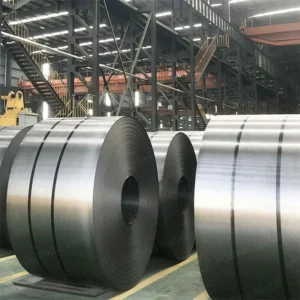
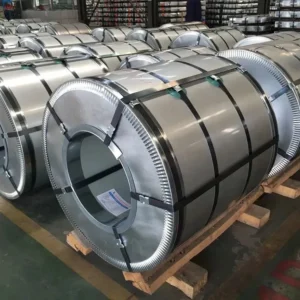
A wound core is a magnetic circuit built from one continuous strip. The strip is wound until the window reaches size, so the flux path carries no joint. That definition hides six requirements. Jiangsu Zhongtong Weiye Special Steel Co., Ltd. unpacks them below, using a CRGO coil as the example.
The Definition, Unpacked
Six requirements turn a coil of steel into a wound core, and each one matters. A continuous strip, a mandrel, a window, one joint, a relief anneal, and a clamp. Skip one and the object becomes a roll, rather than a core. Hence the definition doubles as a build sheet, while a build note covers the rival design.
One — A Continuous Strip
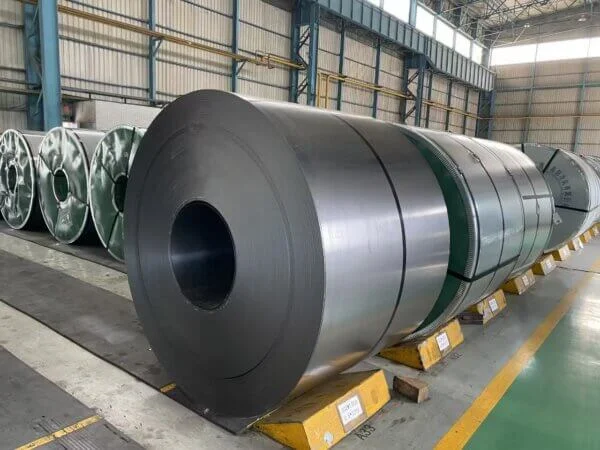
The strip stays continuous from the first turn to the last, since the whole path comes from one coil. No sheet is stamped, and no piece is stacked. Grades run near 0.23 to 0.35 mm, because a thinner strip bends more easily. An oriented grade carries the flux along the strip, which suits a wound path. Hence the winding direction becomes the flux direction.
Two — A Mandrel Sets the Bore
A mandrel fixes the inside diameter, so the strip winds outward from it. A rectangular mandrel makes a rectangular window, while a round one makes a toroid. Tension decides how tight the turns sit, so it decides the stacking factor. Hence the mandrel and the tension set shape and density together.
Three — A Window in the Centre
The window carries the winding, so its size follows the copper. A large window suits a large coil, while a small window suits a compact one. The window shape also fixes the limb width, because strip width equals that width. Hence a core drawing starts at the window, rather than at the outside.
Four — One Joint Only
One joint closes the winding, and it sits where the strip tail meets the earlier turns. That joint overlaps a turn or two, so it carries flux without a gap. Every other point along the path stays seamless, which is what the build buys. Hence the core has one seam, rather than hundreds, since the strip never breaks. The loss note covers the effect.
Five — A Relief Anneal
Winding bends the strip, so the core arrives full of bending stress. A relief anneal near 750 to 800 degrees lets the lattice relax, although the grain stays as it was. Skip that step, and the first loss reading disappoints. Hence a wound core is usually annealed after winding, and the cycle note covers the schedule.
Six — A Clamp and a Varnish
A wound core relaxes outward unless something holds it, so a clamp keeps the turns tight. Varnish also bonds the layers, so the build resists vibration. A loose core buzzes, so a buzz reads as noise and as wear. Hence the last requirement is mechanical, rather than magnetic. The noise note covers the symptom.
The Names It Carries
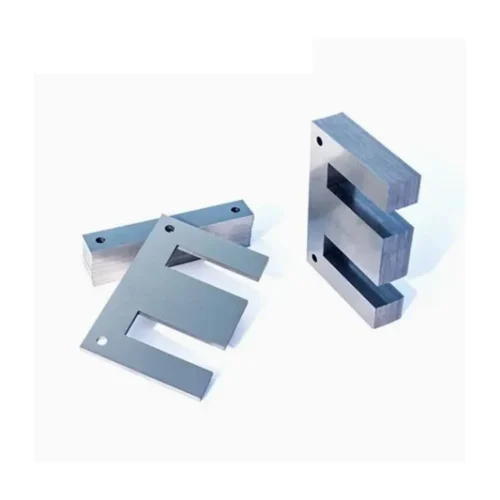
Four names describe the same object, although each points at a different use. A wound core is the general term, while a toroidal core names the round form. A tape-wound core stresses the strip, and a C-core names the cut version. Hence a buyer should match a name to a drawing before quoting. A cut core shows the last case in hardware.
A Worked Example
Take a toroid with a 300 mm outside diameter, a 200 mm bore, and a 100 mm strip width. The mean circumference then runs near 785 mm. A 0.27 mm strip needs about 185 layers for a 50 mm build. The strip length lands near 145 metres, and that weighs about 30.8 kilograms. Hence one drawing converts into one coil length, and that length sets the order. A weight note covers the arithmetic.
What the Drawing Must Show
Five dimensions on a drawing prevent most mistakes, and each one maps to a build step. Bore, outside diameter, build height, strip width, and window shape. A drawing that omits the width leaves the slitter guessing, and a guess becomes scrap. Hence a wound core order starts with a drawing, rather than a grade code. A MOQ note covers the batch side.
What Goes Wrong
One buyer orders strip without a mandrel size, so nobody can check the width. Another skips the anneal, then blames the grade. A third buys a loose core, then hears it buzz in service. Those three errors arrive monthly, and each one starts with a missing dimension.
What We Do Not Do
We do not melt or roll steel. We do not wind a customer’s core, because that work belongs to the builder. Nor do we anneal a finished core, since the cycle follows the winder.
Those limits keep the answer honest, and they keep a definition useful.
Specify Your Order
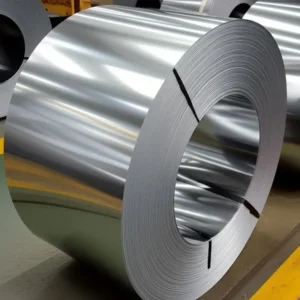
Give the strip width, the gauge, the grade, and the length. Those four fields then size the order. Add the mandrel dimension, because width follows the limb. A grain oriented sheet covers an oriented duty. A narrow coil arrives slit to width and coiled. That reply usually takes a day.
Related Reading
The comparison note sets a wound core against a stack. The grain note covers the strip. A hub page answers six basic questions.
Frequently Asked Questions
A continuous strip, wound around a mandrel until the window is full.
One, at the tail, and nowhere else along the path.
Because winding leaves bending stress inside the strip.
A wound core cut in two, so a coil slides over the limb.
Yes, since the turns relax outward without a clamp.
- Email: vera.liang@ztwysteel.com
- Location: Xishan District, Wuxi, Jiangsu, China
- Supply range: CRGO and CRNGO 0.20–0.65 mm, four coating classes
- Slitting: 20–1,250 mm, ±0.05 mm, burr under 0.02 mm
- Documentation: MTC EN 10204 3.1 with grade, thickness and loss basis, 3.2 on request





 English