

Core Loss vs No-Load Loss — Where the Gap Comes From
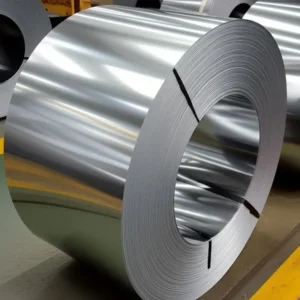
Two numbers describe the same watts, although they never match. Core loss vs no-load loss separates a material figure from a machine guarantee, since four uplifts sit between them. Jiangsu Zhongtong Weiye Special Steel Co., Ltd. reconciles the gap below, using a grain oriented electrical steel sheet as the example.
The Short Answer
Core loss is a material rating in watts per kilogram, measured on a standard sample in a lab. No-load loss is a finished machine figure in watts, measured on the assembled core at the works. The second usually runs 20 to 40 percent above the first, and the ratio has a name. Hence a buyer who reads one and quotes the other will argue at acceptance. The loss note covers the physics.
One Number, Two Names
Three terms circulate in the same conversation, and they rarely agree. A mill quotes specific loss at 1.7 T, while a designer quotes iron loss for a build. A utility then quotes a no-load figure, and each term carries its own boundary. Therefore, a quotation should name the boundary before it names the figure. A range note keeps the gauge in view.

The Reconciliation
Take a 1,000 kVA unit with 1.2 tonnes of core, built from a 23RK085 grade at 0.85 W/kg. Material loss works out at 1,020 W. The finished core measures 1,350 W at the works test. Hence the gap reaches 330 W, which is 32 percent of the material figure. That gap is not an error, since it belongs to four uplifts.
Uplift One — Building Factor
The first uplift is the building factor, since every designer knows the range of 1.1 to 1.3. A factor of 1.32 sits just above that band, and that flags a core where care went missing. That single number explains most of the 330 W above, although the other three add to it. Therefore, the factor is a build quality signal as well as an arithmetic step.
Uplift Two — Joints
The second uplift comes from joints, because flux crosses a gap at every seam. A step-lap joint spreads that crossing over several sheets, although a single lap puts it in one place. A core with many seams therefore pays twice, since the gap and the bulge beside it both add loss. Hence joint design earns more than a grade upgrade does on a large unit. The core type note sorts those builds.
Uplift Three — Stamping Stress
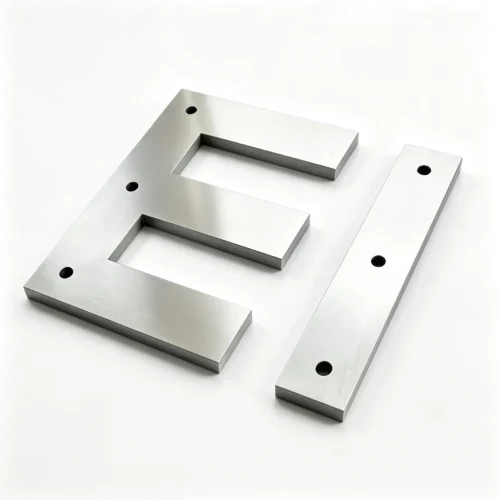
The third uplift arrives with the punch, since shearing distorts the lattice near every cut edge. That damaged band runs a few millimetres wide, while its loss runs above the parent strip. A narrow limb therefore suffers more than a wide one, since the edge share grows. Annealing helps, even though it adds a process step and a re-flatten. The stress note covers the mechanical side.
Uplift Four — Clamping
The fourth uplift comes from the press holding the stack together. Too little pressure lets sheets vibrate, while too much pressure loads the laps and raises loss. A builder therefore tunes the pressure rather than maximising it. Hence the last few percent sit in a torque wrench, rather than in a mill certificate.
Why the Order Matters
A buyer who upgrades the grade may still lose on the test, since the factor travels with the build. Moving from 0.85 to 0.95 W/kg raises the material figure to 1,140 W, since the mass stays fixed. At the same factor of 1.32 the core would measure 1,505 W, and that is worse than 1,350 W. Therefore, fix the build first, and buy the grade second. The RGO note explains why a higher grade costs more.
What Goes Wrong
One buyer compares a mill figure with a works figure, then calls it a short delivery. Another upgrades the grade, although the joints stay single lap. A third tightens the clamp to stop the hum, so loss rises instead. Those three errors arrive monthly.
What We Do Not Do
We do not melt or roll steel. We do not test a finished core, because that measurement belongs to the builder. Nor do we promise a no-load figure from a material rating alone.
Those limits keep the answer honest, and they keep an acceptance test calm.
Specify Your Order
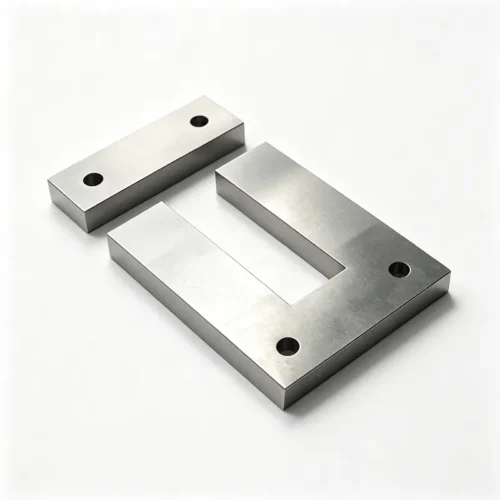
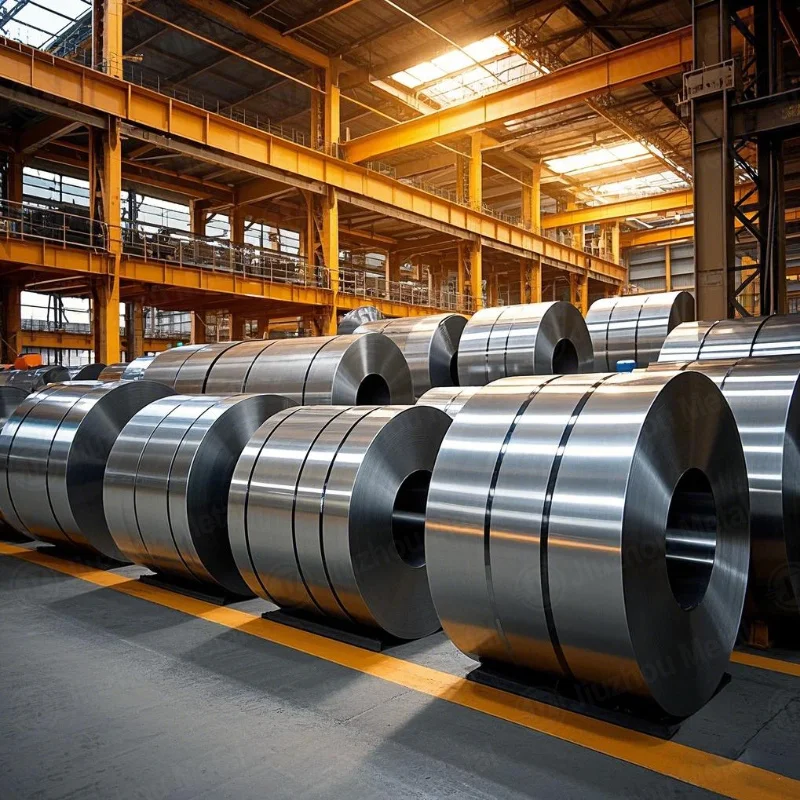
Give the grade, the core mass, and the target figure. Three fields then fix the factor you need. Add the joint type and the anneal state when the target is tight. A CRGO coil then ships with its loss basis printed. A cut core arrives when the stack is built elsewhere. That reply usually takes a day.
Related Reading
Our distribution note works the same sum from the guarantee side. The stacking note explains the area correction. A hub page answers six basic questions.
Frequently Asked Questions
No, since one rates a material, while the other rates a machine.
Twenty to forty percent, at a building factor of 1.1 to 1.3.
Joints and stamping stress usually lead, since both sit near the cutting edge.
Yes, whenever the build factor stays poor.
The builder, because the works test sets the guarantee.
- Email: vera.liang@ztwysteel.com
- Location: Xishan District, Wuxi, Jiangsu, China
- Supply range: CRGO and CRNGO 0.20–0.65 mm, four coating classes
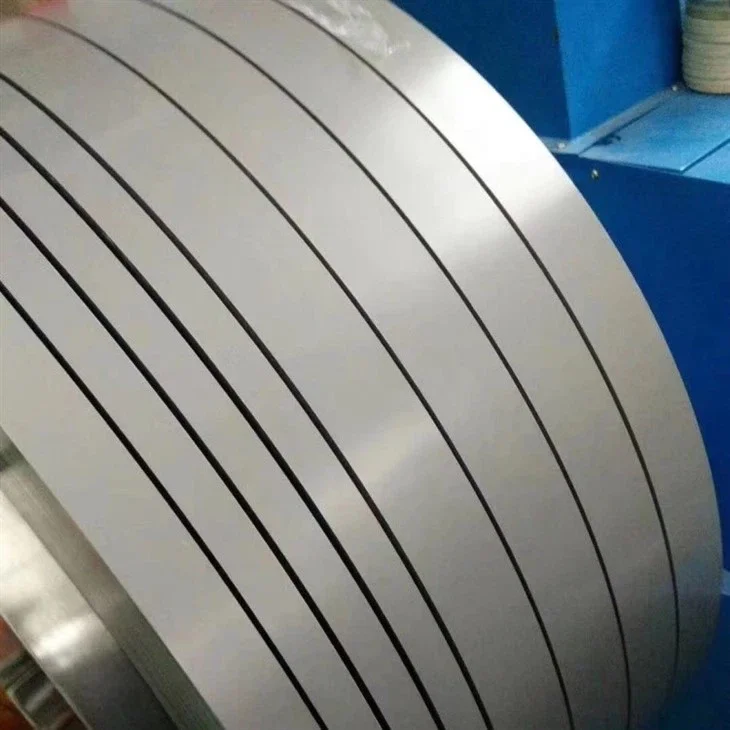
- Slitting: 20–1,250 mm, ±0.05 mm, burr under 0.02 mm
- Documentation: MTC EN 10204 3.1 with grade, thickness and loss basis, 3.2 on request




 English