
ASTM A677 Electrical Steel: How to Read a US Certificate Before You Order
ASTM A677 electrical steel covers fully processed non-oriented strip. The standard runs on a 60 Hz basis rather than the 50 Hz basis used in Europe and China. That single difference causes more disputes than any other item, because the basis changes every figure. A 4.70 W/kg figure at 50 Hz reads near 5.9 W/kg at 60 Hz. So two buyers can argue about one coil and both be right.
This guide separates the three ASTM documents, then sets the 60 Hz basis against the 50 Hz one. It closes with the three errors that follow a misread certificate.
What ASTM A677 Electrical Steel Covers
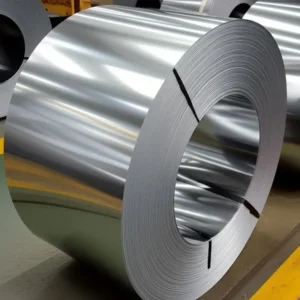
A677 covers non-oriented electrical steel in the fully processed state. So the mill delivers the magnetic property rather than the press. Thickness runs from 0.35 mm to 0.65 mm, so the family serves motors, generators and small transformers. A semi-processed route sits under a different document, so check the scope line before you quote.
The standard fixes the grade designation, the loss limits, the dimensional tolerances and the surface condition. Every line then appears on a certificate, so the buyer can verify it. It also names the test method by reference, so a certificate carries both the grade and the method.
Three ASTM Documents, Three Jobs
Three documents cover the field, and each carries a separate job. Mixing them up wastes a week, so read the scope first.
A677 for Non-Oriented
A677 covers non-oriented strip, so a motor core order cites that document. The grade table sits inside, so each entry states a loss limit at a stated flux and frequency. Most non oriented electrical steel orders from US buyers arrive under this number.
A876 for Grain Oriented
A876 covers grain oriented strip, so a transformer core order cites that document instead. A grain oriented electrical steel sheet order therefore cites A876 rather than A677. The two documents share a format while the families differ, since the magnetic behaviour follows the texture. A drawing that names A677 for an oriented core fails at the first review, since the certificate cannot match.
A343 and A804 for Testing
A343 sets the Epstein frame test at 25 cm, so that method matches IEC 60404-2 in principle. Run the same magnetic test items at your own lab before you accept a lot. A804 sets the single sheet test, so that method suits a quick check rather than a dispute. A certificate should name the method, because the two routes read slightly apart.
The 60 Hz Basis Trap
Frequency enters the loss equation twice, so a basis shift changes every figure. Two effects follow, and both push the reading upward.
Why 60 Hz Reads Higher
Hysteresis loss grows in proportion to frequency, while eddy loss grows with its square. Move from 50 Hz to 60 Hz and the first term rises by 1.20, while the second rises by 1.44. The mix lands near a quarter more, since both terms move together.
So a grade rated 4.70 W/kg at 50 Hz reads near 5.9 W/kg at 60 Hz. Neither number is wrong, because each describes a different duty. The basis line on the certificate settles which one applies, since the duty point stays fixed.
Converting to 50 Hz
A European drawing asks for 50 Hz, while a US certificate states 60 Hz. Convert before you compare, since a direct match fails by about 25 percent. The silicon steel grade conversion note sets the field mapping for both routes. Use the ratio rather than a table, because the eddy share moves with gauge.
A thin sheet carries a larger eddy share, so its 60 Hz figure rises further above its 50 Hz figure. A 0.35 mm grade therefore needs a bigger correction than a 0.65 mm grade. The certificate rarely states the split, so the buyer must estimate it.
Old Tables in Watts per Pound
Older A677 tables list loss in watts per pound, so that unit trips up a metric buyer. One watt per pound equals 2.205 watts per kilogram, so a 2.13 W/lb figure reads as 4.70 W/kg after conversion.
Check the unit before you read the number, since 2.13 and 4.70 describe one coil. A buyer who misses that line understates the loss by a factor of 2.2, so the core then runs hot.
Three Errors Buyers Make
Three errors repeat across orders, so each costs a re-quote. All three trace back to a single line on the certificate.
First, the buyer compares a 60 Hz figure with a 50 Hz drawing. The coil then looks bad before it ships, because the basis differs. Second, the buyer reads a watts per pound table as watts per kilogram, so the figure looks excellent. Third, the buyer mixes A677 with A876, so an oriented core arrives under a non-oriented certificate.
ASTM A677 Electrical Steel: A Cross-Reference Table
The table sets one coil against three systems, so a buyer can read a US certificate beside a European drawing.
| System | Basis | Note |
|---|---|---|
| ASTM A677 | 60 Hz, 1.5 T | US non-oriented |
| EN 10106 | 50 Hz, 1.5 T | European non-oriented |
| GB/T 2521 | 50 Hz, 1.5 T | Chinese non-oriented |
| ASTM A876 | 60 Hz, 1.7 T | US oriented |
The silicon steel standards summary covers all three systems in one page. Meanwhile, the GB standard and EN standard notes read each code field by field.
A 0.50 mm sheet weighs 3.925 kg per square metre. So a 5 t coil runs about 1,274 m at 1,000 mm width. Check the silicon steel sheet weight calculation before you size a US order, since the unit mix invites a slip.
What We Do Not Do
We do not quote an ASTM grade on a 50 Hz basis without stating the conversion. Nor do we send a certificate that drops the test method. Nor do we treat A876 as interchangeable with A677, since the families differ. We hold CRGO silicon steel coils for oriented work under A876. Silicon steel sheets leave Wuxi with the mill label intact, at Jiangsu Zhongtong Weiye Special Steel Co., Ltd.
FAQ
No, because A876 covers the oriented family. A677 covers non-oriented strip in the fully processed state.
The basis differs, since A677 measures at 60 Hz and EN 10106 at 50 Hz. A 4.70 figure at 50 Hz reads near 5.9 at 60 Hz. So the gap is real rather than an error.
One watt per pound equals 2.205 watts per kilogram. A 2.13 W/lb table entry reads as 4.70 W/kg.
A343 sets the Epstein frame at 25 cm, so A804 sets the single sheet test. The certificate should name the method.
Most US orders accept a mill certificate with the heat number and the test method. The mill issues it at shipment, since the buyer needs proof.
Request a Quotation
Send the ASTM grade, the frequency basis and the test method you need. Then we can convert the figure and confirm the delivery. Standard questions are answered within one working day, while quotes stay valid for two weeks. Write to vera.liang@ztwysteel.com.
- Email: vera.liang@ztwysteel.com
- Location: Xishan District, Wuxi, Jiangsu, China
- Standards quoted: ASTM A677, A876, A343, A804 and EN/GB equivalents
- Checks: frequency basis, unit (W/kg or W/lb), test method and grade family
- Documentation: MTC with heat number, basis line and test method
- Response time: standard questions answered within one working day, quotes valid two weeks




 English