

What Grade Do Current Transformer Cores Need?
A current transformer sits a different exam from a power transformer, so the usual score counts for little. Current transformer cores run near millitesla, so a loss figure taken at 1.7 T says almost nothing about them. Jiangsu Zhongtong Weiye Special Steel Co., Ltd. sets out the four questions that do count, using a grain oriented electrical steel sheet as the example.
The Short Answer
A measuring core usually takes 0.23 to 0.30 mm oriented strip in a high-permeability grade. Class 0.1 sometimes takes nickel-iron instead. A protection core takes oriented strip with a knee point high enough to carry the fault current. Hence the family is easy and the grade argument is not.
Why the Usual Score Does Not Apply
Flux in a measuring core sits far below the power side, by two or three orders of magnitude. The comparison fails at the first step. Take a 1 A secondary, a 5 VA burden, 2,000 turns, and 20 cm squared of core. The flux works out near 5.6 mT, against 1.7 T in a transformer. At that level a watt-per-kilo figure carries no meaning, because the material never approaches the curve it describes. Therefore, the catalogue headline misleads here. The flux note covers that curve.

Question One — Permeability at Low Flux
The first question asks how easily the core magnetises near 5 mT rather than at 1.7 T. Oriented strip reaches a relative permeability in the low thousands along its rolling direction, so direction must be watched. A nickel-iron strip reaches tens of thousands, and that gap is why class 0.1 buyers pay for it. Hence the score belongs to the low end of the curve. The texture note explains why direction matters.
Question Two — Phase Displacement
A current transformer must reproduce an angle as well as a ratio, while the class sets the limit. Class 0.5 allows about 30 minutes of phase error, while class 0.2 allows about 10. A core with high permeability holds that angle, although a poorer core drifts under load. Therefore, phase error is the number a meter reads, and it comes from the material. The grade guide maps the naming.
Question Three — Knee Point
A protection core must carry a fault without saturating. The knee point sets its ceiling, and the core area follows. A 5P10 core holds accuracy to ten times rated current, while a 10P20 holds to twenty. That demand pushes the core area up, rather than the grade up. Hence a protection core often uses thicker strip than a measuring core. The core type note sorts those duties.
Question Four — Remanence
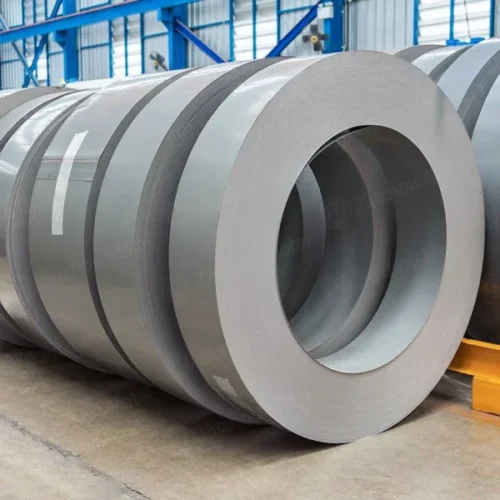
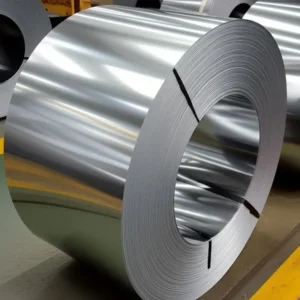
A core remembers the last fault, and that memory shifts the next measurement. Residual flux after a large fault can reach a high share of saturation. The core then starts from the wrong place. A small air gap drains that residue, even though it costs permeability. Therefore, a designer picks between a gapless toroid and a gapped one before ordering. The coil page shows the base material.
Winding the Toroid
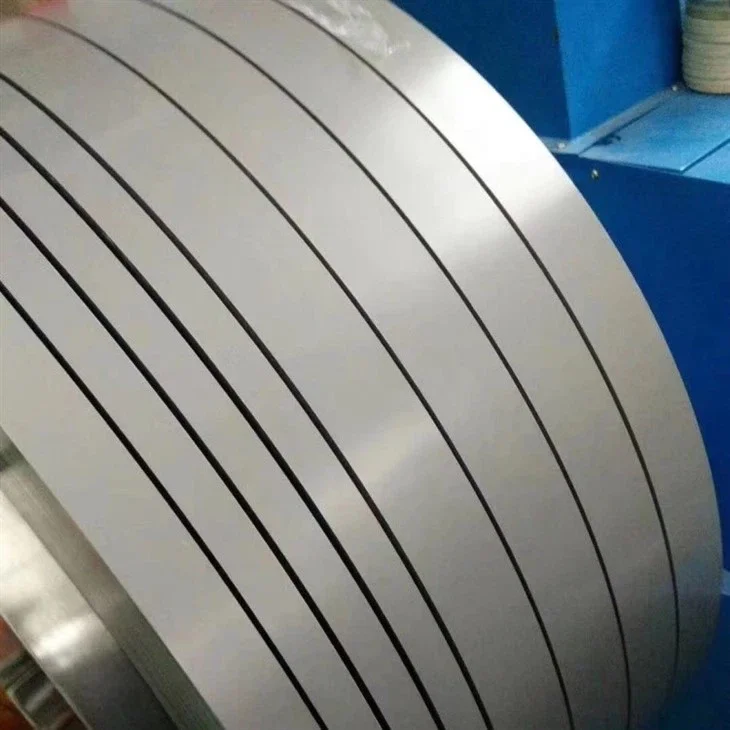
A toroid is wound from a continuous strip, since that method leaves neither joint nor gap. That construction explains much of its accuracy, because joints would add reluctance at every seam. Strip width follows the core build, while 0.23 to 0.30 mm winds without cracking. Hence slitting tolerance matters more than the gauge here, and burr matters most. Our custom size note covers the widths.
When Nickel-Iron Enters
Class 0.1 and lab work sometimes leave steel for a nickel-iron strip. That alloy reaches a far higher permeability at low flux, so the phase error shrinks. It also costs several times more, although it saturates lower. Hence the choice trades accuracy against price and headroom. A silicon electrical steel sheet still covers most of the market.
What Goes Wrong
One buyer quotes a loss figure at 1.7 T, for a core that runs at 5 mT. Another ignores remanence, then finds the meter drifting after a fault. A third orders a thin gauge for a protection core, when area was the missing item. Those three errors arrive monthly.
What We Do Not Do
We do not melt or roll steel. We do not certify an accuracy class, because that test belongs to the meter maker. Nor do we promise a phase figure from a strip that nobody has wound.
Those limits keep the answer honest, and they keep a class claim defensible.

Specify Your Order
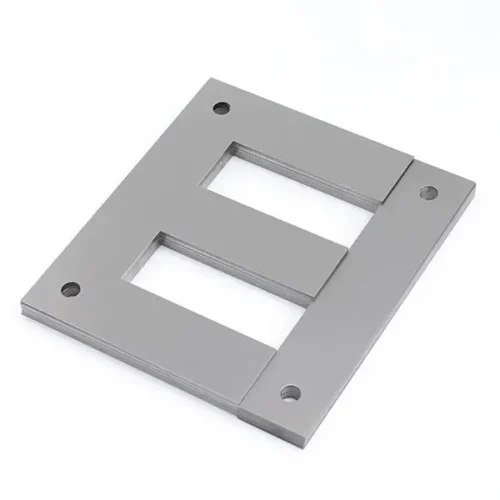
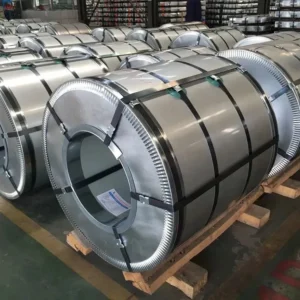
Give the class, the burden, the turns, and the area. Four fields then fix the flux level. Add the knee point for a protection core. A CRGO coil then ships with its rolling direction marked. A cut core arrives when the toroid is wound elsewhere. That reply usually takes a day.
Related Reading
Our distribution note covers the power side. The range note places each gauge. A hub page answers six basic questions.
Frequently Asked Questions
0.23 to 0.30 mm, in a high-permeability grade, wound as a toroid.
Barely, since the core runs near 5 mT and never reaches the curve.
Permeability at that low flux, since the angle follows it.
To drain remanence after a fault, even though permeability drops.
At class 0.1, where accuracy outweighs price and saturation matters less.
- Email: vera.liang@ztwysteel.com
- Location: Xishan District, Wuxi, Jiangsu, China
- Supply range: CRGO and CRNGO 0.20–0.65 mm, four coating classes
- Slitting: 20–1,250 mm, ±0.05 mm, burr under 0.02 mm
- Documentation: MTC EN 10204 3.1 with grade, thickness and loss basis, 3.2 on request




 English