
EN 10106 Electrical Steel: What the Standard Fixes and What It Leaves Open
EN 10106 electrical steel sets the delivery rules for non-oriented strip. Those rules decide whether your drawing fits a European order. The standard fixes the loss basis, the thickness tolerance, the flatness limits and the surface condition. It leaves several commercial points open, so a purchase order must close them. Buyers who read only the grade code often miss both halves.
This guide lists what EN 10106 guarantees, then names the four points it does not.
What EN 10106 Electrical Steel Covers
EN 10106 covers fully processed non-oriented electrical steel strip and sheet. Most non oriented electrical steel orders for motors cite this standard. The family runs from 0.35 mm to 0.65 mm in thickness, and it serves motors, generators and small transformers. Two sibling standards cover the rest, because the product families differ.
EN 10107 covers grain oriented strip, so a transformer order usually cites that standard. Check the silicon steel standards summary when both families sit in one order. EN 10165 covers semi-processed strip, so a motor maker who anneals after stamping cites it. A drawing that names the wrong sibling fails at inspection, even when the grade numbers match.
The Code in Three Fields
An EN grade reads loss first, then thickness, then a trailing letter. Take M470-50A apart, since that code covers most non-oriented orders.
Loss and Thickness
470 states the loss figure multiplied by 100, so the grade allows 4.70 W/kg. 50 states the thickness in hundredths of a millimetre, so the strip runs 0.50 mm. A sheet at that gauge weighs 3.925 kg per square metre, so the weight calculation starts there. Both figures sit in the code, so a buyer reads the pair without opening the standard.
The Trailing Letter
The letter marks the surface type, and the standard defines which options exist. A covers the common insulation film, while other letters mark thinner or heavier variants. A buyer who needs a stamping-friendly film should name the letter, because the default may suit lamination rather than pressing.
What the Standard Fixes
Four clauses carry most of the commercial weight, and each appears on a certificate. Read them in order, because each one constrains the next.
Loss Basis at 1.5 T
EN 10106 measures loss at 1.5 T and 50 Hz, so the figure compares with a GB non-oriented grade directly. The basis matters because 1.7 T raises the figure by a wide margin. The two bases cannot cross without a conversion. Ask for the basis on every certificate, since a house method may sit elsewhere. Run the magnetic test items yourself before you release a lot.
Thickness Tolerance
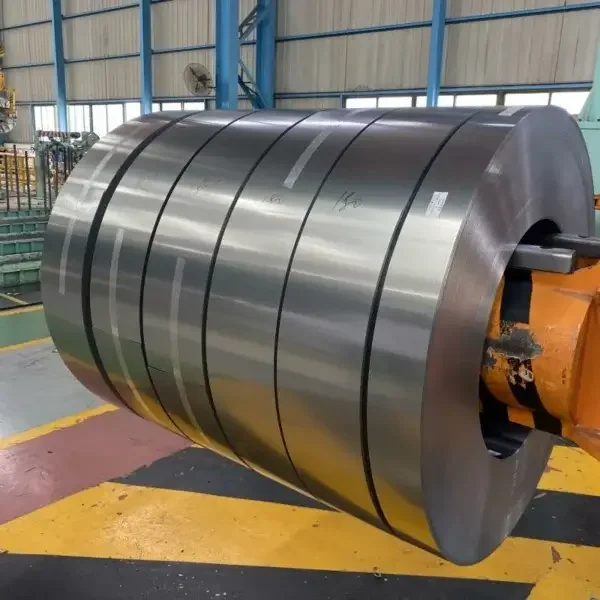
The standard allows a band around the nominal gauge, and that band runs near plus or minus 5 percent. On 0.50 mm the band reads 0.025 mm either way, so the weight varies with the tolerance. A 1,250 mm wide coil at 0.50 mm weighs 4.906 kg per metre. So a full tolerance band changes the tonnage slightly.
Flatness and Straightness
The standard limits edge wave and camber, since a wavy strip jams a press feed. Limits sit in millimetres per metre rather than in absolute figures. A coil that exceeds the limit often passes a spot check yet fails at the press. So measure along the full length.
Surface and Insulation
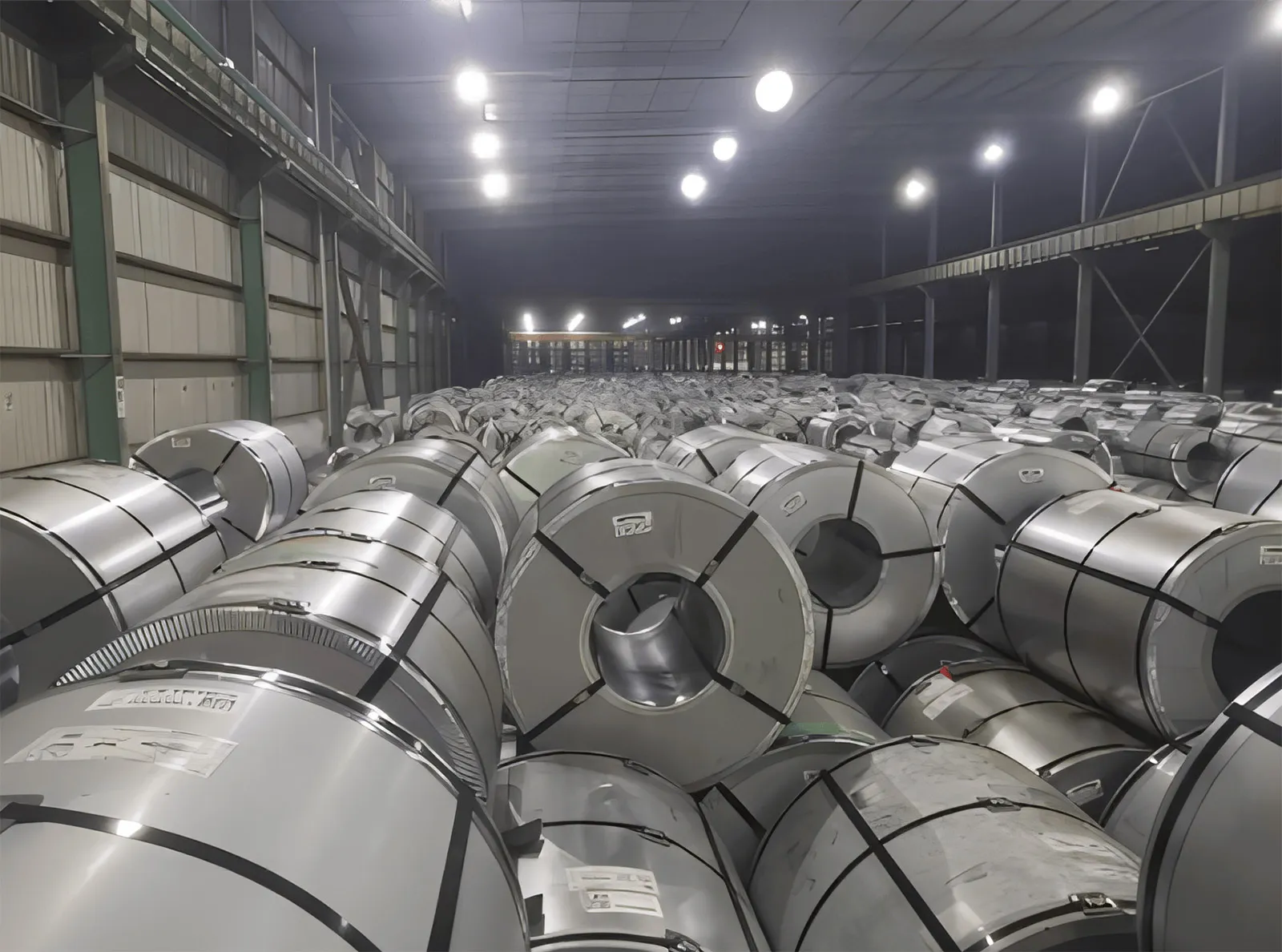
The standard requires a clean surface without rust, scale or harmful defects. It also sets the insulation film as part of the delivery condition, since the coating carries the layer resistance. A certificate that omits the film leaves the buyer guessing, so ask for the surface type in writing. Film condition also decides why silicon steel sheets need insulation.
What the Standard Leaves Open
Four points stay outside the standard, and each belongs in the contract. Close them before you order.
The first point is the mechanical property. EN 10106 states magnetic values, while yield strength and elongation vary with the heat, so name the values you need. Second comes the coating resistance, since the standard fixes the film type rather than a resistance figure. Third is the packing, because the standard covers the product rather than the crate. Finally, the certificate route needs an answer, since EN 10204 offers 3.1 and 3.2 and the order must pick one.
EN 10106 Against GB and ASTM
Three systems share the physics and differ in the paperwork. Two differences matter most, and both appear in the code.
GB 50W470 maps to EN M470-50A, because the fields agree while the order reverses. The GB standard note sets that mapping out field by field. ASTM A677 covers the same family under its own grade table. A figure crosses systems only with a basis note, so write the basis on the drawing. A buyer who sends a drawing across regions should attach the basis. The receiving mill reads its own standard first, since its tables differ.
EN 10106 Electrical Steel: A Delivery Checklist
Six items settle a European order, so check each one against the offer. The list suits a first order as well as a repeat.
| Item | What to write |
|---|---|
| Standard | EN 10106, non-oriented, fully processed |
| Grade | M470-50A or the required loss and gauge |
| Loss basis | 1.5 T at 50 Hz |
| Surface type | trailing letter and film |
| Certificate | EN 10204 3.1 or 3.2 |
| Packing | eye to sky, VCI, timber skid |
Use the silicon steel grade conversion note when the drawing carries a GB or ASTM code. Free samples let you check the film before the bulk order. The fields map in four steps, so a cross-reference costs minutes rather than days.
What We Do Not Do
We do not quote EN 10106 against a 1.7 T basis, because the figures would mislead. Nor do we ship a coil without the surface type on the label. Nor do we treat EN 10107 as interchangeable with 10106, since the families differ. We hold CRGO silicon steel coils for oriented work and silicon steel sheets for non-oriented work. Grain oriented electrical steel sheet ships under 10107, at Jiangsu Zhongtong Weiye Special Steel Co., Ltd.
FAQ
It covers non-oriented strip, so a transformer order usually cites EN 10107. The two standards share a format while the families differ.
Yes on the fields, since both state 0.50 mm and 4.70 W/kg at 1.5 T. The order reverses rather than the meaning.
It marks the surface type, and the standard lists the options. A covers the common insulation film, while other letters mark thinner variants.
No, because the standard focuses on magnetic and dimensional values. Name the yield strength and elongation in the contract, since they vary with the heat.
EN 10204 3.1 suits most orders, since a third party witness the test. A 3.2 certificate adds an independent inspector, and that route suits safety-critical cores.
Request a Quotation
Send the grade, the surface letter and the certificate route you need. Then we can confirm the standard and the basis in one reply. Standard questions are answered within one working day, while quotes stay valid for two weeks. Write to vera.liang@ztwysteel.com.
- Email: vera.liang@ztwysteel.com
- Location: Xishan District, Wuxi, Jiangsu, China
- Standards quoted: EN 10106, EN 10107, EN 10165 and GB/ASTM equivalents
- Checks: loss basis, surface letter, flatness and certificate route
- Documentation: MTC EN 10204 3.1 or 3.2, heat number, surface type
- Response time: standard questions answered within one working day, quotes valid two weeks



 English