

Which Gauge Fits a Wind Generator Core?
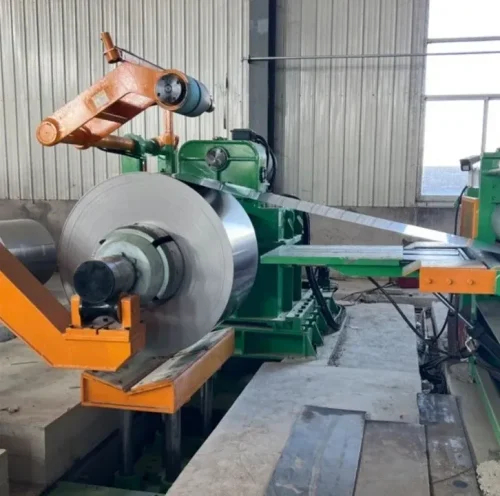
A wind generator looks like a traction motor on paper, and it behaves like the opposite in practice. Silicon steel for wind generators hides two anomalies. The rotor turns near 8 Hz, and the ring outgrows any coil. Jiangsu Zhongtong Weiye Special Steel Co., Ltd. sets out both below, using a non-oriented electrical steel sheet as the example.
The Short Answer
A direct-drive unit usually takes 0.50 mm non-oriented strip, since the frequency stays low. A geared machine with a 1,500 rpm shaft lands near 50 Hz, so it takes 0.35 to 0.50 mm. Both then face the same second problem, which is width rather than watts. Hence the gauge is easy and the layout is hard.
Anomaly One — The Frequency Runs Low
A direct-drive rotor turns at 10 to 15 rpm, and its pole count runs high. A 96-pole machine at 10 rpm produces 8 Hz, which is far below grid frequency. At that rate the hysteresis term dominates, and the eddy term shrinks to a minor share. Therefore, a thin gauge buys almost nothing here. The loss note explains the split.
The Arithmetic of a Slow Rotor
Frequency follows speed and pole count, so the sum is short. Eight hertz sits six times below 50 Hz, so the eddy term falls with the square of that ratio. A 0.50 mm sheet therefore adds little extra loss at 8 Hz, against a 0.35 mm sheet. Meanwhile the thick sheet costs less per tonne, and it needs fewer pieces for one build. Hence the cheap gauge wins on both counts.
Anomaly Two — The Core Is Wider Than a Coil
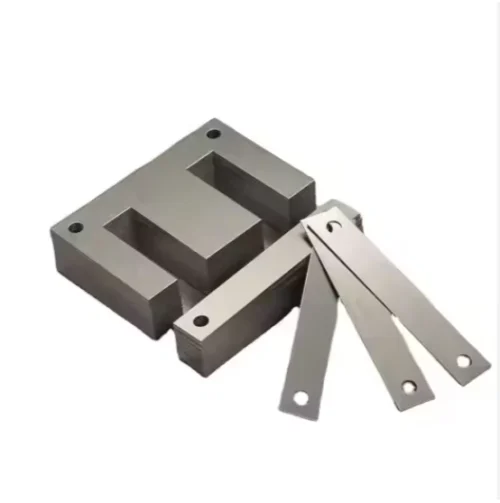
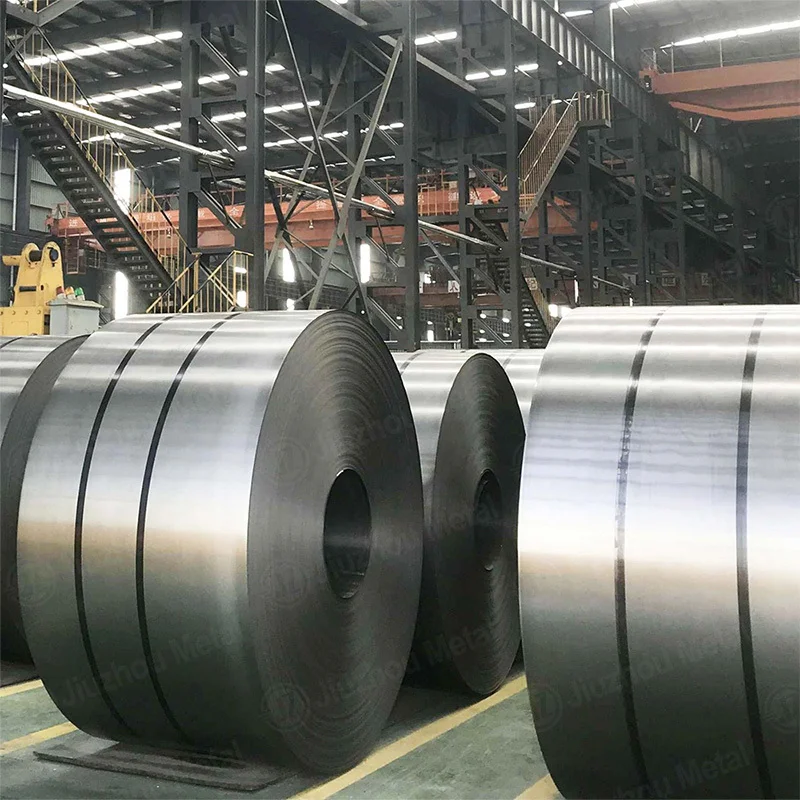
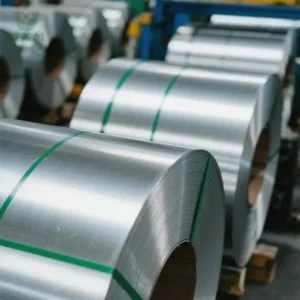
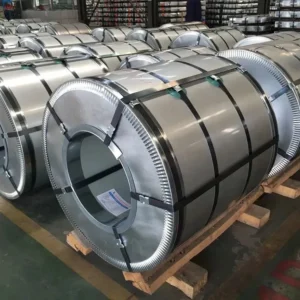
A four metre ring cannot come from a 1,250 mm coil, so the core arrives in segments. The circumference runs 12.57 metres, which needs about ten segments at that width, since each arc covers 1.25 metres. Each segment is a separate stamping, and each pair of segments meets at a joint. Therefore, the design problem moves from metallurgy to layout. The range note covers the gauge side.
What Segmentation Costs
Every joint adds reluctance and loss, so a ring with ten seams runs worse than a solid one. Alignment matters too, because a misaligned segment creates a step that hums. Cutting arcs from a rectangular coil also leaves scrap at the corners, and that scrap is charged to the part. Hence a designer counts joints first, and watts second. The same joint logic appears in a cut core at a smaller scale.
Where the Gauge Really Lands
The direct-drive stator settles on 0.50 mm, since loss is cheap at 8 Hz and pieces are many. A geared machine runs its generator at 1,500 rpm with four poles, and that gives 50 Hz. There the eddy term returns, so 0.35 mm earns its keep under a tight guarantee. The stator note covers that geometry. Therefore, the drivetrain decides the gauge, and the site decides little.
The Gearbox Version
A doubly-fed machine sits behind a gearbox, and its stator behaves much like an induction motor. That duty takes 0.35 to 0.50 mm non-oriented strip, and 0.50 mm still dominates on cost. The rotor circuit carries slip frequency, so its core sees only a fraction of the stator frequency. Hence two cores inside one machine can differ in gauge, and both orders must say so.
Transport and Assembly
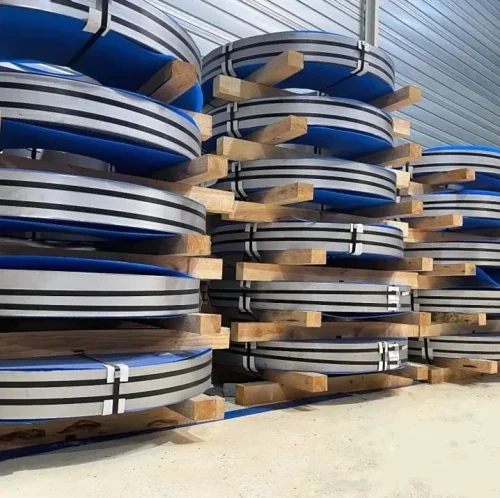
A four metre ring travels as segments, because a full ring will not fit a container. Weight then matters for freight, since 0.50 mm gives 3.925 kg per square metre at the standard density. Ten square metres of ring therefore weighs about 39 kg at 0.50 mm, and a heavier gauge adds freight. Hence a nacelle build pays for mass twice, once at the mill and once at the port.
What Goes Wrong
One buyer copies a traction motor spec, then orders 0.20 mm for a direct-drive unit. Another ignores segmentation, so the drawing shows a ring wider than the coil. A third counts joints as loss-free, although the guarantee then fails. Those three errors arrive monthly.
What We Do Not Do
We do not melt or roll steel. We do not cut a ring wider than the coil, because width is a physical limit. Nor do we promise a joint-free core from a segmented design.
Those limits keep the answer honest, and they keep a nacelle build on schedule.
Specify Your Order
Give the topology, the rotor speed, the pole count, and the ring diameter. Four fields then settle both anomalies. Add the segment count when the ring is large. A silicon electrical steel sheet then ships with its gauge and width printed. The thin gauge note covers the rare high-speed case. That reply usually takes a day.
Related Reading
Our EV note runs the same question at 500 Hz. The grade guide maps every naming pattern. A hub page answers six basic questions.
Frequently Asked Questions
0.50 mm, since the rotor runs near 8 Hz and the eddy term stays small.
Because the eddy term falls with frequency squared, and 8 Hz is low.
The coil width, which caps a segment near 1,250 mm of arc.
Yes, since each joint adds reluctance and a small air gap.
No, since the rotor sees slip frequency instead.
- Email: vera.liang@ztwysteel.com
- Location: Xishan District, Wuxi, Jiangsu, China
- Supply range: CRGO and CRNGO 0.20–0.65 mm, four coating classes
- Slitting: 20–1,250 mm, ±0.05 mm, burr under 0.02 mm
- Documentation: MTC EN 10204 3.1 with grade, thickness and loss basis, 3.2 on request



 English