

Heat Resistant Temperature of Silicon Steel Sheets
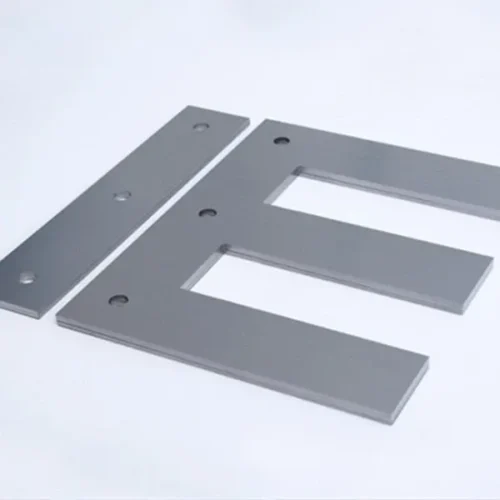
One number does not exist here, since the answer depends on where the sheet sits. Silicon steel heat resistance stops near 180 C inside a machine. A bare sheet then reaches 800 C inside a furnace, provided gas keeps the air out. Jiangsu Zhongtong Weiye Special Steel Co., Ltd. supplies silicon steel sheet with the coating class stated, which sets that first ceiling.
The Short Answer
Two contexts give two answers. In a machine, the coating and the insulation class fail near 155 to 180 C. In a furnace, the steel itself tolerates 750 to 800 C while the atmosphere protects it. The alloy only loses its magnetism near 740 to 770 C. Hence ask where the sheet sits before asking how hot it may go.
Context One — Inside a Machine
An insulation system of class B, F, or H carries limits of 130, 155, and 180 C. A coating film begins to degrade near 180 C, since the resin loses its bond. The lower of those figures then governs the winding and the core alike. Therefore, a motor rated for 155 C cannot run its core at 200.
Why the Winding Sets the Limit
Heat inside a machine comes from copper loss, not from the flux, so the core follows the winding. A hot spot at the end winding then spreads into the laminations through the shaft and the frame. A loss figure in watts per kilogram says nothing about that path. Hence the thermal class decides, and the sheet merely complies.
The Magnetic Ceiling
Iron loses ferromagnetism at the Curie point, near 740 to 770 C for this alloy. A core held above that point carries no useful flux, whatever the atmosphere. Loss also climbs with temperature well before the Curie point, so efficiency falls early. Therefore, the magnetic ceiling sits far above the practical one.
Context Two — Inside a Furnace
A stress-relief anneal runs at 750 to 800 C, and it works because nitrogen or hydrogen excludes air. Above 850 C the grains grow and the properties shift, which may be wanted or not. A CRGO sheet needs 1,200 C for its texture, and only the mill runs that step. Hence furnace work is a process question, not a service one.
What Air Does at Each Level
Above 200 C a thin oxide film colours the surface, and the film thickens with heat. Near 400 C the oxide turns to visible scale, and a thicker layer begins to spall. A scale that flakes takes coating with it and leaves a pit. Therefore, atmosphere control matters more than the temperature figure.
What Cycling Does to the Coating
Coatings and steel expand at different rates, so every cycle loads the bond. A few hundred cycles near the limit then craze the film and drop the interlayer resistance. A silicon steel sheet tested once at 180 C may pass and fail after a year of duty. Hence cycling shortens the usable ceiling.
Why the Soak Runs Long
Heat moves through a single sheet at 18 to 22 W/m K, and a stack conducts far worse. A short excursion then heats the surface while the centre stays cool, which hides a real overheat. A long soak evens the stack and exposes the coating to the full limit. Therefore, time and temperature trade against each other.
A Short Excursion
Brief spikes to 220 C may leave no visible damage, since the film needs minutes to craze. A sustained 200 C does more harm than a one-minute 250 C, because the bond relaxes slowly. Controllers that overshoot once per shift then cost more than a steady offset. Hence duration belongs in the specification.
What the Buyer Should State
State the insulation class of the machine, since 130 C and 180 C differ by a coating choice. Then state the process temperature, since a stress-relief step needs 750 to 800 C and gas. Finally state the cycle count, since repeated heating wears the film. Three statements fix the ceiling. Then ask for the coating class on the certificate.
What Goes Wrong
One buyer quotes 180 C for a class B motor and blames the coil for a short life. Another anneals at 800 C in air and finds scale under the coating. A third reads the Curie point as a service limit. Those three misreadings cover most of the heat questions we answer.
What We Do Not Do
We do not melt or roll steel. We do not anneal a coil to a customer’s cycle. Nor do we certify an insulation system for a machine we did not build.
Those limits keep the answer honest.
Specify Your Order
First, name the application and the insulation class. Second, give the grade and the gauge. Then state the process temperature and the atmosphere, so the coating and the duty agree.
Related Reading
The insulation note explains what the film does before heat destroys it. The thermal note follows the same path through a stack.
Frequently Asked Questions
What is the service limit? Near 155 to 180 C, set by the coating.
What is the Curie point? About 740 to 770 C.
Can it run at 800 C? Only bare, in protective gas.
Does cycling matter? Yes, the film crazes after repeated cycles.
What should the quote state? The coating class and the grade.
- Email: vera.liang@ztwysteel.com
- Location: Xishan District, Wuxi, Jiangsu, China
- Supply range: CRGO and CRNGO 0.23–0.65 mm, coating class stated
- Slitting: 20–1,250 mm, ±0.05 mm, burr under 0.02 mm
- Documentation: MTC EN 10204 3.1 with grade, thickness and coating class, 3.2 on request





 English