

Where Is Silicon Steel Commonly Used in Electrical Industries?
Silicon steel sits at every stage of the power chain, and each stage asks something different of it. In practice, generation wants isotropic sheet, transmission wants directional sheet, and consumption wants cheap sheet that still meets an efficiency class. Consequently, one material family serves five distinct duties. Jiangsu Zhongtong Weiye Special Steel Co., Ltd. supplies both branches.
Stage 1 — Generation
Hydro and wind generators run at low frequency, so they favour non-oriented sheet at 0.35–0.50 mm. Consequently, they accept a slightly wider hysteresis loop in exchange for uniform behaviour in every direction.
Excitation here is modest, yet the machine must survive decades outdoors. Hence coating quality matters as much as loss.
Stage 2 — Transmission
Power transformers use oriented sheet almost exclusively, because flux runs along one axis only. Moreover, no-load loss bills continuously, so grade choice carries unusual weight.
Typical builds take 0.23–0.30 mm strip in grades from 23P85 to 30P120. In addition, joint design and clamping decide how much of that advantage survives assembly.
Stage 3 — Distribution
Distribution transformers form the volume business, since every feeder carries one. Therefore, this stage consumes large tonnages of oriented strip at 0.27–0.35 mm, usually at moderate loss classes rather than premium ones.
Reactor and choke cores also live here. They need a deliberate air gap, and a reactor core lamination supplies exactly that shape.
Stage 4 — Consumption
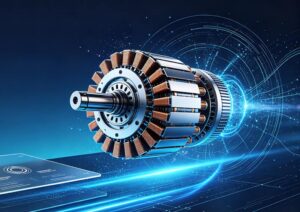
Electric motors absorb the largest share of non-oriented tonnage, and industrial drives dominate within that group. Stators and rotors take 0.35–0.50 mm sheet in grades such as 50W470 or M19.
Household appliances follow close behind. Washer motors, fan motors, and compressor motors use compact cores, sometimes a silicon steel coiled magnet ring for washer motors, where cost dominates.
EV traction and charging equipment add a newer demand. High rotational speed pushes frequency up, so thin gauge at 0.20–0.27 mm enters those specifications.
Stage 5 — The Machines Behind the Machines
Welding transformers, induction heaters, and medical imaging magnets also consume electrical steel. These duties are smaller in tonnage, yet they demand tight consistency, since a scanner core cannot drift.
Hence specialty grades serve them, often at narrow widths.
What Each Stage Demands
- Generation: uniform properties, robust coating, moderate loss.
- Transmission: lowest loss, high B8, thin gauge.
- Distribution: balanced loss and price, reliable supply.
- Consumption: punchability, cost, and efficiency class.
- Specialty: consistency and narrow slit widths.
Each line translates into a different purchase order, and mixing them wastes money.
Where the Volume Actually Sits
Motors and appliances take the bulk of non-oriented tonnage globally, and distribution transformers take the bulk of oriented tonnage. Consequently, most supply contracts serve those two segments, while transmission grades remain fewer in tons but higher in value.
That imbalance explains why 50W470 is easy to find and 23P85 is not.
Why One Material Serves All Five
Iron carries flux cheaply, and silicon suppresses the losses that come with it. Therefore, no competing material matches the cost per kVA across such a range of duties. Amorphous ribbon beats it on no-load loss, yet it loses on cost, width, and mechanical fragility.
Hence silicon steel remains the default, and alternatives occupy niches.
Reading Your Own Position
Ask which stage your product serves, then ask what flux path it uses. Stage answers give the family, and the flux path gives the grade. After that, gauge follows frequency, and price follows urgency.
That sequence shortens most grade debates.
Application detail across machine types sits in the applications guide, and grade codes are decoded in the grades overview.
Frequently Asked Questions
Electric motors, followed by distribution transformers.
Rarely, since their flux rotates rather than runs in one direction.
Yes, in small transformers, chokes, and instrument supplies.
Indirectly, through inverters, reactors, and the transformers that connect them.
In structural work, cutting tools, and high-frequency circuits above a few kilohertz.
What We Do Not Do
- We do not roll, anneal, or coat steel.
- We do not wind or assemble cores.
- We do not supply structural or stainless products.
Consequently, we supply coil and documentation, while your plant owns fabrication.
Specify Your Order
- State the machine and its flux path.
- Name the grade, or give the loss limit.
- Give gauge and slit width, then confirm tonnage and port.
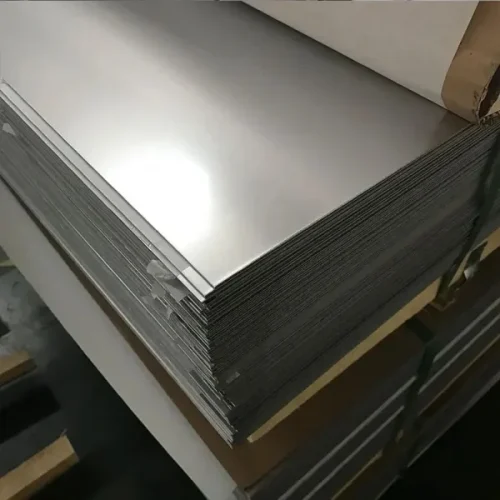
M36 Non Oriented Electrical Steel covers appliance and light motor duty, and quotes return within one working day.
- Email: vera.liang@ztwysteel.com
- Location: Xishan District, Wuxi, Jiangsu, China
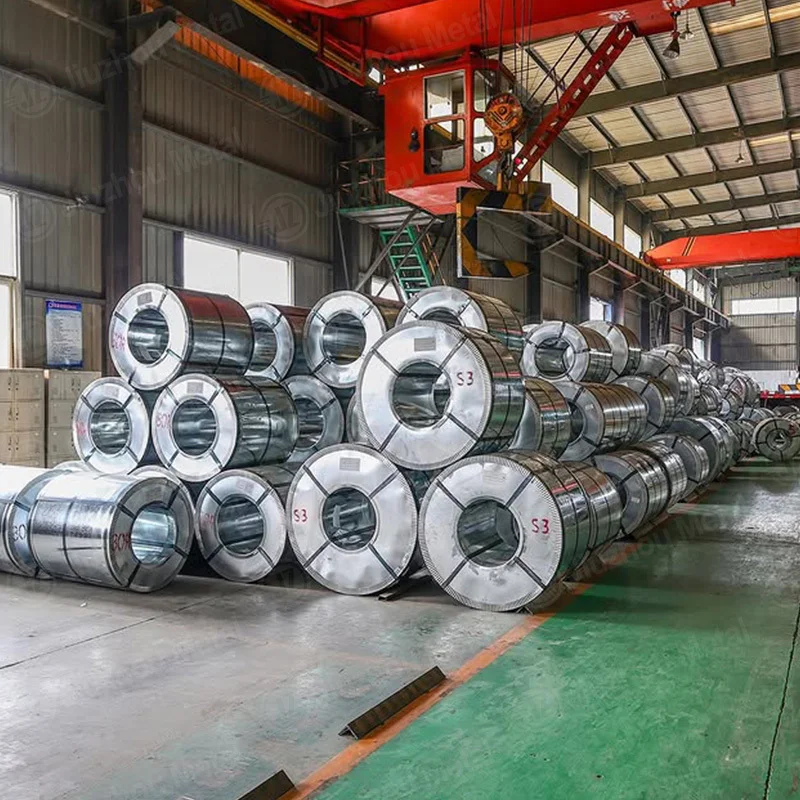
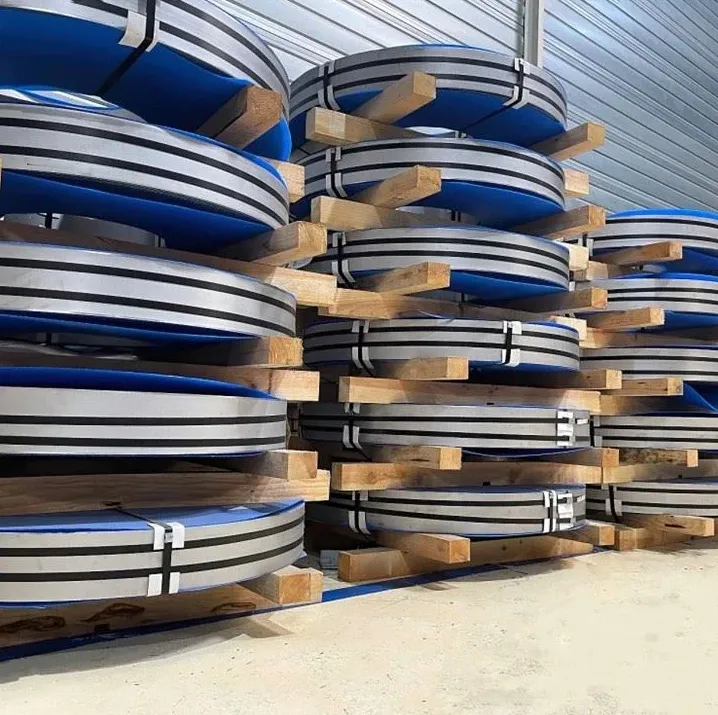
- Supply range: CRNGO M19–M47 at 0.35–0.65 mm, CRGO M4/M5 at 0.23–0.35 mm
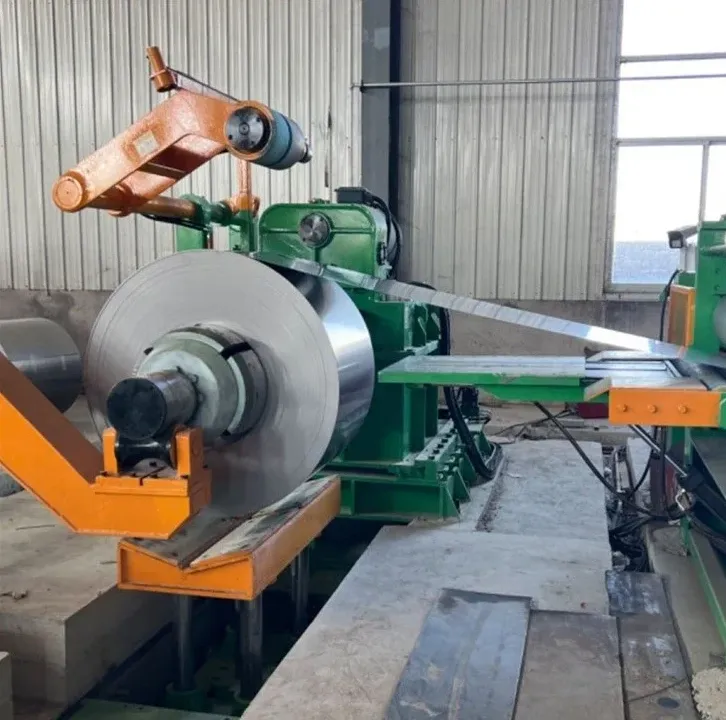
- Slitting: 20–1250 mm, ±0.05 mm, burr under 0.02 mm
- Documentation: MTC EN 10204 3.1, core loss per ASTM A343 / IEC 60404-2




 English