What is Inconel 725 used for?
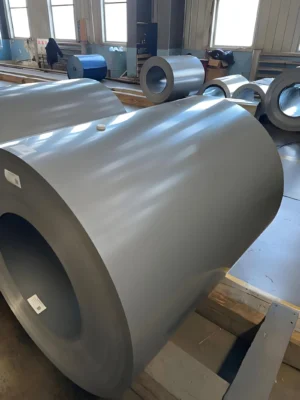
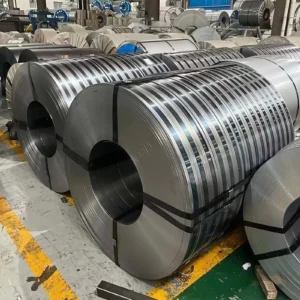
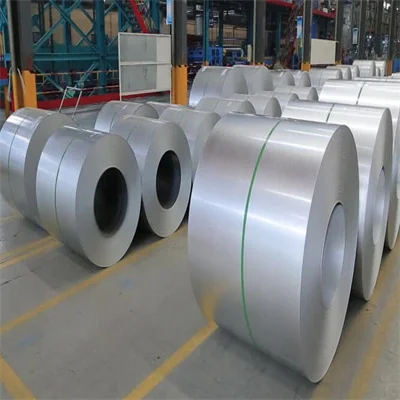
It fills a gap between two neighbours, so Inconel 725 sits between 625 and 718. 625 resists sour gas but yields around 414 MPa, while 718 reaches higher strength yet carries less molybdenum. 725 reaches above 700 MPa after ageing and keeps 7 to 9.5% molybdenum. Jiangsu Zhongtong Weiye Special Steel Co., Ltd. supplies 725 coil and strip, and it books plate and bar on request.
The Short Answer
Sour gas hardware uses 725, since that duty demands strength plus chloride resistance. Wellhead valves, tubing hangers, subsea connectors, chokes, and fasteners form the main order lines. Hence the grade exists for high-pressure wet gas, not for furnaces.
Why the Gap Exists
A deep gas well runs high pressure with H2S and chlorides. The metal therefore needs both strength and corrosion resistance. 625 covers the corrosion side, yet a thin wall cannot hold the pressure. 718 covers the strength side, yet its molybdenum falls short in chloride. Therefore, a designer had no option until 725 appeared.
What the Chemistry Does
725 carries 19 to 22.5% chromium and 7 to 9.5% molybdenum, plus niobium and titanium for ageing. Chromium and molybdenum handle the corrosion, while the niobium and titanium form a precipitate on ageing. That precipitate lifts the yield from about 400 MPa to above 700 MPa. Hence one alloy serves two duties at once.
Use One — Wellhead Valves
A wellhead valve body sees pressure, H2S, and sand erosion in one place. 725 holds the pressure in a compact body, since its aged yield allows a thin wall. The body also keeps a gate seat dimension stable, because ageing runs before final machining. Therefore, a compact tree often uses 725 rather than 625.
Use Two — Tubing Hangers
A tubing hanger carries the string weight and seals the annulus, so it needs strength at a wet interface. 725 resists the chloride there, and it holds a thread under load. A hanger also sees fatigue from pressure cycling, and the aged structure resists that too. Hence the hanger is a classic 725 part.
Use Three — Subsea Connectors
A subsea connector sits in seawater outside and produced fluid inside, so it faces two media. 725 resists both, since its molybdenum handles the produced chloride and its chromium handles the oxygenated seawater. A connector also needs a high preload, so the yield matters. Therefore, subsea trees often specify 725.
Use Four — Chokes and Flow Control
A choke takes a pressure drop across a small bore, so the fluid speed runs high. 725 resists erosion there, and the aged hardness helps against sand. A choke body also needs thread strength, since a small body carries a large load. Hence flow control parts use 725 in sour fields.
Use Five — Fasteners and Springs
A bolted joint in a sour line needs a bolt that holds preload and resists H2S. 725 fasteners carry that duty, and they resist relaxation better than a solid-solution grade. A spring in a downhole tool also uses it, since the aged structure holds load at temperature. Therefore, small parts often justify the grade.
The Temperature Limit
Ageing fades above roughly 600 °C, so 725 is not a furnace alloy. A downhole tool at 200 °C sits well inside the limit. A subsea part at 100 °C sits far inside it. Therefore, the grade belongs to wet service rather than hot service.
What 725 Does Not Cover
Hydrochloric acid defeats it, since 8% molybdenum cannot carry that duty. Strong nitric acid also favours a higher-chromium grade. A caustic stream usually takes Nickel 201, because nickel resists hydroxide better. Hence 725 covers sour gas and seawater, not every corrosive duty.
How It Welds
725 welds with a matching or 625-type filler, and the joint then ages with the part. A weld that never ages stays soft, so the procedure should include the full ageing cycle. Low heat input helps, since a wide bead dilutes the filler. Hence a fabrication drawing should state the post-weld treatment.
The Certificate Question
A 725 lot carries an EN 10204 3.1 certificate with the UNS N07725 number and the heat. The certificate also states the condition, since annealed and aged plates behave differently. A buyer should check that line before machining. Therefore, the condition belongs on the purchase order.
Where Buyers Get It Wrong
A buyer machines a 725 part before ageing, and the part moves during the heat cycle. Another welds it and skips the age, so the joint runs soft. A third uses 725 in a 700 °C furnace, where the strength fades. Those three errors cover most of our returns.
What We Do Not Do
We do not melt, roll, or age 725. We do not machine a finished part. Nor do we sell an annealed plate as an aged one, since the certificate would contradict the label.
Those limits keep the grade honest.
Specify Your Order
First, name the grade and the UNS number. Second, state annealed or aged. Then give the form and the size, so the mill order matches the heat treatment.
Inconel 725 coil and strip covers connectors and small parts. For a solid-solution wall, Inconel 625 plate and sheet is simpler. For springs and bolts, Inconel X-750 bar also fits.
Related Reading
Grade naming systems read best in the silicon steel grade note, since both explain how a spec is encoded. Cut-length practice appears in the cut-to-size note.
Frequently Asked Questions
How strong is 725 after ageing? Above 700 MPa yield, which allows a thin pressure wall.
Does 725 meet NACE requirements? It does, and sour gas specs often name it for that reason.
Can 725 work at 600 °C? Only briefly, since ageing fades near that level.
Which filler suits 725? A 625-type filler, aged with the part afterwards.
Do you stock 725 plate? Coil and strip ship from stock, and plate comes on order.
- Email: vera.liang@ztwysteel.com
- Location: Xishan District, Wuxi, Jiangsu, China
- Supply range: 725 coil 0.5–3 mm, plate on order, 625 plate 1–50 mm
- Cutting: length under 4 m, ±1 mm, squareness 1 mm per metre
- Documentation: MTC EN 10204 3.1 with UNS N07725, 3.2 on request