

Do Zhongtong Weiye nickel plates and sheets come with mill test certificates?
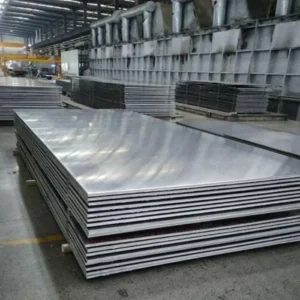
Yes, every bundle ships with one, since a mill test certificate accompanies nickel plate and sheet by default. Grade 3.1 is standard, while 3.2 comes on request. Jiangsu Zhongtong Weiye Special Steel Co., Ltd. treats the certificate as part of the delivery, not as an extra.
The Short Answer
Each shipment carries an EN 10204 3.1 certificate, and each bundle carries a copy. The document names the UNS grade, the heat number, the chemistry, and the mechanical results. Hence a buyer can audit the plate without cutting a sample.
Question 1 — Who Signs It
A 3.1 certificate is signed by the mill’s own inspection department, which acts independently of production. A 3.2 certificate adds a third-party inspector, because a buyer may appoint one. Therefore, 3.2 costs more and takes longer, yet it satisfies stricter audit rules.
Question 2 — What It Checks
The chemistry block matters most for nickel, since carbon separates 200 from 201. A usable certificate states nickel minimum, carbon, sulphur, iron, copper, silicon, and manganese. It also lists tensile strength, yield, elongation, and the temper supplied.
Question 3 — Can It Be Traced
Every plate carries a heat number, stamped or stencilled at the edge, so the number follows the piece. That number links the plate to the certificate and to the bundle label. Hence an auditor can walk from a finished vessel back to the melt.
Where Nickel Certificates Differ From Steel
Carbon carries more weight here, since 0.15% and 0.02% define two different grades. Steel certificates often lead with yield strength and impact energy, while nickel certificates lead with chemistry. A buyer who reads only the strength line misses the point.
Why Carbon Leads the Chemistry Block
A nickel certificate lists seven elements, yet carbon decides the grade. The mill measures carbon on every heat, because 0.02% and 0.15% sit far apart in practice. Hence a buyer should circle that line first.
Which Standard the Certificate Cites
North American orders usually cite ASTM B162 for plate, sheet, and strip, while European orders cite EN 10095. Some European buyers cite the mill’s own specification instead. Both list the same fields, yet the acceptance values differ slightly. Therefore, the purchase order should name one standard.
What 3.2 Adds
An independent inspector reviews the mill’s results and may witness the tests. That signature suits nuclear, pharma, and marine class work. For routine chemical plant orders, 3.1 usually satisfies the insurer and the auditor.
What the Certificate Cannot Prove
It does not cover corrosion performance, since that needs a separate test. It does not replace ultrasonic testing, which travels as its own report. Nor does it certify a surface finish unless the finish is stated. Hence read the scope before relying on the document.
What to Check on Arrival
Compare three items: the heat number on the plate, the heat number on the certificate, and the grade code. Then check the carbon value against the grade you ordered. Finally, confirm the thickness against the packing list.
Three checks take a minute and prevent a claim.
How a Certificate Travels With a Cut Plate
When we cut a plate, the piece keeps the parent heat number. The bundle label repeats that number, so the paperwork survives the cut. A small cut plate therefore still carries full traceability.
What We Send With Each Bundle
Each bundle carries a paper copy inside the packing, and a digital copy goes to the buyer by email. The digital file is a scan of the signed original, not a template. Hence it stands up in an audit.
What Auditors Ask Most Often
An auditor asks for the heat match first, since that proves the link. Then comes the carbon value, because grade substitution hides there. Finally the thickness, since a thin plate may pass as a thicker grade.
When Buyers Ask for More
Some buyers want a certificate per cut piece, although that adds handling time. Others want the heat analysis and the product analysis side by side. Both are quoted, since neither is difficult.
Where Certificates Get Rejected
A certificate fails when the grade code differs from the order, even if the chemistry fits. It also fails when the signature block is a photocopy, because auditors want an original scan. Hence check both before the goods leave.
Related Reading
The grade comparison appears in the Nickel 200 vs 201 note. The general certificate guide appears in the MTC note.
Frequently Asked Questions
Is the certificate included in the price? It is, since 3.1 is part of the standard delivery.
Can you supply a 3.2 certificate? We can, though a third-party inspector adds time.
Does the certificate list the heat number? It does, and the same number appears on the plate edge.
Does it include corrosion data? No, since corrosion testing is quoted separately.
Which standard applies to nickel plate? ASTM B162 for North American orders, and EN 10095 for European ones.
What We Do Not Do
We do not issue certificates for material we did not supply. We do not alter a mill certificate. Nor do we certify corrosion or UT results that no test covered.
Those limits keep the document credible.
Specify Your Order
First, name the grade and the standard. Second, give thickness, width, and length. Then state whether you need 3.1 or 3.2, so the paperwork matches the audit.
Nickel 200 Pure Nickel Plate ships with a 3.1 certificate. Nickel 201 High-Temperature Nickel Sheet covers hot caustic duty. Monel 400 Copper-Nickel Alloy covers brine service.
- Email: vera.liang@ztwysteel.com
- Location: Xishan District, Wuxi, Jiangsu, China
- Supply range: Nickel 200 / 201 plate 0.5–50 mm, certificate per bundle
- Cutting: length under 4 m, ±1 mm, squareness 1 mm per metre
- Documentation: MTC EN 10204 3.1 standard, 3.2 on request







 English