

Does Silicon Steel Loss Rise Over Time?
A certificate states a loss figure on the day the coil leaves the line. That figure is not a lifetime promise. Magnetic aging runs on three clocks, since carbon and nitrogen both leave solution slowly. Jiangsu Zhongtong Weiye Special Steel Co., Ltd. sets out those clocks below, using a non-oriented electrical steel sheet as the example.
The Short Answer
Loss rises a few percent over decades, although the rise stays small when chemistry is controlled. Three elements decide the pace, and each carries a ceiling at or near 0.003 percent. Hence a buyer who holds a twenty year unit to a fresh coil figure will find a gap. The loss note covers the two terms inside that figure.
Clock One — Carbon
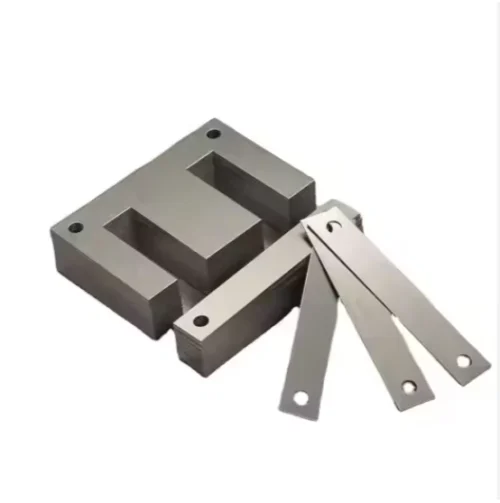
Carbon sits in solution after hot rolling, and it wants out. A wet atmosphere anneal drops it from 0.05 to 0.003 percent. That step slows the exit almost to a stop. What remains still moves, even though that movement takes years at room temperature. Hence the ceiling is a delay, rather than a ban. The composition note lists those limits.
Clock Two — Nitrogen
Nitrogen follows a similar path, while aluminium joins it. Together they form aluminium nitride, which pins grains and raises loss once it appears. That reaction runs fastest between 100 and 200 degrees Celsius, so a warm winding invites it early. A nitrogen ceiling near 0.003 percent keeps the supply thin, since little remains to react. Therefore, the second clock ticks faster than the first, although it starts later.
Clock Three — Temperature
Heat sets the pace for both clocks, because a reaction roughly doubles for every 10 degrees added. A transformer winding settles near 105 degrees in service, while a warehouse sits far cooler. Hence the clock in a substation runs quicker than the clock on a shelf. That difference explains why an old unit tests worse than its twin in storage.
Reading the Aging Test
Standards compress decades into a short bake, and one common method holds a sample at 150 degrees for 100 hours. The test then compares loss before and after, while a limit caps the rise. That bake stands in for years of service, although no bake models every duty. Hence the result is a proxy, yet a useful one. The standard note groups those methods.
Why the Guarantee Says Nothing About Time
A mill certificate reports a value at a stated thickness and induction, taken once at the works. It carries no date beyond the test, and no projection either. A designer therefore adds margin, whenever a unit must hold a figure for thirty years. Hence the margin covers aging, building factor, and measurement error at once. The grade note shows where that basis is printed.
What Cannot Be Aged Back
Aging moves one way, because precipitation does not reverse at service temperature. A full anneal near 800 degrees can restore much of the loss. It also softens the sheet, though, and it distorts a finished core. Therefore, a rebuilt core answers in practice, while a re-anneal belongs to the laboratory. The anneal note covers the temperature limits.
What the Numbers Look Like
A 0.50 mm non-oriented grade at 4.70 W/kg may drift a few percent across twenty years. That shift costs about 0.15 W/kg, which on 1.2 tonnes reaches near 180 W at the sheet weight used here. On a 1,000 kVA unit that slice shows, since the no-load figure is only 1,350 W. Hence aging belongs in the margin, even when the number looks small on paper.
What Goes Wrong
One buyer compares a 1998 unit against a 2024 certificate, then blames the supplier. Another stores coils in a hot shed, then finds the loss moved before the first cut. A third skips the aging test, so a fresh figure gets quoted for a thirty year duty. Those three errors arrive monthly.
What We Do Not Do
We do not melt or roll steel. We do not run an aging test on a customer’s core, because the bake belongs to the lab. Nor do we promise a thirty year figure from one certificate.
Those limits keep the answer honest, and they keep a guarantee readable.
Specify Your Order
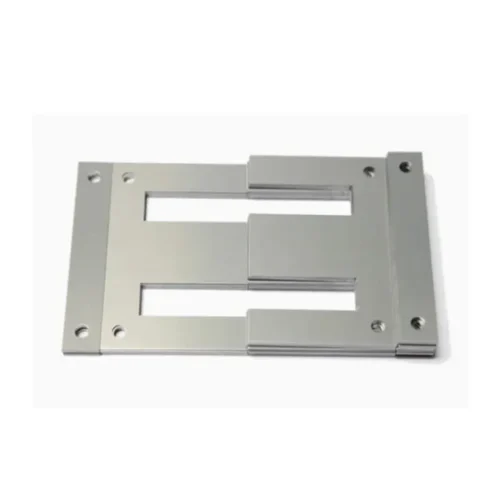
Give the grade, the thickness, the induction, and the duty temperature. Those four fields then set the aging margin. Add the storage condition when coils wait long before cutting. A silicon electrical steel sheet then ships with its test date printed. The rust note covers the storage side. That reply usually takes a day.
Related Reading
Our composition table lists the ceilings. The heat note sets the service limit. A hub page answers six basic questions.
Frequently Asked Questions
Yes, by a few percent over decades, and the pace depends on heat.
Carbon and nitrogen leaving solution, with aluminium in the second case.
The nitrogen clock, near 100 to 200 degrees, since it needs the least heat.
Only by a full anneal, which a finished core cannot take.
No, since it reports one test date and no trend.
- Email: vera.liang@ztwysteel.com
- Location: Xishan District, Wuxi, Jiangsu, China
- Supply range: CRGO and CRNGO 0.20–0.65 mm, four coating classes
- Slitting: 20–1,250 mm, ±0.05 mm, burr under 0.02 mm
- Documentation: MTC EN 10204 3.1 with grade, thickness and loss basis, 3.2 on request



 English