

Silicon Steel Price Factors: What Moves a Quote Line by Line
A silicon steel quote rarely moves because the metal itself became dearer. Instead six silicon steel price factors move together on the offer sheet. Grade sits at the top, while gauge follows. Then width and yield join in, after coating class, order size and trade terms.
Read those six lines in order, so distant per-tonne figures often land close. On the finished part, the gap may shrink to a few percent, because the six lines rarely move alone. This guide walks down that sheet, so every stop carries a number. Good offers usually hide the gap in the third line rather than the first.
What the Base Price Actually Covers
The base price is a mill price for a defined grade at a defined gauge, before slitting and freight. So a 4 percent coil gap becomes 12 percent at the press, because most buyers compare base prices alone.
Inside that figure, the alloy cost covers iron as well as the 0.5 to 3.2 percent silicon addition. Processing comes next, since casting, hot rolling, cold rolling and the anneal all sit here. The yield loss covers crop ends and edge trim. That usually runs 3 to 8 percent of the coil rather than a fixed figure.
Silicon Steel Price Factors: Grade and Loss Level
Grade is the single largest lever, because CRGO and CRNGO never trade in the same band. The different grades of silicon steel split into several families, while each family carries its own cost base.
The Gap Between CRGO and CRNGO
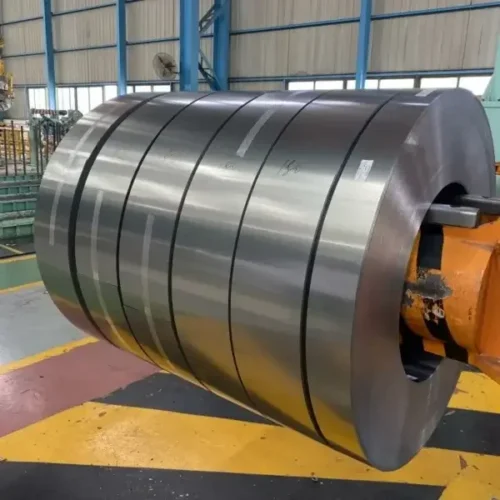
Grain oriented electrical steel trades at 1,700 to 2,400 USD per tonne FOB, since its process costs more. Non oriented electrical steel for motor stampings sits near 850 to 1,200 USD, whereas the gauge stays the same. The ratio lands close to two, because the process differs sharply. Grain oriented steel needs a sharp Goss texture and two cold rolling passes, while RGO needs one pass. It also needs a secondary recrystallization near 1,200 °C, so less prime coil comes back.
Where Hi-B Sits
Hi-B sits above regular grain oriented grade, because its loss at 1.7 T reaches roughly 0.85 W/kg. RGO shows 1.20 W/kg at the same field, so the gap in watts is wide. Fewer watts leave a thinner mill margin, so the premium is real. The no-load saving on a 300 MVA transformer often repays it, because the saving runs every hour. We quote our grain oriented electrical steel sheet for transformer cores against the loss figure rather than a name alone.
Thickness as a Price Multiplier
Gauge changes the price per tonne and the price per piece in opposite directions. So buyers misread this line most often.
0.23 mm vs 0.50 mm
In practice a 0.23 mm CRGO coil costs about twice as much per tonne as a 0.50 mm coil. Two extra rolling passes explain much of it, while more annealing time explains the rest.
Why Thin Gauge Costs Less per Piece
Now run the arithmetic per piece, using the silicon steel sheet weight calculation rather than a guess. Density stays fixed at 7.85 g/cm³, so one square metre weighs 3.925 kg at 0.50 mm. At 0.23 mm the same area weighs 1.806 kg. Therefore a tonne yields about 255 pieces at 0.50 mm and about 554 at 0.23 mm.
At 2,000 USD per tonne the 0.50 mm piece costs 7.85 USD. Meanwhile the 0.23 mm piece at 4,000 USD costs 7.22 USD. So thin gauge costs more per tonne but slightly less per piece. That result holds only when the design can use the lower loss, because extra strokes add cost. Otherwise thin gauge non oriented silicon steel needs more laminations, so it needs more stamping strokes.
Width, Slitting and Yield
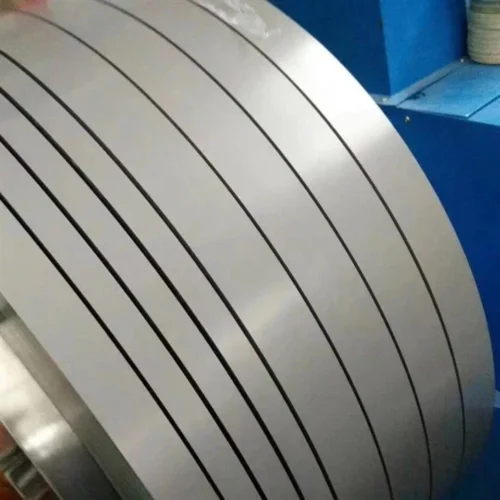
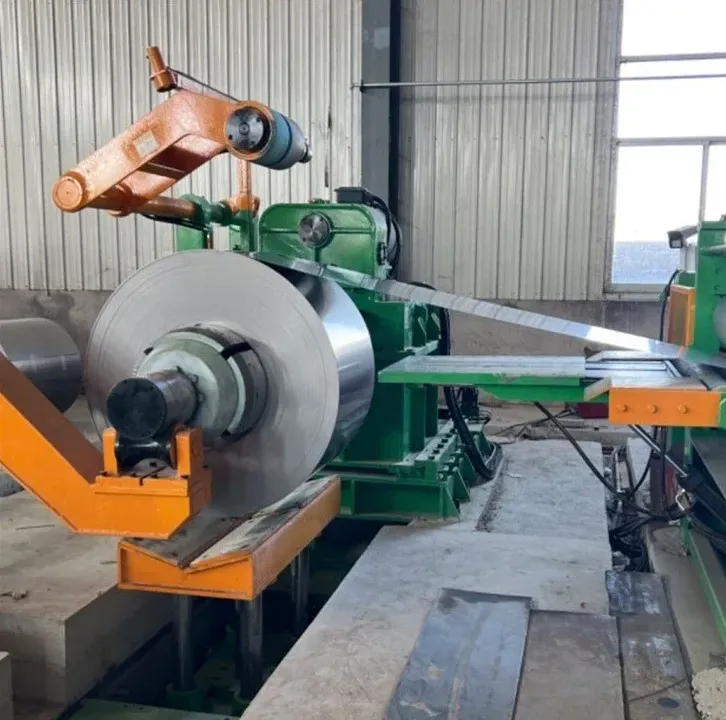
Width decides how much of the master coil reaches your press, while slitting adds little labour cost. Poor nesting still adds hidden cost that usually outweighs the saving.
How Coil Width Changes Unit Price
Take a 1,250 mm master coil with 5 mm trimmed from each edge, so usable width becomes 1,240 mm. A 980 mm part runs one strip and leaves 260 mm, so yield sits at 79 percent. Next a 600 mm part runs two strips and leaves 40 mm, for 97 percent. Then a 410 mm part runs three strips and leaves 10 mm, for 99 percent.
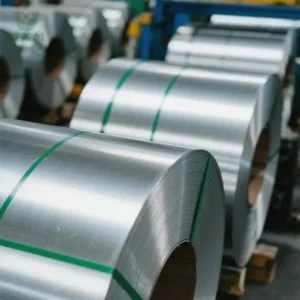
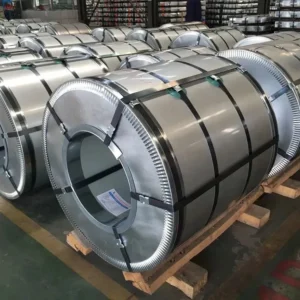
In practice the 980 mm order pays for metal it never receives. That gap usually outweighs any discount on the base price, because the loss repeats on every coil. Cut to size sheets carry this arithmetic in the quotation itself, so the yield figure stays visible before the order. Most of this work starts from CRGO silicon steel coils slit to your width, unless the mill ships cut lengths.
Coating Class and Surface Treatment
Coating adds a thin film, usually 0.003 to 0.006 mm per side, so the price step between classes stays modest. C5 and C6 inorganic coatings normally sit within a few percent of each other. A semi-organic coating for heavy stamping carries a higher step, because the added resin raises the film cost. The resin also raises the curing cost, so the step grows. Damage during handling costs far more than the coating upgrade, because a scratched film exposes bare metal. Rust follows within weeks in a humid container, so the cheap class rarely pays. That is why silicon steel sheets need insulation rated for the actual press rather than the cheapest class. The cheapest class may not survive it, so the saving turns into scrap.
Order Size, Lead Time and Mill Schedule
Volume moves price in a step pattern rather than a smooth line. A 25 tonne order matches a mill’s standard coil weight, so it avoids a setup charge. By contrast a 5 tonne order carries a 5 to 10 percent premium, because the mill runs the same sequence. So the small lot pays for the setup that the big lot spreads across 25 tonnes.
Lead time works the same way, since stock in a Wuxi warehouse ships in days. A fresh mill run takes 30 to 60 days, because the schedule follows the mill’s campaign. Small trial lots obey the electrical steel coil MOQ rules, so the premium may not pay.
Currency, Freight and Trade Terms
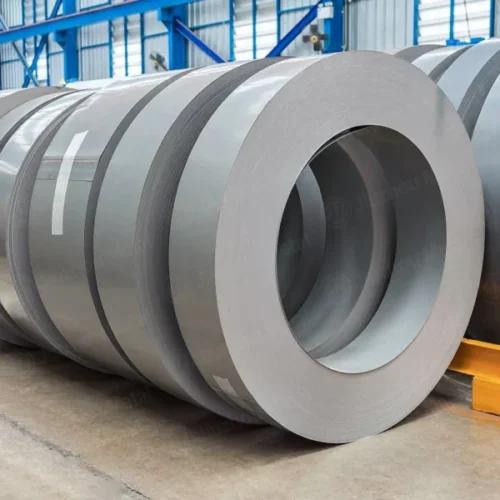
Three items sit outside the mill price yet still reach your landed cost. The currency clause matters, because most Asian offers are in US dollars. A 3 percent rate move erases a thin margin, so the clause decides more than the price. Freight from Shanghai to Rotterdam takes 30 to 35 days, so plan the buffer. Meanwhile a 20 ft container holds 25 to 28 tonnes. Terms decide who carries that risk, so FOB and CIF quotes on the same coil are not comparable.
Silicon Steel Price Factors: How to Compare Two Quotes
Put both offers on one sheet with six columns. Grade, gauge, width and yield come first, while coating, quantity and terms follow. Then convert everything to cost per finished piece, because that figure decides the order. Check the certificate and the coil label against the mill heat number. A cheap offer sometimes carries a different grade, since the label and the paper must agree. The label may say one grade while the certificate says another, so the paperwork settles it. Therefore the silicon steel standards list should settle that question.
Our silicon steel sheets page lists the gauges we hold in stock. So you can price a trial before committing to a full coil. Most buyers also ask about electrical steel quotation speed before they send a drawing. The reply time decides the shortlist, so it shapes the comparison.
What We Do Not Do
We do not quote a grade we cannot document, nor do we promise a mill schedule we cannot confirm. We do not relabel a coil or issue a certificate for a heat number we did not receive. The label and the certificate must match, since a mismatch voids the traceability. Every coil keeps its mill label, while stock sits in Wuxi with Jiangsu Zhongtong Weiye Special Steel Co., Ltd.
FAQ
Not always, because silicon above 3.2 percent raises resistivity yet also makes the strip brittle. A 6.5 percent grade needs a CVD line or rapid solidification. So it costs 3 to 5 times the 3 percent grade.
Check the loss guarantee first. A 0.50 mm coil at 4.70 W/kg differs from one at 5.80 W/kg. So a 20 percent loss gap explains most of the price gap.
Slitting itself adds little, while the wide part is the yield. A 980 mm strip from a 1,250 mm coil returns 79 percent. So you pay for 21 percent of metal you cannot use.
Usually 5 to 10 percent, because the mill avoids a run setup below one full coil. Below one full coil the premium grows faster than the volume falls, so small orders lose twice.
Two weeks, since alloy surcharges and exchange rates move faster than most buyers expect.
Request a Quotation
Send your coil weight, width, destination port and packing preference, so we can confirm the container plan and the protection level before we quote. Packing enquiries are answered within one working day, and quotes stay valid for two weeks. Write to vera.liang@ztwysteel.com.
- Email: vera.liang@ztwysteel.com
- Location: Xishan District, Wuxi, Jiangsu, China
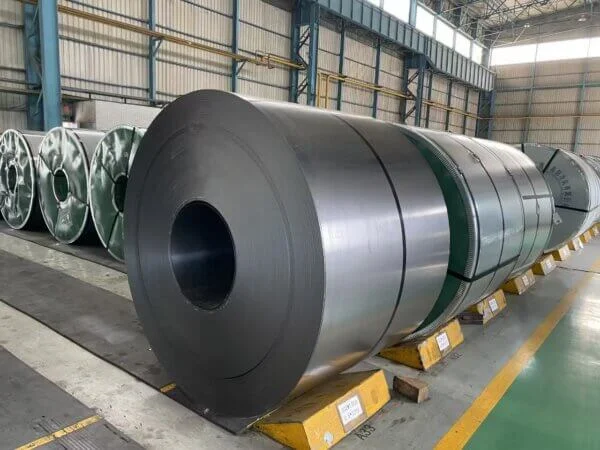
- Packing: eye-to-sky horizontal coils, VCI film, desiccant, steel strapping
- Container load: 20 ft 25–28 t, 40 ft 25–27 t
- Marking: mill label, heat number and gross weight on every coil
- Documentation: MTC EN 10204 3.1, packing list, loading photos
- Response time: packing enquiries answered within one working day, quotes valid two weeks



 English