

Cut to Size Sheets: Where the Yield Rate Decides Your Price
Two orders ask for the same tonnage and receive prices eighteen percent apart, since width decides what leaves the coil. Cut to size sheets are sold by the piece, so yield rate carries the cost. Jiangsu Zhongtong Weiye Special Steel Co., Ltd. works that arithmetic below, using silicon steel sheets in coil and sheet form as the example.
Cut to Size Sheets in Brief
A cut sheet order answers three questions: width, length, and packing. Width decides yield, while length decides piece count, and packing decides damage. Hence a buyer should check yield before comparing tonnage prices. The custom size silicon steel coils and sheets page covers the width side.
Three Cutting Routes for Cut to Size Sheets
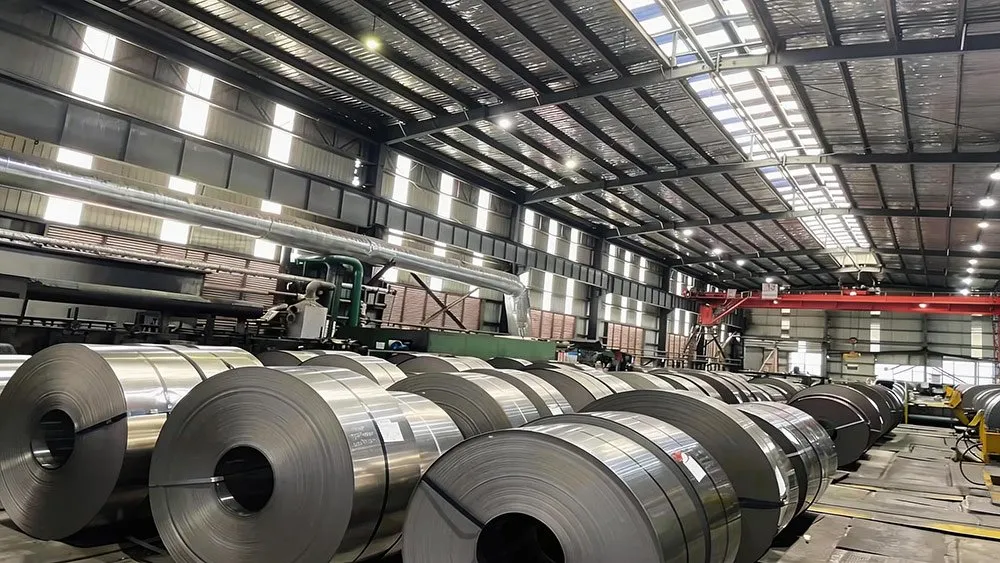
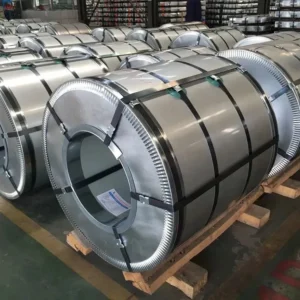
Three operations turn a coil into usable stock, although each stops at a different point. The first stays with us, the second runs on a partner line, and the third belongs to a press shop.
Slitting Yields Narrow Coils
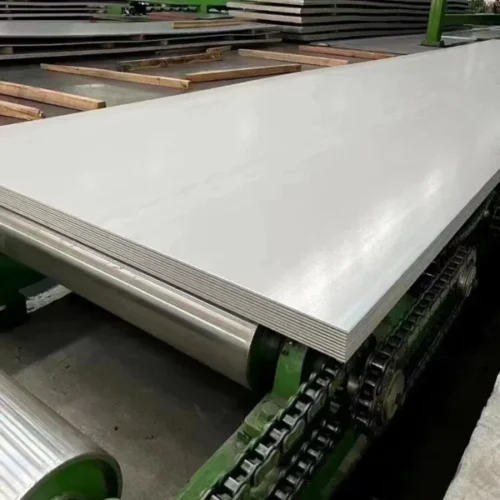
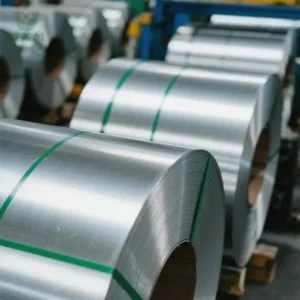
Slitting cuts the coil lengthwise, so it yields narrower coils rather than flat pieces. We run that step in house, from 20 to 1,250 mm and within plus or minus 0.05 mm. Hence a slitter serves a rewinder, rather than a stacker.
Cut to Length Yields Flat Sheets
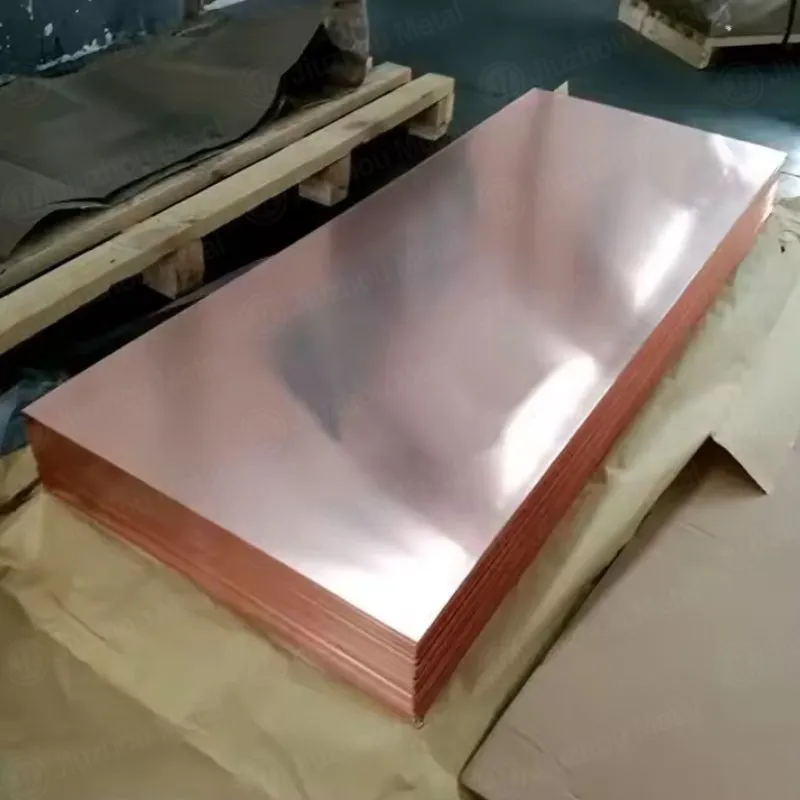
Cut to length runs a coil through a line, which shears it into flat sheets. That line sets the length, so piece count follows the coil length. Hence this route suits a fixed panel size, and it suits a hand-fed press.
Blanking Belongs to a Press
Blanking punches a shape, which belongs to a press rather than a shear. Hence a shaped part changes the supplier, while the first two routes stay in a service centre. A custom stamped laminations page covers that third route.
How Yield Rate Works on a 1,250 mm Coil
A 1,250 mm master coil carries a fixed width, so a requested width divides into it in whole strips. Three requests show how far that spread reaches.
980 mm Returns 79 Percent
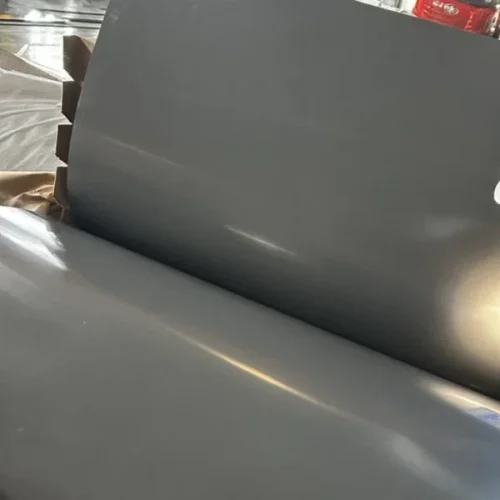
Ask for 980 mm and one strip leaves, since 270 mm stays over. Yield then runs near 79 percent, which wastes a fifth of the coil.
600 mm Returns 97 Percent
Ask for 600 mm and two strips leave, since only 40 mm stays over. Yield then runs near 97 percent, as the silicon steel sheet types page shows.
410 mm Returns 99 Percent
Ask for 410 mm and three strips leave, since 10 mm stays over. Yield then runs near 99 percent. Hence one coil pays very differently, and that gap becomes the price.
Trim Allowance and the Usable Width
A slitter trims both edges before it splits the coil, so the usable width runs below the nominal one. Five millimetres per side leaves about 1,240 mm on a 1,250 mm coil. That trim changes a yield figure, since 980 mm then returns near 79 percent. Hence the trim belongs in the yield sum, rather than beside it.
Length Tolerance and Piece Count
Length converts a coil into pieces, while the tail becomes another cost. A five tonne coil at 1,250 mm and 0.50 mm runs about 1,019 metres. Cut at 1,000 mm, that yields near 1,019 pieces, with nothing left over. Cut at 800 mm, the count rises near 1,274 pieces, although a short tail remains. The silicon steel sheet weight calculation page covers the mass. Hence a length that divides the coil cleanly saves a scrap piece.
Sheet Tolerance: Four Numbers, Four Sources
Four tolerances matter on a flat sheet, and each has a different source. A buyer who checks two of them leaves two open.
Width Within 0.05 mm
Width follows the slitter, so it runs within plus or minus 0.05 mm. That figure holds on every strip in a set, since one blade sets them all. Hence width is the tightest number on a cut sheet.
Length Within 1 to 2 mm
Length follows the shear, so it runs within a millimetre or two. A stop gauge sets that figure, and a worn gauge widens it. Hence length costs less precision than width.
Squareness by a Diagonal Check
Squareness follows both cuts, so a diagonal check catches a skew. Two diagonals that differ by a millimetre point to a misaligned gauge. Hence a square stack needs that check, rather than a ruler.
Burr Under 0.02 mm
Burr follows the blade, so it stays under 0.02 mm on a sharp tool. A dull blade raises it, which then bridges the coating. The silicon steel burr limit page covers that ceiling.
Packing a Cut to Size Sheet Order
Packing decides whether a sheet arrives flat, so three habits matter. A crate holds sheets flat, because a stack on edge dents the lower pieces. Paper between sheets stops abrasion in transit. A desiccant box holds humidity down, since a sea container sweats. Hence packing costs money and saves more, while the silicon steel rust causes and prevention page covers humidity.
What Costs More Than the Steel
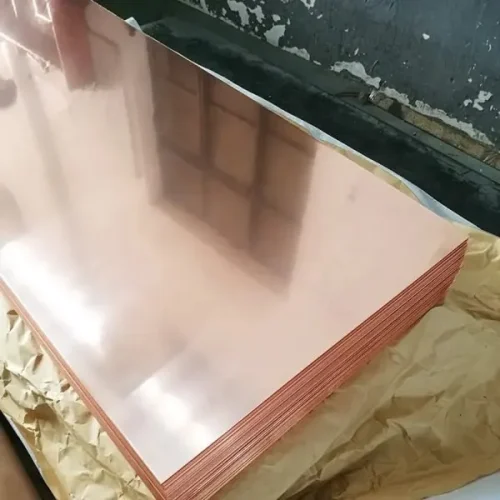
Three charges sit on top of the metal, and each surprises a first buyer. Cutting adds a line charge, because a shear runs slower than a slitter. Packing adds a crate and labour, since a flat crate is bulky. Handling adds a crane move per bundle, because sheets cannot be coiled. The electrical steel coil MOQ page covers the minimum.
What Goes Wrong
One buyer compares two tonnage quotes without a yield check, then wonders why invoices differ. Another orders 980 mm from a 1,250 mm coil, so a fifth of the metal becomes scrap. A third accepts sheets on edge, so the bottom layer arrives dented. Those three errors arrive monthly, and the first one costs the most.
What We Do Not Do
We do not melt or roll steel. We do not blank a shape here, because that step belongs to a press. Nor do we quote a piece price without a packing method.
Those limits keep the answer honest, and they keep a yield figure useful.
Request a Quotation
Send the width, the length, the gauge, and the packing. Those four fields then price a piece, and a fifth field sets the tolerance class. Add the diagonal callout, because a tight one costs a second pass. We answer a size list within one working day, and a quotation stays valid for two weeks. The electrical steel quotation speed page covers that clock.
A grain oriented electrical steel sheet for transformer cores covers an oriented duty. A CRGO silicon steel coil for slitting covers a winder, since both routes start from a master coil.
Related Reading
The grain oriented steel coil guide covers the input side. A silicon steel weight check page catches a mass error. A silicon steel hub page answers six basic questions.
Frequently Asked Questions
Requested width divided into 1,240 mm usable width, then rounded down to whole strips.
Because 980 mm returns 79 percent and 600 mm returns 97 percent, a gap of 18 points.
Plus or minus 0.05 mm, since one slitter blade sets every strip.
One to two millimetres, because a stop gauge sets the shear.
Flat in a crate, with paper between sheets and a desiccant box inside.
One crate, which usually runs near 500 kg, so a size list sets the exact figure.
No, since a blank needs a press rather than a shear line.
- Email: vera.liang@ztwysteel.com
- Location: Xishan District, Wuxi, Jiangsu, China
- Supply range: CRGO and CRNGO 0.20–0.65 mm, four coating classes
- Slitting: 20–1,250 mm, ±0.05 mm, burr under 0.02 mm
- Documentation: MTC EN 10204 3.1 with grade, thickness and loss basis, 3.2 on request
- Response time: size lists answered within one working day, quotes valid two weeks



 English