
GB Silicon Steel Standard: How to Read a Chinese Grade Before You Order
GB silicon steel standard orders rest on GB/T 2521. That document decides everything from the grade code to the test method. Most overseas buyers meet the standard through a mill certificate rather than through the text. That gap causes two errors, namely a misread loss basis and a missing suffix. Both errors cost money, because a wrong basis changes the loss figure by a factor of three.
This guide reads the code field by field, then sets it against EN and ASTM. It closes with the three checks that belong before any order.
What the GB Silicon Steel Standard Covers
GB/T 2521 covers cold rolled electrical steel strip in both grain oriented and non-oriented families. It fixes the grade designation, the thickness tolerance, the loss limits and the delivery condition. The 2016 edition split into parts, so a quotation should name the part as well as the year.
Two companion standards complete the package, because a grade alone does not settle an inspection. GB/T 3655 governs the magnetic test, while GB/T 708 governs dimensions and shape. The same split appears in the silicon steel standards summary for other systems. Buyers who quote only the grade often argue about a test method later.
GB Silicon Steel Grade Codes: Four Fields
A GB grade reads left to right, and four fields carry the meaning. Take 50W470 apart, since that code covers most non-oriented orders.
Thickness Field
The first two digits state the nominal thickness in hundredths of a millimetre. So 50 means 0.50 mm and 35 means 0.35 mm. The tolerance runs plus or minus 5 percent, so 0.50 mm allows 0.025 mm either way. Weight follows directly, since 0.50 mm weighs 3.925 kg per square metre.
Type Letter
The letter states the family, so W marks non-oriented stock and Q marks grain oriented stock. A letter pair appears on oriented grades, because QG marks high permeability and QR marks regular grain oriented. A buyer who ignores the letter compares two different products. That rule holds for non oriented electrical steel and for oriented stock alike.
Loss Field
Finally, the trailing digits state the loss figure multiplied by 100, so 470 reads as 4.70 W/kg. The basis sits in the standard rather than in the code, so 50W470 measures at 1.5 T and 50 Hz. This field carries the most commercial weight, because every core design starts from it. The silicon steel grades note walks through the same fields on a European code.
Suffix Field
A suffix letter marks a special condition, so A often marks a particular coating or surface finish. The same base grade can carry different suffixes, so each one changes the delivery condition. Ask for the suffix in writing, since a missing suffix reverts to the default. Read the 50W470 grade meaning note for the worked example.
GB 50W470 Against EN and ASTM
Three systems describe the same metal in different orders, and that difference trips up most comparisons. ISO and IEC wording sits between the two.
The Reverse Order Trap
EN puts the loss first and the thickness last, so M470-50A matches GB 50W470. The numbers agree while the order reverses, so a direct character match fails. Read the fields rather than the string, because the two codes describe one product.
Basis Difference
GB grades below the oriented family measure at 1.5 T, while many oriented grades measure at 1.7 T. ASTM A677 and A876 follow their own tables, so a figure cannot cross systems without a basis note. A 4.70 figure at 1.5 T and the same figure at 1.7 T describe different metals. Flux enters the loss equation, so the basis decides the metal.
What a GB Order Delivers
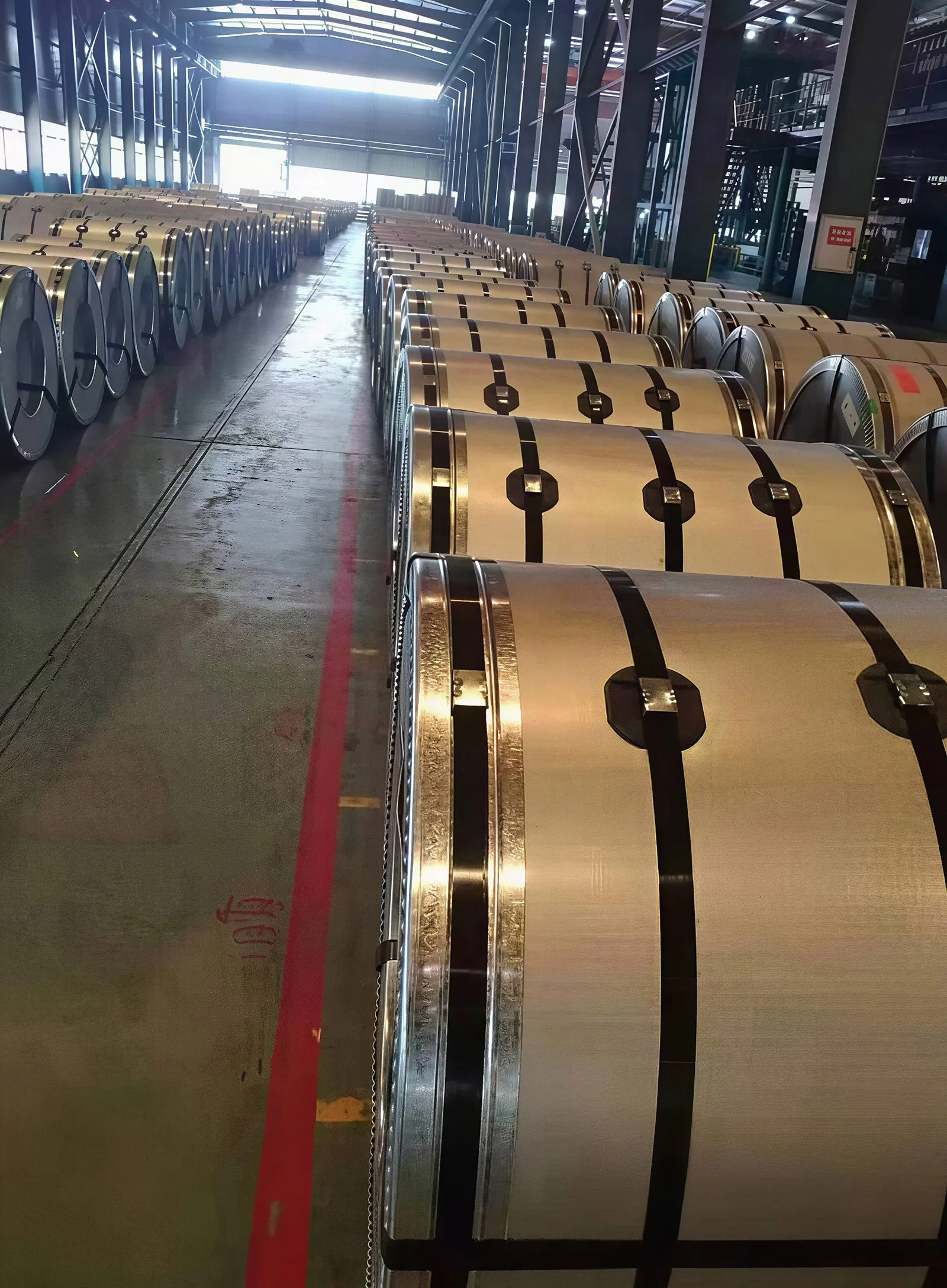
A GB order delivers a defined physical state, and that state belongs in the contract. Four items settle it, so write each one down.
Annealed and Coated
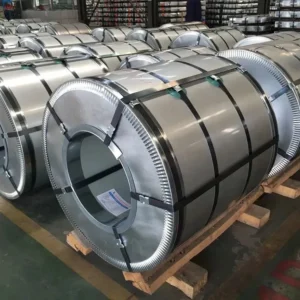
The strip arrives fully annealed and coated, since the mill finishes the magnetic property before it ships. Coating class follows the suffix or the purchase note, because the standard allows several films. A buyer who needs a stamping-friendly film should say so, since the default may suit lamination rather than pressing.
Test Method
GB/T 3655 sets the Epstein frame method, and that method matches IEC 60404-2 in principle. Sample size and stress state therefore follow a single pattern, so a Chinese certificate compares with a European one. Ask for the test standard on the certificate, because a house method reads differently. Run the same magnetic test items at your own lab before you accept a lot.
Certificate
A mill certificate states the heat number, the grade, the loss figure and the mechanical values. The chemical composition table shows the silicon and carbon limits behind each family. EN 10204 3.1 suits most orders, since a third party witness the test. A 3.2 certificate adds an independent inspector, and that route suits safety-critical cores.
Three Checks Before You Order
Three checks catch most mistakes, and each takes one question. Run them before you accept a quotation.
First, confirm the loss basis, since 1.5 T and 1.7 T differ by a wide margin. Second, confirm the suffix, because a default coating may not suit your press. Third, confirm the standard year, since the 2016 edition split into parts. Ask for free samples before you fix a supplier, because a 20 kg strip settles the coating question.
GB Silicon Steel Standard: A Conversion Table
The table pairs common codes across three systems, so a buyer can read a Chinese offer against a European drawing.
| GB code | EN code | Loss basis |
|---|---|---|
| 50W470 | M470-50A | 4.70 W/kg at 1.5 T |
| 50W800 | M800-50A | 8.00 W/kg at 1.5 T |
| 35W440 | M440-35A | 4.40 W/kg at 1.5 T |
| 30Q120 | — | 1.20 W/kg at 1.7 T |
| 27QG120 | — | 1.20 W/kg at 1.7 T |
The oriented rows suit a grain oriented electrical steel sheet order, since the basis moves to 1.7 T.
Use the silicon steel grade conversion note when a code falls outside the table. The mapping follows the fields rather than a list, so four steps settle any code. A 0.50 mm sheet weighs 3.925 kg per square metre. So a 5 t coil runs about 1,274 m at 1,000 mm width. Check the silicon steel sheet weight calculation before you size the order.
What We Do Not Do
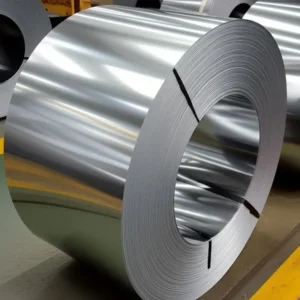
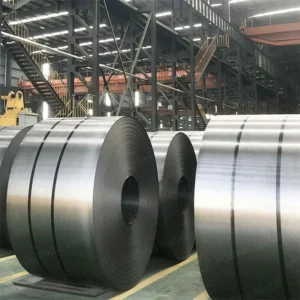
We do not translate a GB code into an EN code without stating the basis. Nor do we issue a certificate that drops the suffix. Nor do we ship a coil with a grade label that differs from the heat record. We hold CRGO silicon steel coils and non-oriented stock on one floor, so a mixed lot never ships. Silicon steel sheets leave Wuxi with the mill label intact, at Jiangsu Zhongtong Weiye Special Steel Co., Ltd.
FAQ
No, because each standard carries its own tables and tolerances. The grade fields map across, while the limits differ. Always quote both the standard and the basis.
Yes on the fields, since both state 0.50 mm and 4.70 W/kg at 1.5 T. The order reverses rather than the meaning, so read each field in turn.
Part 1 covers non-oriented strip, while part 2 covers grain oriented strip. The 2016 edition made that split, so a quotation should name the part.
Yes, because the certificate route sits outside the grade standard. A 3.2 certificate adds an independent inspector, and that step costs extra.
Check the basis first, since 1.5 T and 1.7 T read far apart. A figure of 4.70 at 1.5 T does not compare with 1.20 at 1.7 T, because the flux differs.
Request a Quotation
Send the grade code, the standard year and the coating you need. Then we can confirm the basis and the delivery condition. Standard questions are answered within one working day, while quotes stay valid for two weeks. Write to vera.liang@ztwysteel.com.
- Email: vera.liang@ztwysteel.com
- Location: Xishan District, Wuxi, Jiangsu, China
- Standard range: GB/T 2521 part 1 and part 2, with EN and ASTM equivalents
- Checks: loss basis, suffix letter and standard year
- Documentation: MTC EN 10204 3.1 or 3.2, heat number, test standard
- Response time: standard questions answered within one working day, quotes valid two weeks



 English