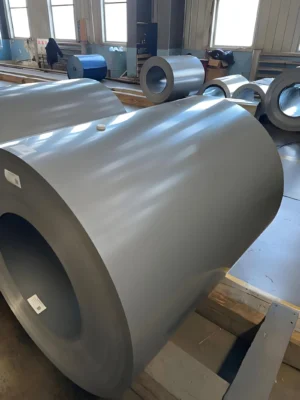
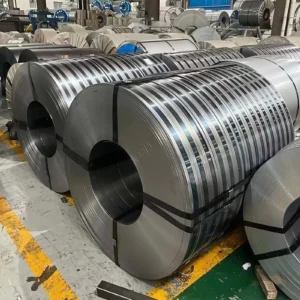
Is Inconel 725 coil and strip suitable for oil and gas applications?
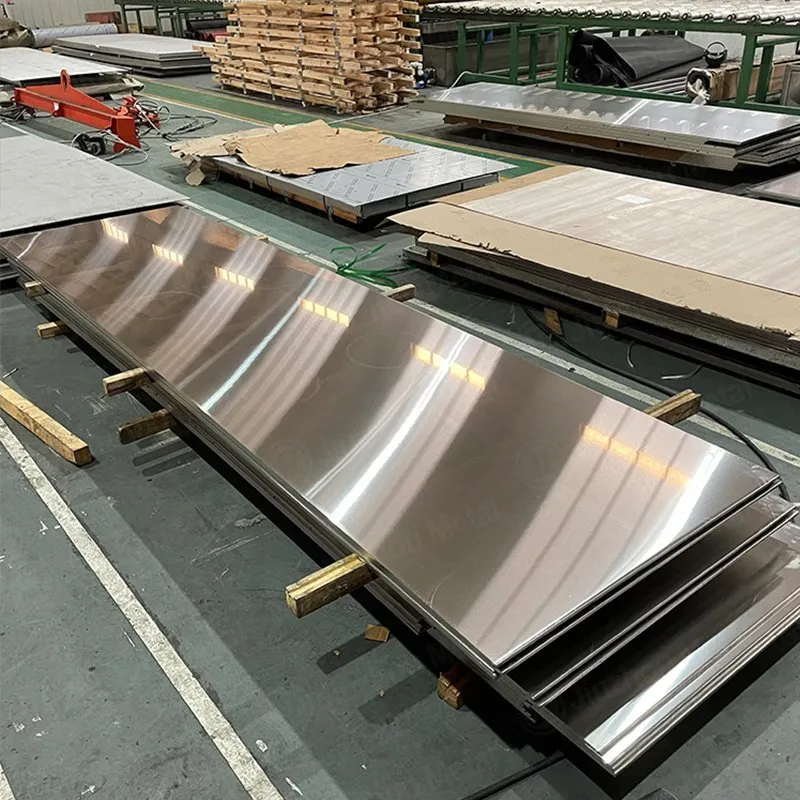
Yes, but only for thin parts, since Inconel 725 coil cannot carry a pressure wall. The alloy suits sour service. The 0.5 to 3 mm gauge limits it to seal rings, clamps, and small trim. Jiangsu Zhongtong Weiye Special Steel Co., Ltd. supplies 725 coil and strip, and it tells buyers when a part needs bar instead.
The Short Answer
The alloy fits oil and gas, and the form fits thin work. A seal ring, a gasket ring, or a clamp works well in 725 coil. A valve body, a hanger, or a connector needs bar or a forging, since that part carries full pressure. Hence the question splits into alloy and form.
What the Alloy Brings
725 reaches above 700 MPa yield after ageing, and it carries 7 to 9.5% molybdenum for chlorides. The chemistry meets NACE MR0175, so a sour gas specification can name it. Therefore, the alloy side of the question is settled, and only the form remains.
What the Form Cannot Do
A 2 mm strip holds a gasket load, yet it cannot hold a wellbore pressure. That wall would need a section far beyond the gauge. Pressure bodies are machined from bar, and they gain thickness in three directions. Coil also cannot supply a 100 mm block, because no mill rolls that section as strip. Hence a designer picks the form first.
Part One — Seal Rings
A seal ring sits in a groove and holds a preload against a mating face. It therefore needs strength plus chloride resistance. 725 rings serve that duty, since the aged alloy resists relaxation better than 625. A ring is stamped or machined from strip, then aged, then lapped. Hence the ring is the most common 725 coil part.
Part Two — Gasket and Retainer Rings
A gasket retainer holds a soft seal in place, and it sees the produced fluid at the edge. 725 retains its shape there, because ageing keeps the yield high at 150 °C. A retainer also survives a make-up cycle, since the alloy resists galling better than a softer grade. Therefore, a compact flange joint often uses 725 rings.
Part Three — Clamps and Brackets
A subsea clamp holds a line against vibration, and it sits in seawater for decades. 725 resists that seawater, and it keeps a bolt preload through thermal cycling. A bracket also needs stiffness, so a 3 mm strip bent into a channel works. Hence thin structural parts are a real market for this coil.
Part Four — Small Valve Trim
A trim retainer, a seat backup ring, or a stem bushing uses 725 strip where the section stays small. A choke trim of larger section needs bar, since the flow path erodes a thin edge fast. Therefore, the trim decision follows the erosion rate, not the alloy name.
The Ageing Sequence
A 725 part ages after forming, since cold work before ageing would distort the shape. The cycle runs near 720 °C for eight hours, then cools to 620 °C for another eight. A stamped ring therefore needs a fixture to hold its roundness through that cycle. Hence the heat treat belongs in the process plan, not at the end.
The Welding Question
A welded 725 strip takes a 625-type filler, and the joint ages with the part. Low heat input matters, since a thin strip warps easily under a wide bead. A seam that never ages stays soft, so the procedure must include the full cycle. Therefore, a welded assembly should be designed for post-weld ageing.
Where Coil Falls Short
Hydrochloric streams defeat 725 at any gauge, since 8% molybdenum is not enough. Service at 600 °C also defeats it, because the ageing fades near that heat. A high-velocity sand stream erodes a thin strip quickly, so that duty needs bar. Those three limits keep the coil in its lane.
The Certificate and the Condition
Each 725 coil carries an EN 10204 3.1 certificate with the UNS N07725 number, the heat, and the condition. A buyer should check whether the coil is annealed or aged, since the two behave differently in forming. Hence the condition line decides the process route.
Coil Size and Packing
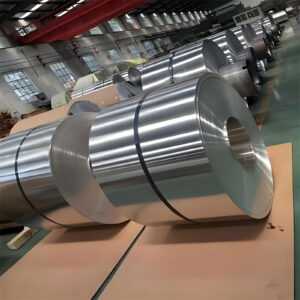
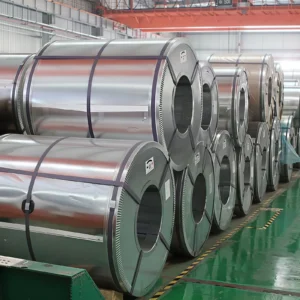
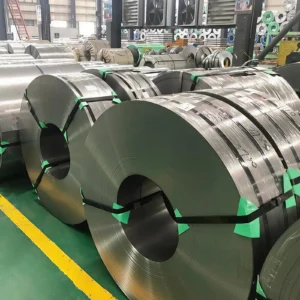
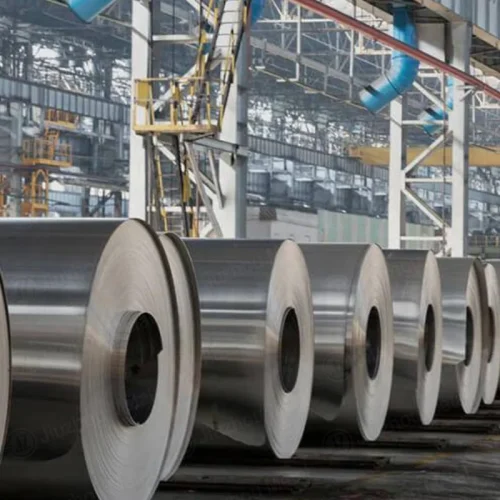
Coil runs 0.5 to 3 mm thick and up to 1,250 mm wide, and it weighs 3 to 5 t. A narrow strip slits to 20 mm for a small stamped part. Packing uses a skid with edge protectors, since a bent edge ruins a stamped ring. Therefore, specify the width and the edge quality together.
Cost Against Bar
A coil part wastes less material than a machined bar part, since a stamping nests on a strip. A ring stamped from 2 mm strip uses far less metal than a ring cut from a 40 mm bar. Hence a thin part often costs less in coil, even at a higher price per tonne.
Where Buyers Get It Wrong
A buyer orders coil for a valve body and finds no mill will roll that section. Another stamps a ring and skips the age, so the ring relaxes in service. A third welds a strip without a fixture and finds the seam warped after ageing. Those three errors cover most of our returns.
What We Do Not Do
We do not roll, age, or machine 725. We do not stamp a ring, and we do not weld a strip. Nor do we sell coil for a pressure body, since that part needs bar.
Those limits keep the advice honest.
Specify Your Order
First, name the part and its section. Second, state annealed or aged. Then give the thickness, the width, and the edge, so the coil matches the stamping.
Inconel 725 coil and strip covers seal rings and clamps. For a pressure body, Inconel 625 plate and sheet covers solid-solution work. For bolts and springs, Inconel X-750 bar fits.
Related Reading
Grade naming systems read best in the silicon steel grade note, since both explain how a spec is encoded. Cut-length practice appears in the cut-to-size note.
Frequently Asked Questions
Can 725 coil make a valve body? No, since a pressure body needs bar or a forging.
Does 725 coil meet NACE MR0175? The alloy does, and the certificate names the UNS number.
When should the part be aged? After forming, since cold work before ageing distorts it.
Which filler suits a 725 strip weld? A 625-type filler, aged with the part afterwards.
What width can you slit? From 20 mm to 1,250 mm, at ±0.05 mm.
- Email: vera.liang@ztwysteel.com
- Location: Xishan District, Wuxi, Jiangsu, China
- Supply range: 725 coil 0.5–3 mm × up to 1,250 mm, strip 20–1,250 mm
- Slitting: width ±0.05 mm, burr under 0.02 mm
- Documentation: MTC EN 10204 3.1 with UNS N07725, 3.2 on request