

23Q110 CRGO Silicon Steel: Properties
23Q110 is a 0.23 mm thick, conventional-grade grain-oriented electrical steel used in transformer and reactor cores where the no-load loss budget is moderate and the core is built from thin laminations. This page explains how the grade code reads, what its loss and induction band means on a certificate, which thickness and width tolerances apply, and how the material is supplied in slit coils or cut sheets. It sits within the wider grain-oriented electrical steel family.
What 23Q110 Means in the Grade Code
Under the GB/T 2521.2 naming convention, the code breaks into three parts:
- 23is the nominal thickness in hundredths of a millimetre, so 23 means 0.23 mm.
- Qmarks a conventional grain-oriented grade. A QG prefix would indicate a high-magnetic-polarisation grade, and a QH prefix a domain-refined grade; 23Q110 is neither.
- 110is the maximum specific total loss at 1.7 T and 50 Hz, P1.7/50, in hundredths of a watt per kilogram, so 110 means a loss ceiling of 1.10 W/kg.
A useful way to read the same logic across standards: the same 0.23 mm, 1.10 W/kg band corresponds to IEC designation M110-23S5, and Baowu lists its equivalent conventional product as B23G110. The full orientation grade lineup shows how this grade sits next to thicker and lower-loss bands.
Typical Magnetic Performance
The guaranteed magnetic figures are set out in the grade table and printed on the mill certificate for the delivered lot; typical directions for 23Q110 are:
- Core loss P1.7/50:no more than 1.10 W/kg at 1.7 T, 50 Hz.
- Conventional density:65 kg/dm³, the value used for stacking factor and loss calculations.
- Magnetic polarisation:23Q110 is a conventional grade with relatively modest induction; the minimum B8 figure has to be read from the certificate rather than assumed from the thin gauge alone.
Because the Q prefix is conventional rather than high-induction, this grade should not be specified against a Hi-B loss or induction target. What P17/50 means as the key transformer indicator explains how the loss number and the induction figure are read together before a grade is accepted.
Thickness and Width Tolerances
For the 0.23 mm gauge, GB/T 2521.2 sets the geometric limits as follows:
| Item | Limit for 0.23 mm gauge |
| Nominal thickness deviation | ±0.020 mm |
| Longitudinal thickness deviation | +0.025 / 0 mm over a 2000 mm length or one sheet |
| Transverse thickness deviation | +0.015 / 0 mm |
| Coil width | Generally up to 1050 mm |
When strip is supplied to a final slit width, the width tolerance follows the standard’s slit-strip table rather than the producer-range tolerance. Thickness tolerance and flatness standards for transformer steel covers how these tolerances affect core stacking and lamination fit.
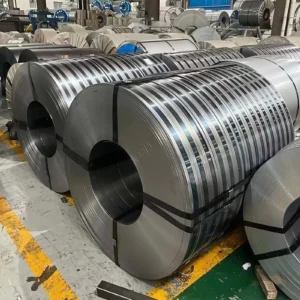
Slitting and Coil Supply for the 0.23 mm Gauge
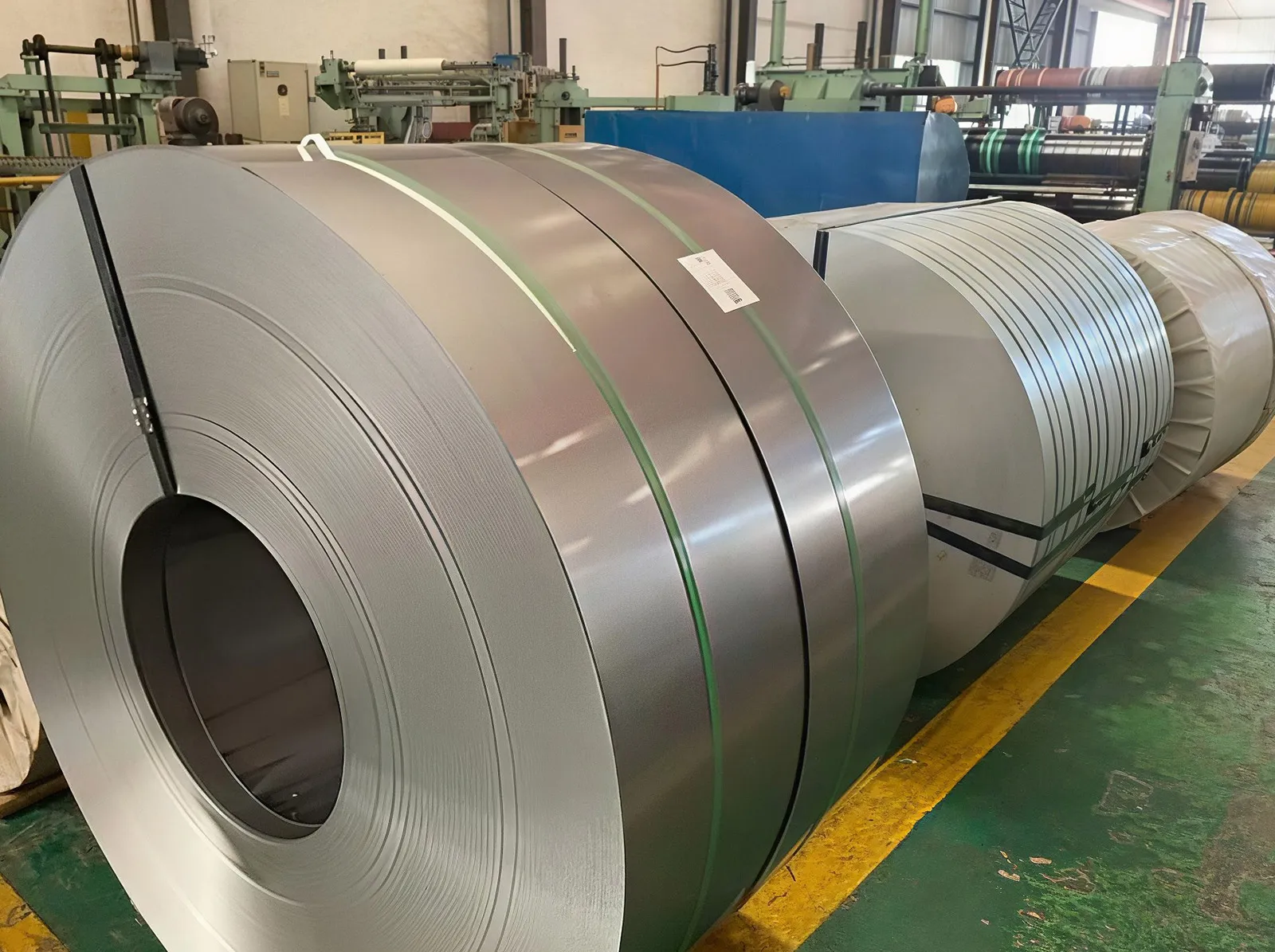
0.23 mm is one of the thinnest regular gauges in oriented steel, and slitting it needs tighter control than thicker strip. The main supply options are:
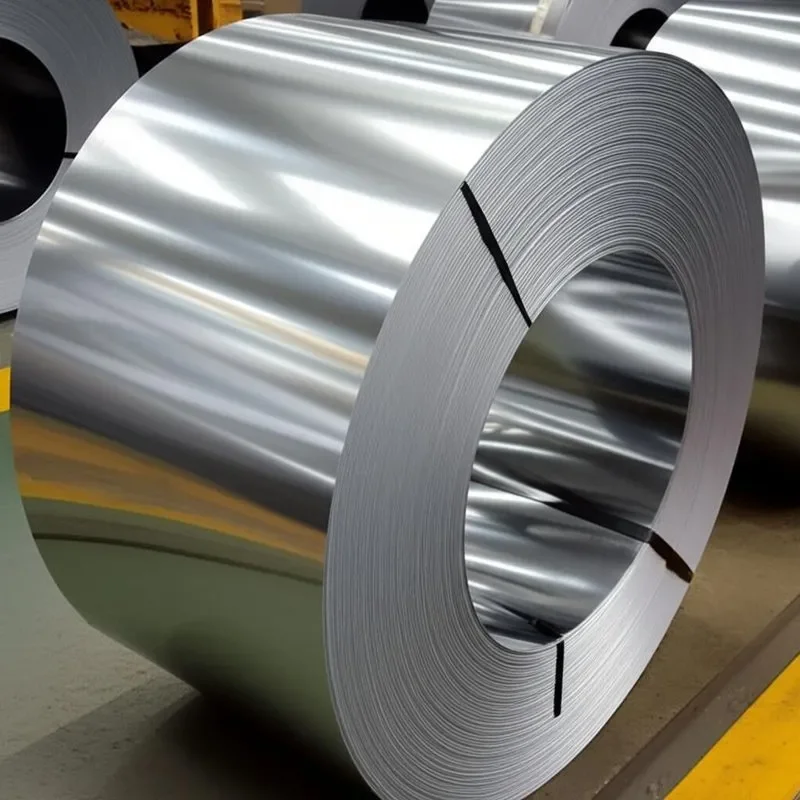
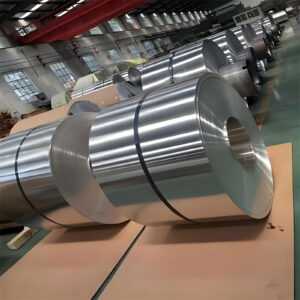
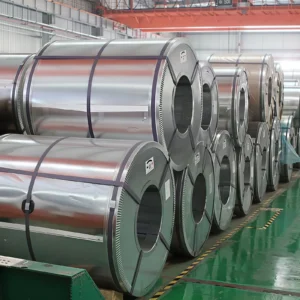
- Full-width coils, supplied to the mill producer width within the standard range.
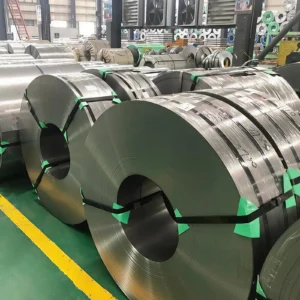
- Slit coils, cut to the customer’s core strip width along the rolling direction. Keeping the grain orientation aligned with the strip length matters because the material carries flux only in the rolling direction.
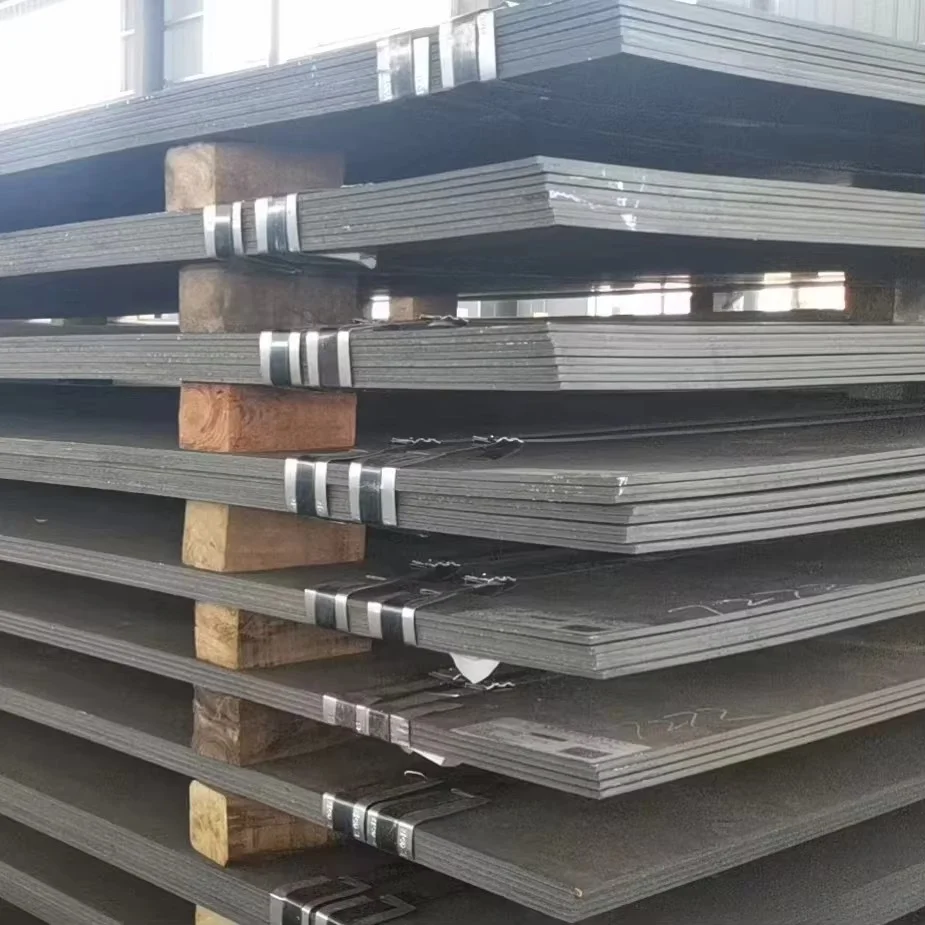
- Cut sheets or laminations, processed to shape for a specific core design, subject to the available tooling and order size.
On a thin gauge, slitting has to control burr and edge wave so that the lamination stacks cleanly; excessive burr lowers the stacking factor and can short adjacent sheets. The actual minimum slit width, coil inner diameter and delivered coil weight depend on the gauge, the requested strip width and the processing line, and are confirmed per order on the quotation and mill certificate rather than held as a universal fixed value.
Where 23Q110 Is Used
The standard lists the conventional 0.23 mm grade for large and small transformers, distribution transformers, reactors and magnetic amplifiers, small power transformers, instrument transformers, traction transformers and special transformers, as well as large generators. The thin gauge helps keep eddy-current loss down in cores that run continuously; the conventional induction band suits designs where a high B8 is not the binding requirement.
How 23Q110 Sits Against Other Gauges and Grades
Within 0.23 mm material, moving to a QG or QH band lowers loss and raises induction, but at a higher material level. Comparing gauges across the lineup, 0.23 mm trades some stacking factor and stiffness for lower eddy-current loss than 0.27 mm or 0.30 mm material. Choosing transformer steel between 0.23, 0.27 and 0.30 mm walks through that gauge trade on the basis of loss, core window and stacking.
For a ready reference of the supplied material, the silicon electrical steel sheet product range lists the regular oriented and non-oriented gauges kept in stock.
FAQ
Is 23Q110 a high-induction Hi-B grade? No. The Q prefix marks a conventional grain-oriented grade. High-induction material carries a QG designation in the GB system, and domain-refined material a QH designation; those are separate, lower-loss bands.
Does 0.23 mm always mean lower loss than 0.27 mm? Thinner gauge reduces the eddy-current part of the loss, but the total loss still depends on the grade band and the lot’s measured P1.7/50 and B8. A thick high-grade sheet can outperform a thin conventional one on the total-loss figure.
What slit width can the 0.23 mm coil be cut to? The minimum slit width depends on the processing line and the core design. It is agreed per order; send the target strip width and lamination profile to confirm feasibility before sizing the order.
What coil weight does a 23Q110 coil carry? Coil weight and inner diameter follow the slit width, order quantity and processing capability. They are quoted per order rather than carried as one fixed figure across all 0.23 mm lots.
What is the IEC equivalent of 23Q110? The GB/T 2521.2 standard maps 23Q110 to IEC designation M110-23S5. Cross-standard matching should still be checked against the certificate values, not the name alone.
Need a 23Q110 0.23 mm coil or slit laminations? Send the core width, lamination profile and estimated tonnage to vera.liang@ztwysteel.com, and we will confirm the available gauge, slit range and certificate band for your requirement.



 English