
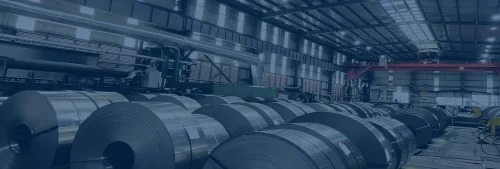
Electrical Steel Upgrades Quality and Performance Amid Market Clearing Acceleration
Oriented electrical steel price closed H1 2026 up 8% on the benchmark 0.23 mm Hi-B grade. Meanwhile, non-oriented grades slid through the second quarter. Furthermore, total output reached 9.29 million tons, a gain of 6.25% year on year. At Jiangsu Zhongtong Weiye Special Steel Co., Ltd. in Wuxi, we price coil against these moves every week. Here is the data, stripped of noise.
Output Split: 9.29 Million Tons
- Total electrical steel: 9.2943 Mt, +6.25% year on year.
- Grain-oriented: 1.7703 Mt, +11.97%.
- Hi-B share: 1.3591 Mt, or 76.77% of GO output, +27.48%.
- Conventional GO: 411,300 t, 23.23% of GO, −20.14%.
- Non-oriented: 7.524 Mt, +4.99%.
- High-grade NGO: 2.5951 Mt, 34.49% of NGO, +5.92%.
- EV motor steel: 806,000 t, +21.15%.
- Mid and low grade NGO: 4.9289 Mt, 65.51% of NGO, +4.51%.
The pattern is clear. Premium tonnage grew fast, and conventional tonnage shrank. Therefore, capacity clearing is already visible in the numbers.
Two Price Paths in One Market
High-end oriented sheet moved up. For example, 0.23 mm Hi-B climbed from RMB 11,200 to 12,100 per ton between January and mid-June. Additionally, 0.30 mm high-induction grades gained 10.31%, and 0.23 mm low-loss grades added 9.8%.
Low-end oriented sheet lagged behind. Conventional 0.27 mm CGO rose only 7.07%, and some grades barely held flat. Consequently, the spread between Hi-B and CGO widened through the half year.
That spread matters at the coil level. Buyers who specified CGO three years ago now find the premium for Hi-B smaller than the transformer loss penalty. Subsequently, specification sheets are shifting toward high-induction grades.
Q1 Up, Q2 Down: The Non-Oriented Trail
- January: mills raised order prices as supply tightened. 50W800 gained RMB 109 per ton.
- February: prices flattened around the Spring Festival break.
- March: cost support pushed quotes higher, though enquiries thinned.
- April–June: buyers moved to on-demand purchasing while new capacity started up.
- June: 50W800 fell RMB 43, and 50W300 dropped RMB 74, the steepest monthly fall of the half.
Ironically, high-grade NGO lost ground faster than mid-grade material. In practice, EV motor demand growth slowed from 24.6% in 2025 to 21.15%. Therefore, the premium tier lost its scarcity argument.
Utilisation confirms the pressure. Non-oriented lines ran at 82%, while oriented lines held 95%. As a result, NGO producers absorbed the surplus.
Trade: Exports Down, Oriented Up
Total exports reached 717,100 tons, down 6.37%. However, oriented exports rose 0.48% to 395,100 tons, while non-oriented exports fell 13.59% to 322,000 tons.
Imports told the opposite story. Inbound volume dropped 16.57% to 63,800 tons, with oriented imports down 17.15%. Consequently, import substitution has nearly run its course in standard grades.
Apparent consumption hit 8.61 million tons, up 6.74%. That still trails output by 396,100 tons in oriented steel and 297,200 tons in non-oriented steel.
Emerging Demand Beyond EV
New energy vehicles remain the largest single driver, yet growth is maturing. Three new tracks are absorbing ultra-thin high-grade sheet:
- High-speed rail. China plans 10,000 km of new line in five years, reaching 60,000 km by 2030.
- Humanoid robots. Shipments may pass one million units globally by 2030.
- Low-altitude aircraft. The sector targets RMB 2.5 trillion core output by 2030.
Each application needs thin, low-loss grades. Typically, those gauges sit below 0.20 mm. Consequently, allocation remains tight.
What Buyers Should Do Before Q4
- Lock grade, not just gauge. Hi-B availability beats CGO on every loss metric.
- Book Q4 tonnage early, because grid deliveries cluster there.
- Ask for core loss at your operating flux, not a catalogue figure.
- Confirm coating type before impregnation planning.
- Keep lot traceability so batch drift stays visible.
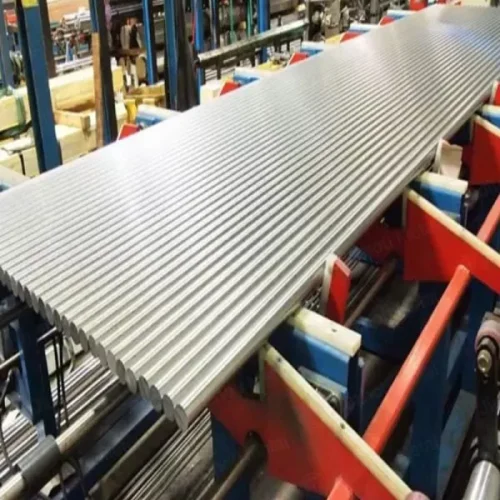
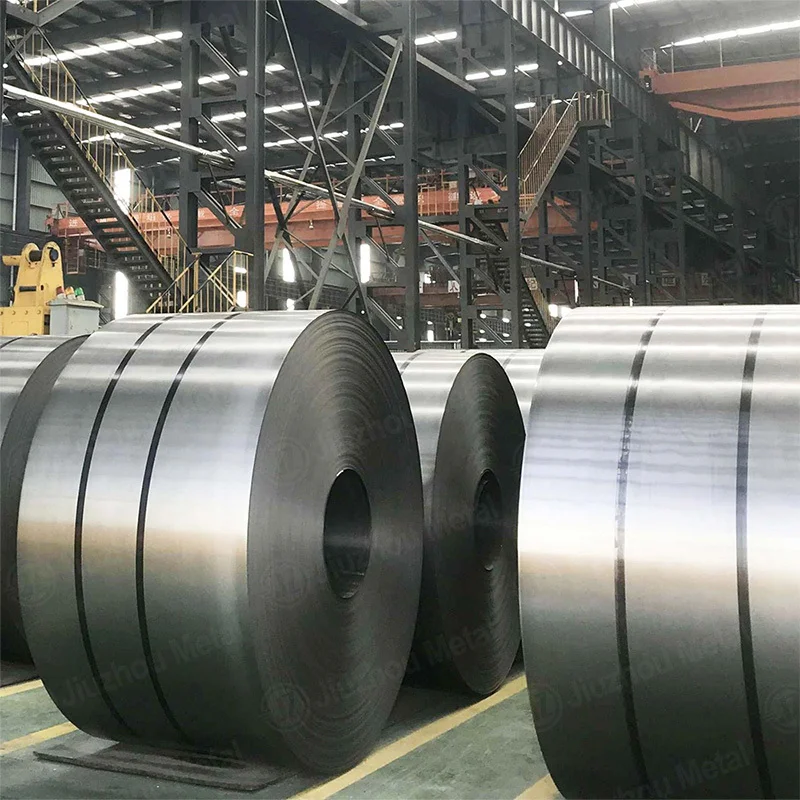
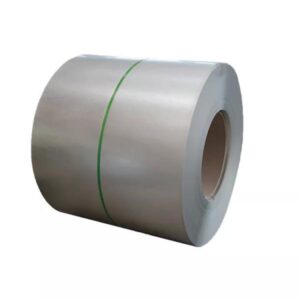
For transformer work, M3 Grain Oriented Electrical Steel covers 0.23 mm Hi-B. Distribution units usually take M4 Grain Oriented Electrical Steel at 0.27–0.30 mm. Motor builders rely on M19 Non Oriented Electrical Steel for 0.35–0.50 mm stators.
Frequently Asked Questions
Unlikely across premium grades. Q3 looks flat, and Q4 brings seasonal firmness.
Rarely. The price gap narrowed while efficiency rules tightened.
EV demand growth cooled. Therefore, the scarcity premium eroded.
Safeguard and anti-dumping cases raise the bar. Expect extra documentation.
MTC EN 10204 3.1, core loss per ASTM A343 or IEC 60404-2, plus coating data.
What We Do Not Do
- We do not roll or anneal steel.
- We do not stamp laminations or wind cores.
- We do not forecast prices as investment advice.
Consequently, we quote against today’s mill allocation and document what ships.
Specify Your Order
- Name the grade and gauge.
- Give slit width and coil ID.
- Confirm tonnage and port.
- State the target efficiency class.
We answer with stock, price, and lead time within one working day.
- Email: vera.liang@ztwysteel.com
- Location: Xishan District, Wuxi, Jiangsu, China
- Supply range: CRGO M3/M4/M5 at 0.23–0.35 mm, CRNGO M19–M43 at 0.35–0.50 mm
- Slitting tolerance: ±0.05 mm
- Documentation: MTC EN 10204 3.1, core loss per ASTM A343 / IEC 60404-2, coating data







 English