Wind Power Generator Core Ultra-Thin Silicon Steel Lamination Processing and Delivery Case: Optimizing Energy Efficiency and Performance
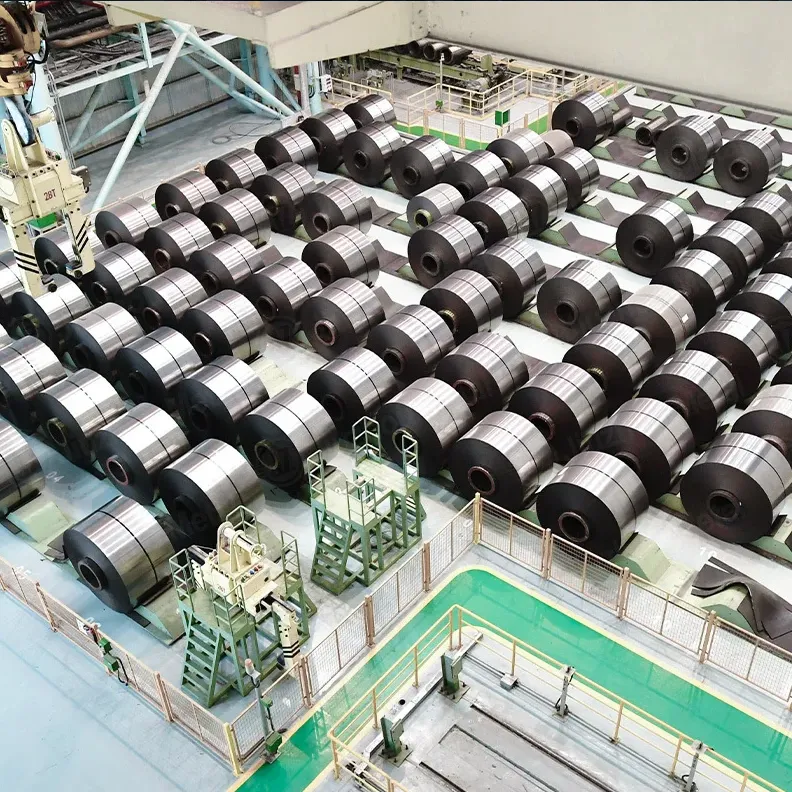
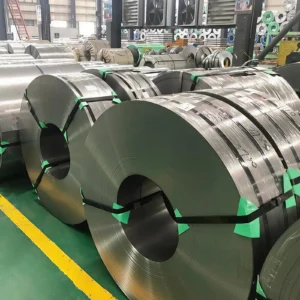
Ultra-thin silicon steel lamination supply for wind generator cores is a logistics problem as much as a metallurgy problem. In practice, one 3 MW direct-drive unit absorbs roughly 20 tons of core steel. Consequently, a single project can commit an entire container of premium coil. Jiangsu Zhongtong Weiye Special Steel Co., Ltd. slits and packs that coil in Wuxi. Below, therefore, is one delivery case, stage by stage.
Case File: 3 MW Stator Core, 22 Tons
- Machine: direct-drive permanent-magnet generator, 3 MW.
- Grade: non-oriented, 0.35 mm, P1.5/50 grade.
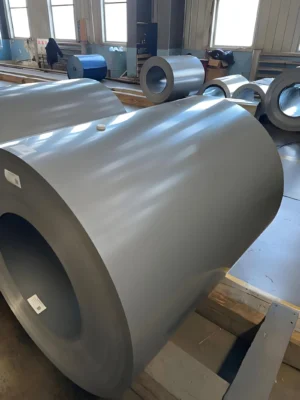
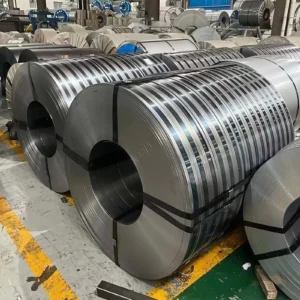
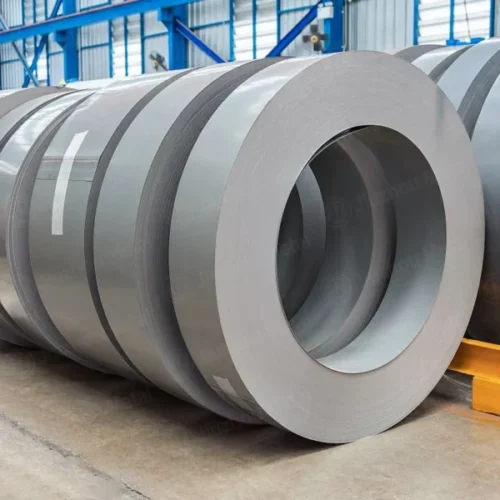
- Coil format: slit to 620 mm, ID 508 mm.
- Tonnage: 22 t across nine coils.
- Route: Shanghai to a northern European port.
- Lead time: 21 days from order to sailing.
Gauge choice came first, because frequency governs the payoff. Direct-drive units run at low electrical frequency, so 0.35 mm already delivers low eddy loss. High-speed geared designs, by contrast, gain more from 0.20–0.27 mm sheet.
Stage 1 — Grade and Gauge Confirmation
The customer specified loss at 1.5 T and 50 Hz, not a catalogue label. Therefore, we matched M19 Non Oriented Electrical Steel to that duty. Had cost dominated, M36 Non Oriented Electrical Steel would have served instead, at slightly higher loss.
Stage 2 — Slitting and Burr Control
Slitting sets the yield, since stamping scrap follows width accuracy. We held width to ±0.05 mm and burr under 0.02 mm. Moreover, tension stayed constant, because varying tension thickens the edge locally.
Stage 3 — Coating and Insulation Check
Insulation film prevents inter-laminar shorts, and damaged film causes local hot spots. Consequently, we verified coating continuity before packing. In addition, the customer specified C-5 film, since their impregnation runs at moderate temperature.
Stage 4 — Packing for Fragility
Thin sheet dents easily, so packing carries most of the risk. Each coil therefore received VCI paper, edge protectors, and desiccant. Furthermore, coils sat on hardwood pallets inside a lined container, and straps ran through protective saddles.
Moisture control matters more than most buyers expect. Salt air attacks exposed edges within weeks, and white rust then ruins the lot. Hence desiccant bags plus VCI paper form the minimum barrier.
Stage 5 — Loading and Documentation
Loading used eye-to-sky lifting, because horizontal slings crush coil walls. Subsequently, coils were blocked against shift, and the container was photographed at three stages. Documents travelled ahead of the cargo, since customs queries delay release otherwise.
Our generator core application note covers the electrical side, while the silicon steel applications overview lists other machine types.
What Goes Wrong in Transit
- Edge damage: caused by forklift impact, and it destroys the outer wraps.
- White rust: caused by condensation, especially across climate zones.
- Coil collapse: caused by cut strapping, since thin walls unwind violently.
- Document mismatch: caused by late amendments, which trigger inspection holds.
Each failure is preventable, yet each recurs because packing decisions get made late. Therefore, fix the packing spec before the first coil is slit.
The Efficiency Math, Briefly
Thinner gauge cuts eddy loss, and that term scales with thickness squared. Consequently, 0.27 mm sheet can reduce eddy loss by roughly 40% against 0.35 mm at the same frequency. Hysteresis loss, however, barely changes, so total gain stays smaller than the headline figure. Hence specify gauge against the real operating frequency, not against a brochure claim.
For a 3 MW unit running 8000 hours a year, a one-point efficiency gain returns several hundred megawatt-hours. Therefore, gauge discipline pays back within the first service interval.
Frequently Asked Questions
0.35–0.50 mm for direct-drive units, and 0.20–0.27 mm for high-speed geared designs.
No, and we supply slit coil only; stamping stays with your lamination shop.
VCI paper, desiccant, edge protectors, and hardwood pallets inside a lined container.
±0.05 mm as standard, with burr held under 0.02 mm.
Usually three to five days, since VCI wrapping and crating run in parallel with slitting.
What We Do Not Do
- We do not stamp or stack laminations.
- We do not wind generator cores.
- We do not certify turbine-level performance.
Consequently, we supply coil, documentation, and packing discipline.
Specify Your Order
- State the machine rating and operating frequency.
- Name the grade, or give the loss limit.
- Give slit width and coil ID, then confirm tonnage and port.
We reply with stock, price, and a packing plan within one working day.
- Email: vera.liang@ztwysteel.com
- Location: Xishan District, Wuxi, Jiangsu, China
- Supply range: CRNGO M19–M47 at 0.35–0.65 mm, CRGO M4/M5 at 0.23–0.35 mm
- Slitting tolerance: ±0.05 mm, burr under 0.02 mm
- Documentation: MTC EN 10204 3.1, core loss per ASTM A343 / IEC 60404-2, packing list with photos