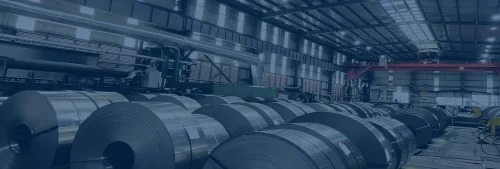
What is non-oriented electrical steel and where is it used?
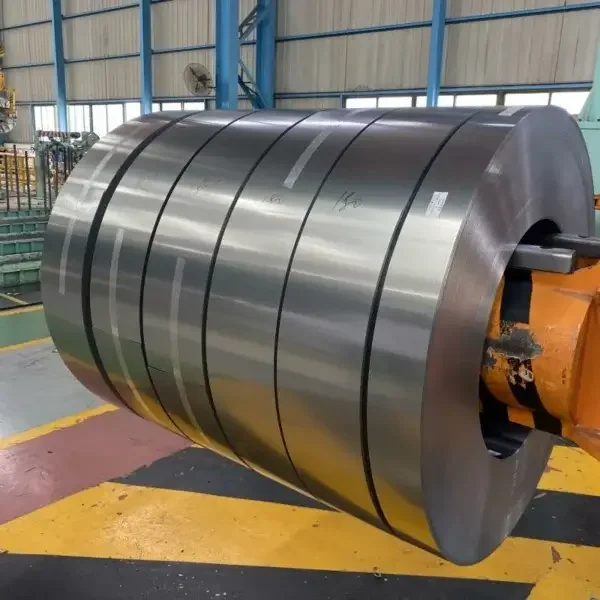
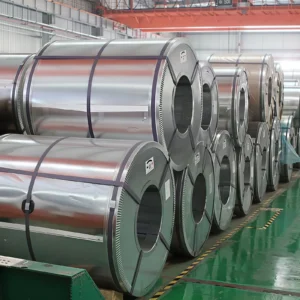
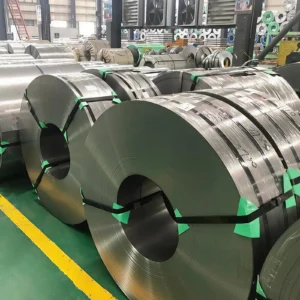
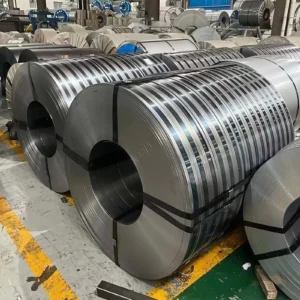
Non-oriented electrical steel carries magnetic flux almost equally in every direction. Its grains are not aligned, so the rolling direction and the cross direction differ by only 10–30%. That trait suits any machine whose flux rotates or turns a corner. Jiangsu Zhongtong Weiye Special Steel Co., Ltd. stocks it from 0.35 mm to 1.00 mm.
The Definition in One Line
No preferred direction means a designer can cut a lamination at any angle. Consequently, a stator with 36 slots wastes nothing on off-axis flux. A grain-oriented sheet in the same slot would lose several percent, because flux crosses its grain.
Isotropy is the whole point.
Walk the Stator Yoke
Flux travels along the yoke, then turns 90° to enter each tooth. That turn happens twice per pole, so the yoke always sees off-axis flux. Hence isotropic sheet prevents a hot band at the corners.
A ring, magnetised around its curve.
Walk the Stator Teeth
Each tooth carries radial flux at high induction, often above 1.6 T. Non-oriented grades hold up there, although a high-silicon grade saturates earlier. Therefore, tooth width and grade choice travel together.
Walk the Rotor
Rotor flux rotates with the shaft, so every point experiences both directions each cycle. Consequently, non-oriented sheet delivers the lowest average loss in the rotor. Grain-oriented sheet cannot follow that rotation. Skewed slots spread the rotation further, which softens the harmonics.
Why Transformers Do Not Use It
Transformer flux stays in one direction, which is why oriented sheet wins by a wide margin. Non-oriented sheet loses roughly twice as much at the same induction in that role. Hence the two families divide the market by flux path, not by price.
What Non-Oriented Steel Is Made Of
Silicon runs from 1.5% to 3.5%, which raises resistivity and cuts eddy loss. Grains stay random after the final anneal, which is the deliberate step behind isotropy. Thickness usually sits between 0.35 mm and 1.00 mm, although thinner grades exist for high-speed rotors.
Where the Loss Comes From
Eddy loss falls with gauge, while hysteresis falls with silicon content. Non-oriented grades therefore trade purity against punchability, since more silicon means harder sheet. Consequently, a grade choice is a compromise between loss and tool life.
Decoding the Grade Code
A code such as 50W470 reads as gauge and loss in one line. The 50 means 0.50 mm, and the 470 means 4.70 W/kg at 1.5 T and 50 Hz. The letter W marks non-oriented steel in the IEC system, while a Q or P marks oriented steel.
Two digits, two facts.
What Rotating Flux Does to a Lamination
Under a rotating field, loss exceeds the value measured along one axis. Test standards measure along one direction, so the datasheet understates rotor duty. Hence designers add margin for rotating flux.
Five Uses and Their Reasons
Motors take most of the tonnage, since flux rotates through the rotor. Generators follow, because their stators mirror the same geometry. Hermetic compressor motors need thin, clean sheet for tight housings. Reactors use it for gapped cores, where flux spreads at the gap. Small distribution transformers use it only where price beats efficiency.
Five uses, one shared trait: flux that turns, spreads, or rotates.
Where Laminations Come From
Most buyers order punched laminations, not full coils. Consequently, our magnet ring for washer motors ships as a finished part. Shops that punch in-house order M36 non-oriented coils instead.
Thickness Choices That Matter
Thinner sheet lowers eddy loss at high frequency, yet it stacks worse and costs more. A 0.35 mm grade suits 50 Hz motors, while 0.50 mm serves larger, slower machines. Therefore, match gauge to frequency before matching it to price.
Surface and Insulation
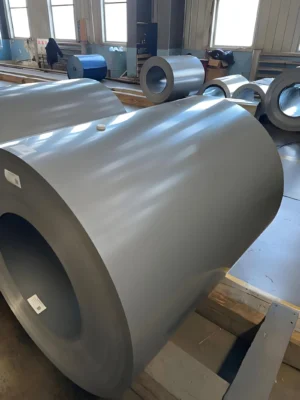
Non-oriented sheet usually carries a thin organic coating, which insulates laminations and survives punching. Some grades add a self-bonding layer for stack curing. Hence the coating choice follows the winding and varnish process.
Coating Classes for Non-Oriented Sheet
Non-oriented coatings are usually thinner than oriented ones, since punching stress matters more here. A heavier coating protects the edge, although it lowers stacking factor. Therefore, ask which coating suits your varnish.
Related Reading
The two families are compared in the GO versus NGO note. Typical end uses appear in the industry map.
Frequently Asked Questions
Yes, usually, since its processing is shorter.
No, because losses rise sharply at power frequency.
A 0.50 mm or 0.35 mm grade, chosen by loss class.
Bare edges can, so keep coils dry and wrapped.
Yes, from 20 to 1250 mm.
What Buyers Get Wrong on Price
A cheaper grade with a worse direction ratio can raise motor temperature. That heat shortens winding life, so the saving reverses. Hence compare tested efficiency, not only the invoice.
What We Do Not Do
We do not roll steel, since we buy from mills and process it. We do not promise a direction ratio below 10%. Nor do we recommend non-oriented sheet for a transformer core.
Those limits keep the advice honest, and they keep the quote fast.
Specify Your Order
First, state the grade code or the loss class. Second, give gauge and width. Then confirm coating type, so the laminations behave in your line.
- Email: vera.liang@ztwysteel.com
- Location: Xishan District, Wuxi, Jiangsu, China
- Supply range: CRGO 0.23–0.35 mm and CRNGO 0.35–1.00 mm
- Slitting: 20–1250 mm, ±0.05 mm, burr under 0.02 mm
- Documentation: MTC EN 10204 3.1, loss stated at 1.5 T and 50 Hz