

Silicon Steel Shelf Life: How Long Can You Store a Coil?
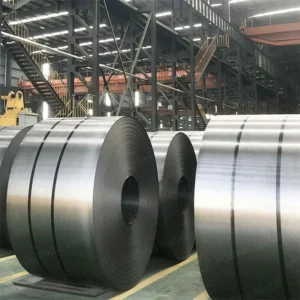
Silicon steel shelf life is not an expiry date, because the metal itself does not age out. What expires is the surface, since the coating and the cut edge carry the risk. A coil stored well keeps its loss figure for years, while a coil stored badly loses its edge in weeks. The difference lies in humidity, temperature and wrap, so the clock runs faster than most buyers expect.
This guide sets the clock for four store types and three coating classes. Then it names what fails first, so you can inspect the right place rather than the whole coil.
What Shelf Life Means for Coated Silicon Steel
A shelf life figure states how long a coil keeps its specification, not how long the steel lasts. Two readings define that specification, namely the loss figure and the layer insulation. Edge rust and coating blister attack both, so the clock measures protection rather than metal.
Storage does not change the alloy, because silicon stays in solution at room temperature. Storage does change the surface, since moisture and oxygen work on the film every hour. That is why rust causes matter more in a warehouse than on a press floor.
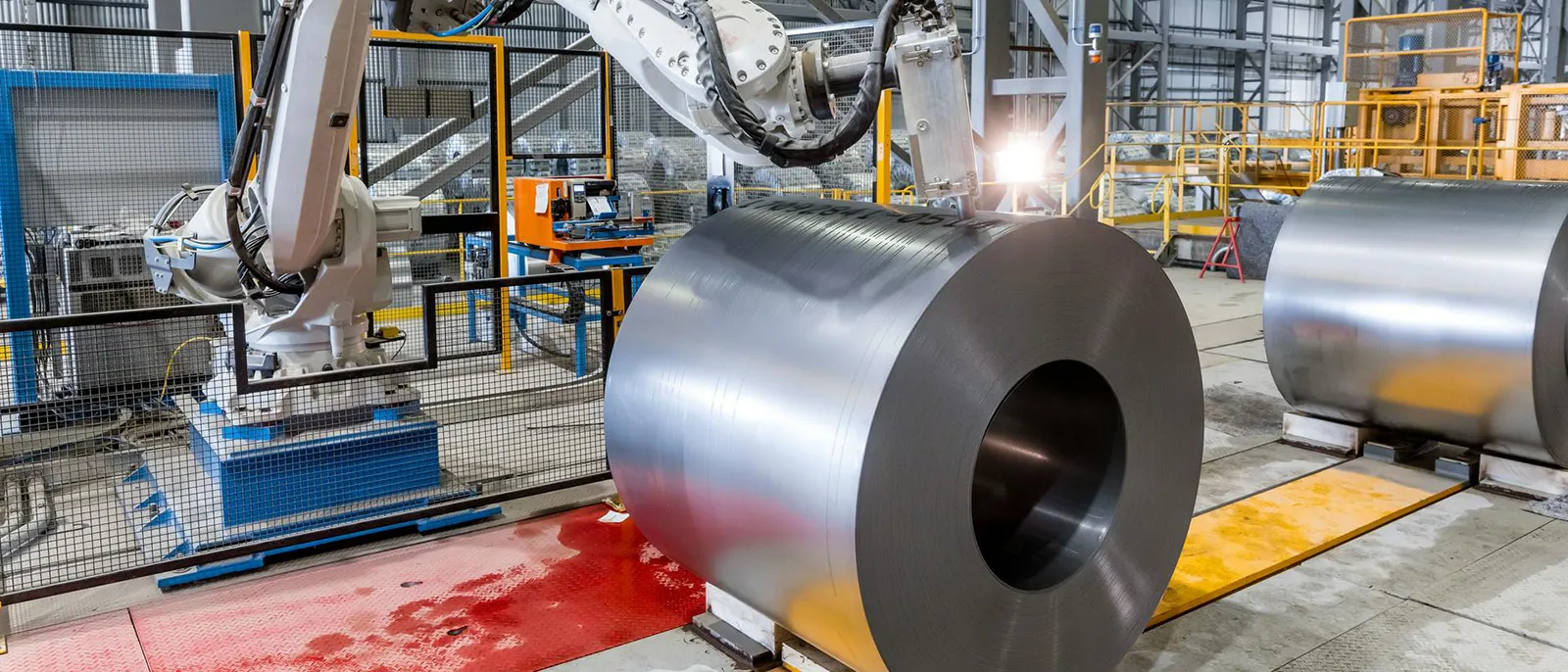
Silicon Steel Shelf Life: Four Storage Conditions
Four store types cover most sites, and each carries a different clock. Measure the relative humidity first, because that number sets the band.
Dry Indoor Store
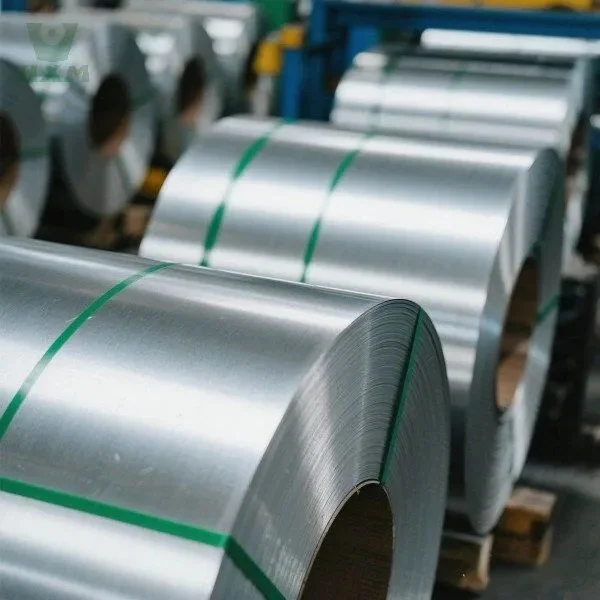
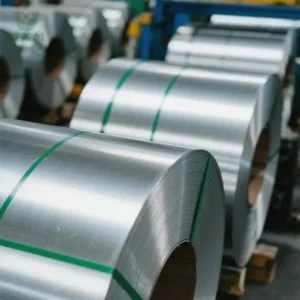
A dry indoor store holds relative humidity below 50 percent, so no continuous water film forms. Most coated coils keep their specification for 12 to 24 months at that level. That band also suits a grain oriented electrical steel sheet held for a transformer order. A VCI wrap adds another margin, since the vapour slows the surface reaction. Check the wrap every quarter, because a torn film ends the protection at once.
Ordinary Warehouse
An ordinary warehouse runs between 50 and 70 percent relative humidity, so the surface reacts slowly. Expect 6 to 12 months for a C3 coil and 12 to 18 months for a C5 or C6 coil. Floor contact hurts non oriented electrical steel stock more than air humidity, since a damp floor feeds the bottom wrap.
Covered Yard
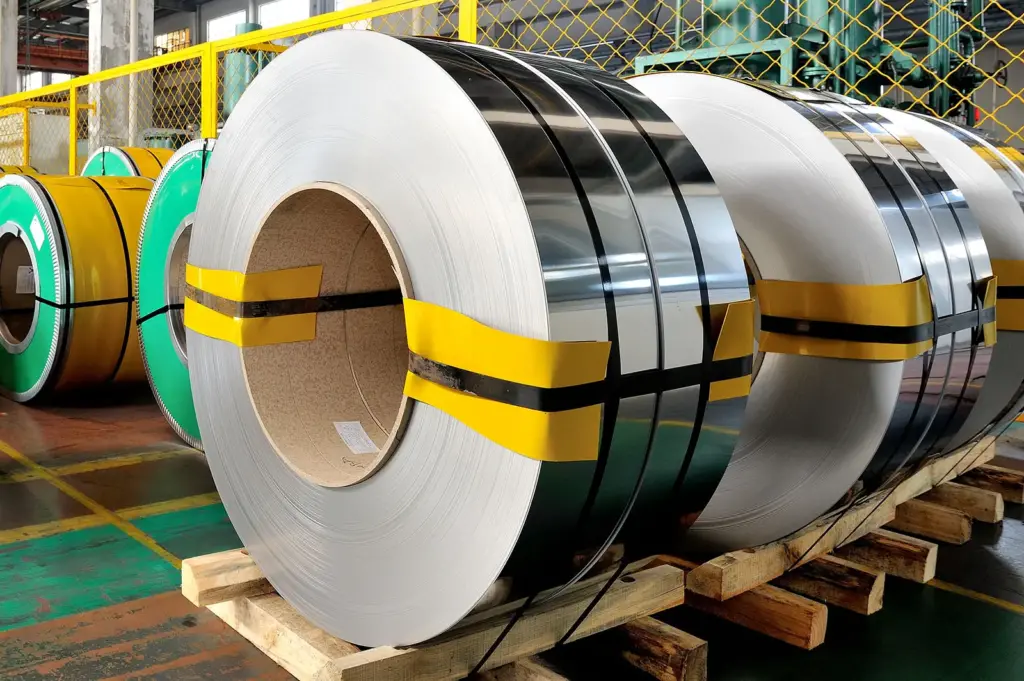
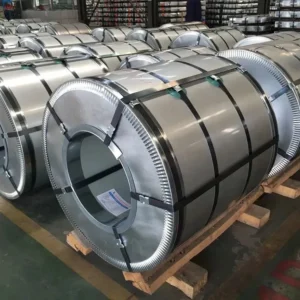
A covered yard keeps rain off but lets the air swing, so condensation forms on cool nights. That pattern repeats the silicon steel export packing problem, since the sea trip does the same. Plan on 3 to 6 months for C3 and 6 to 12 months for C5 or C6. Stack the coils on timber rather than on concrete, since timber blocks the capillary path.
Open Yard
An open yard ends the argument, because rain and sun work together. A C3 coil shows edge rust within weeks, while a C5 coil may hold 1 to 3 months. No wrap survives that exposure, so an open yard suits short staging rather than storage.
Coating Class Changes the Clock
Coating class sets the starting point, so a thicker or denser film buys time. Three classes carry most orders, and each behaves differently.
C3, C5 and C6
C3 offers a light film, so it suits short storage of a grain oriented electrical steel sheet for transformer cores. C5 and C6 carry heavier inorganic films, so they resist humidity longer. The film runs 0.003 to 0.006 mm per side, so the difference sits in density rather than in thickness alone.

Semi-Organic and Self-Bonding
A semi-organic coating adds resin, so it survives stamping better than a pure inorganic film. That resin also ages, since heat and time harden it. A self-bonding coating carries an adhesive layer, so it needs a dry store rather than a covered yard.
What Fails First
Three failures dominate, and each shows at a different place. Inspect the edge first, because the edge carries no coating.
Edge Rust
Edge rust starts at the slit line, since the shear leaves bare metal there. It spreads inward by millimetres rather than by metres, so a 5 mm trim often removes it. A stored coil with brown edges may still pass, while a stored coil with brown faces rarely does. Read rusty silicon steel sheets before you scrap a coil, since edge rust trims off.
Coating Blister
A blister lifts the film from the steel, so the coating loses contact. Moisture under the film drives the process, since the water expands when it warms. Blisters read as small domes on the surface, and each dome marks a spot where the film has failed.
Layer Insulation
Layer insulation falls as oxide bridges the laps, so eddy currents find a path. The drop shows on a stack test rather than on a single sheet, because the loss depends on the stack. Film condition drives it, so read why silicon steel sheets need insulation first. A 20 percent drop in layer resistance marks the practical limit, since the core loss then climbs.
How to Extend Shelf Life
Five habits add months, and each costs little. Apply them in order, because the cheap ones come first.
First, keep the store below 50 percent relative humidity, since that line stops the reaction. Second, stack on timber rather than on concrete, because timber breaks the capillary path. Third, keep the wrap closed, since VCI only works in a sealed space. Fourth, rotate stock on a first-in basis, so no coil sits for years. Fifth, log the store readings, because a written record settles a later claim.
How to Test a Stored Coil Before Use
Three checks settle a stored coil, and each takes minutes. Run them before you release the coil to the press.
Check the edge for brown, since edge rust shows first. Check the face for domes, because a blister marks a failed spot. Run one sample through the magnetic test items set, since a 5 percent loss rise signals trouble. Compare the result against the certificate rather than against the catalogue, because the certificate states the basis. The silicon steel standards list tells you which basis applies.
Silicon Steel Shelf Life: A Storage Table
The table gives planning figures rather than guarantees, so confirm them against your store readings. Humidity and wrap move the clock more than coating class does.
| Store | C3 | C5 or C6 |
|---|---|---|
| Dry indoor, RH under 50 percent | 12–24 months | 24–36 months |
| Ordinary warehouse, RH 50–70 percent | 6–12 months | 12–18 months |
| Covered yard | 3–6 months | 6–12 months |
| Open yard | weeks | 1–3 months |
A 5 t coil on a timber skid takes 0.127 m³ per tonne. So a full store holds more coils than most buyers plan for. Use the silicon steel sheet weight calculation to size the rack before you order another coil.
What We Do Not Do
We do not promise a shelf life figure without your store readings. Nor do we ship a coil with a torn wrap. Nor do we relabel an aged coil as fresh stock. Finally, we do not stack coils above three high, since the bottom wrap crushes. CRGO silicon steel coils leave Wuxi with the mill label intact, at Jiangsu Zhongtong Weiye Special Steel Co., Ltd.
FAQ
No, because the steel does not age out. The coating and the edge do, so the clock measures protection. A coil stored dry keeps its loss figure for 24 months and often longer.
The store matters more, since two coils from one heat can differ by 12 months after storage. Check the wrap and the humidity first, and the mill date second.
Yes, because a 5 mm trim removes the damaged band. Re-check the burr after trimming, since a fresh cut must stay under 0.02 mm. A rusted face rarely recovers, since the oxide sits in the steel.
Every quarter for the first year, since a torn wrap fails without warning. Every six months after that, because the reaction slows once the surface stabilises.
Yes, because warm air holds more water. Air at 30 °C carries 30.4 g/m³, while air at 20 °C carries 17.3 g/m³. So a warm store condenses nearly twice the water on a cool night.
Request a Quotation
Send your store humidity, the coating class and the months in stock. Then we can set a realistic shelf life figure from our silicon steel sheets stock record. Storage questions are answered within one working day, while quotes stay valid for two weeks. Write to vera.liang@ztwysteel.com.
- Email: vera.liang@ztwysteel.com
- Location: Xishan District, Wuxi, Jiangsu, China
- Storage advice: store type, humidity band and wrap condition
- Inspection: edge, face and layer insulation checks
- Documentation: MTC EN 10204 3.1, store log, inspection record
- Response time: storage questions answered within one working day, quotes valid two weeks




 English