
Stainless Steel vs Silicon Steel: Key Differences, Properties, Applications & Cost
Stainless steel vs silicon steel is not a close contest, since the two alloys solve opposite problems. Stainless fights corrosion, whereas silicon steel fights magnetic loss. Consequently, the choice comes down to function rather than price per kilogram. Jiangsu Zhongtong Weiye Special Steel Co., Ltd. supplies the silicon side of that comparison from Wuxi. Below, therefore, is a scored comparison instead of a parts list.
Scorecard: Six Criteria, Two Winners
- Corrosion resistance: stainless 5/5, while silicon scores 1/5.
- Magnetic performance: silicon 5/5, whereas stainless scores 1/5.
- Thickness flexibility: stainless 5/5, so it spans foil to heavy plate.
- Structural strength: stainless 5/5, although silicon meets only assembly loads.
- Cost per kilogram: silicon 5/5, since it carries no alloy premium.
- Cost per kVA delivered: silicon 5/5, because loss dominates lifetime spend.
No material wins outright, and each scores where its job demands. Therefore, match the criterion that governs your duty cycle.
Composition: Chromium Against Silicon
Stainless steel needs at least 10.5% chromium, and that chromium forms a self-repairing passive film. In addition, nickel, molybdenum, and nitrogen tune strength and acid resistance. Silicon steel, by contrast, centres on 1–4.5% silicon with carbon held very low. That silicon lifts resistivity, which in turn suppresses eddy currents. Therefore, each alloy optimises a different physical property, and neither substitutes for the other.
Grade Families Side by Side
Stainless splits into five families: austenitic 304/316, martensitic 410/420, ferritic 430, duplex 2205/2507, and precipitation-hardening 17-4PH. Austenitic grades dominate tonnage, because corrosion resistance and weldability matter most. Martensitic grades, however, win where hardness after heat treatment decides the application.
Silicon steel splits only two ways, yet each branch serves a rigid magnetic duty. Grain-oriented sheet handles static cores, whereas non-oriented sheet handles rotating flux. If you need the full list, our guide to silicon steel grades sets them out.
Thickness and What It Implies
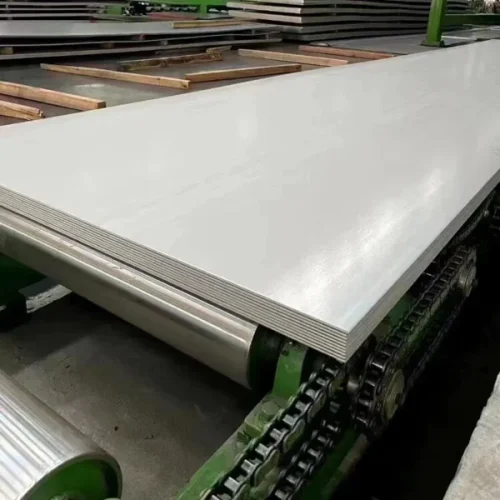
Silicon sheet rarely exceeds 1.0 mm, and mainstream supply runs 0.23, 0.27, 0.35, and 0.50 mm. That ceiling exists because eddy loss scales with thickness squared, so thinner sheet saves energy. Stainless, in contrast, spans 0.02 mm foil to 100 mm plate. Hence stainless serves structures, seals, and pressure parts that silicon cannot touch.
Can Stainless Replace Silicon? No
Most austenitic grades are non-magnetic or weakly magnetic, since alloying disrupts domain alignment. Substituting stainless into a transformer core would collapse efficiency and raise winding temperature fast. Consequently, no certification body accepts such a core for grid duty. Some martensitic grades do respond to magnets, yet they still lose badly on core loss.
Cost: Per Ton Against Per kVA
Stainless carries an alloy premium, because chromium and nickel set the floor price. Silicon steel avoids that premium, although annealing and coating add process cost. Comparing the two per ton misleads, therefore, since duty cycles decide the real bill. For a transformer, twenty years of loss dwarfs the coil invoice, so grade choice pays back twice.
When to Choose Which
- Corrosive service, structural load: stainless, every time.
- Rotating flux in motors: non-oriented sheet.
- Static flux in transformers: grain-oriented sheet.
- Mixed duty on one machine: two materials, not one compromise.
Motor builders usually specify M19 Non Oriented Electrical Steel for 0.47–0.50 mm stators. Heavier frames often take M36 Non Oriented Electrical Steel, because cost matters more there. Transformer shops, meanwhile, work with M4 Grain Oriented Electrical Steel or M5 Grain Oriented Electrical Steel.
Confusing the two families is common, and our note on why silicon steel and electrical steel are the same material clears that up. Application detail sits in our silicon steel applications overview.
Frequently Asked Questions
Rarely. Austenitic grades are effectively non-magnetic, although cold work can create slight response.
Barely. It needs coating and dry storage, since moisture attacks the surface quickly.
Silicon steel, because it contains no chromium or nickel premium.
Because eddy loss rises with thickness, so thin gauge protects efficiency.
Stainless welds easily, whereas silicon steel needs care to protect the insulation coating.
What We Do Not Do
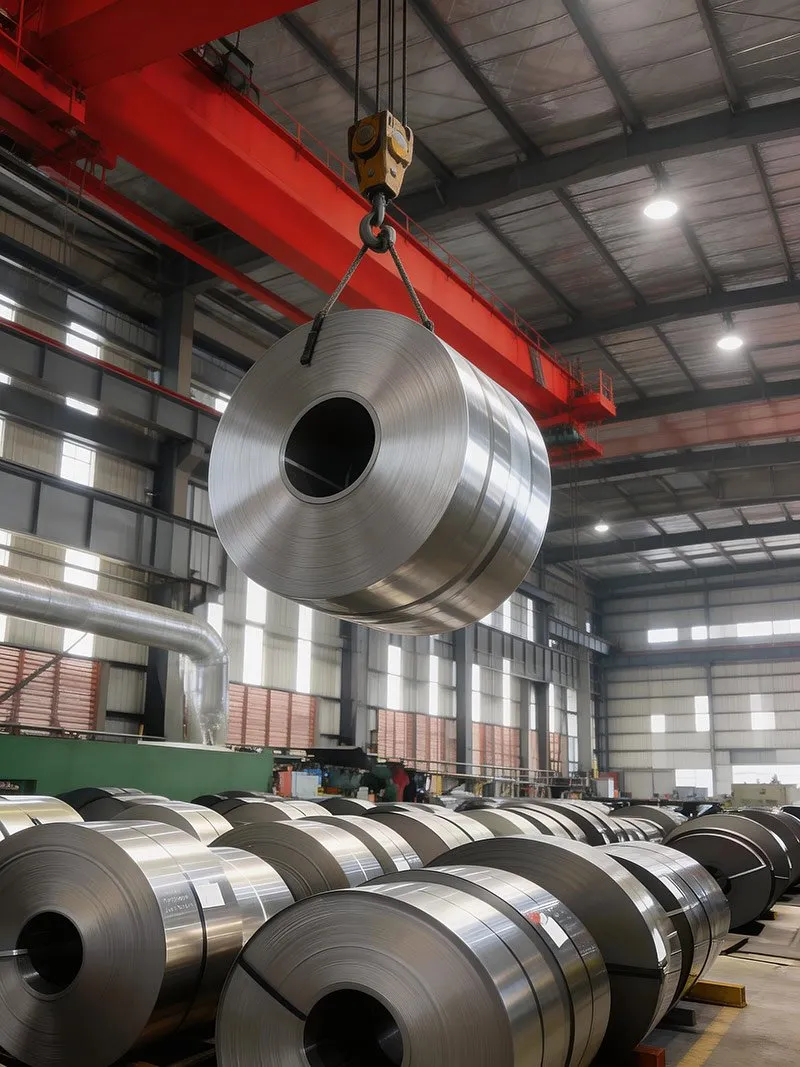
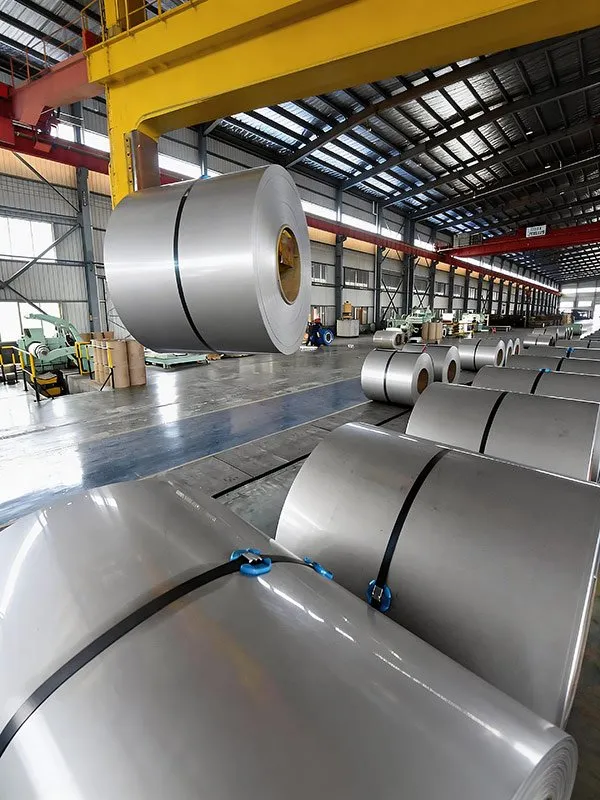
We do not supply stainless plate, sheet, or bar. Nor do we roll, anneal, or stamp silicon laminations. Consequently, we focus on electrical steel coil alone, slit to width and documented properly.
Specify Your Order
- State the machine and its flux path.
- Name the grade, or give the loss limit.
- Give gauge and slit width, then confirm tonnage and port.
We reply with stock, price, and lead time within one working day.
- Email: vera.liang@ztwysteel.com
- Location: Xishan District, Wuxi, Jiangsu, China
- Supply range: CRGO M4/M5 at 0.23–0.35 mm, CRNGO M19–M47 at 0.35–0.65 mm
- Slitting tolerance: ±0.05 mm
- Documentation: MTC EN 10204 3.1, core loss per ASTM A343 / IEC 60404-2, coating specification





 English