

Silicon Steel vs Electrical Steel: Why Are They The Same Material?
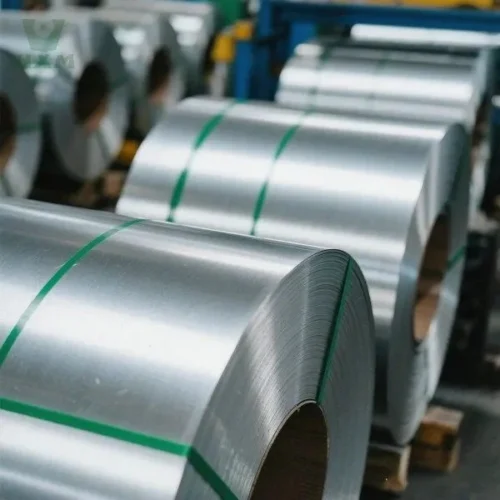
Silicon steel vs electrical steel is not a rivalry, since the two names describe one product family from two angles. In practice, “silicon steel” names the composition, while “electrical steel” names the duty. Therefore, a single coil can carry both labels on one certificate. Jiangsu Zhongtong Weiye Special Steel Co., Ltd. sells it under either name.
One Definition, Two Doors
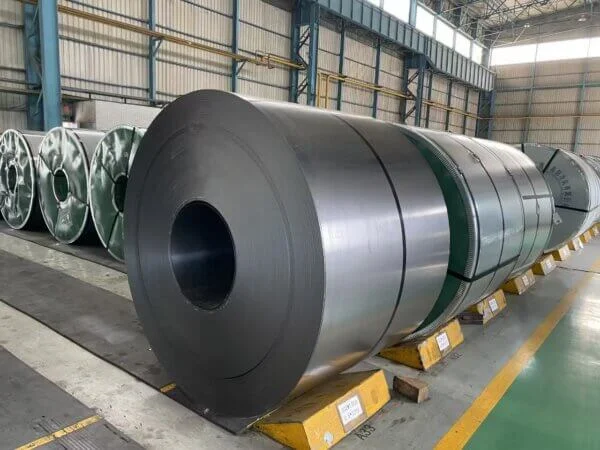
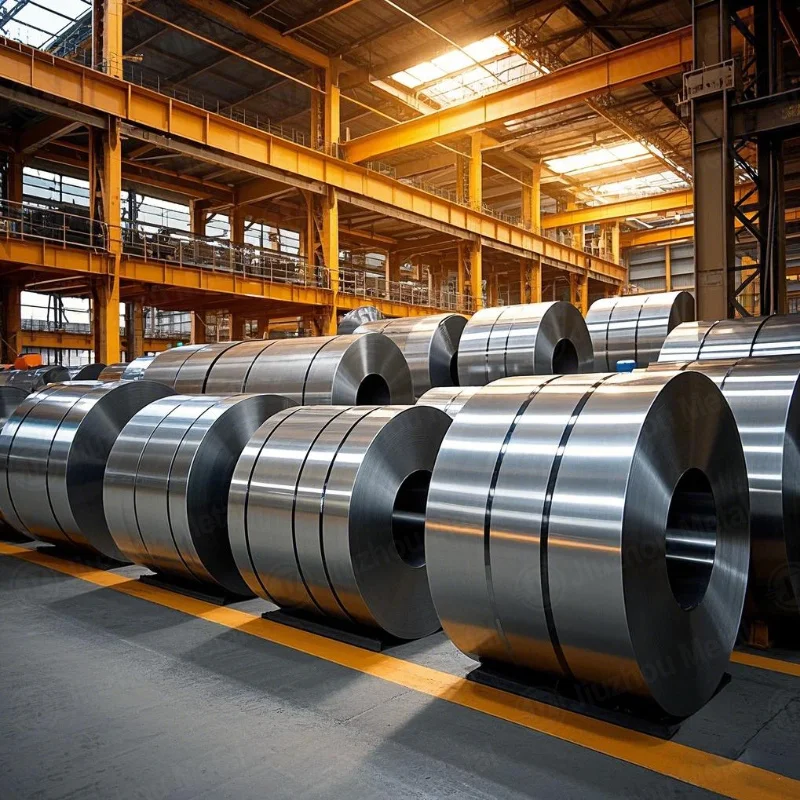
The material is a flat-rolled iron alloy with 1–4.5% silicon, low carbon, and a soft magnetic response. Consequently, metallurgists call it silicon steel, because silicon is the defining addition. Electrical engineers call it electrical steel, because magnetic cores are its only serious use.
Both names point at the same sheet, and neither contradicts the other.
Who Says Which Name
- Mills usually say electrical steel, since the product family spans several silicon levels.
- Standards use electrical steel too, as in GB/T 2521 and EN 10106.
- Transformer shops speak of oriented steel, or CRGO, because direction matters there.
- Motor shops speak of non-oriented steel, or CRNGO, because rotation matters there.
- Traders say silicon steel, because buyers recognise the word fastest.
- Procurement systems often say lamination steel, because that is what arrives at the press.
Hence the vocabulary follows the speaker, not the metallurgy.
Where They Are Not Exactly the Same
Strictly, electrical steel is the wider term, and silicon steel is its dominant subset. Low-silicon lamination steels with 0.5% silicon also count as electrical steel, as do some nickel-iron alloys. Moreover, amorphous ribbon sits outside both names, although it competes in the same slots.
Therefore, treat the two as synonyms in ordinary trade, and as a subset relation in a standards discussion.
Why the Confusion Persists
Chinese trade uses 硅钢 and 电工钢 almost interchangeably, and English translation splits them into two apparent products. In addition, grade codes differ between regions, so the same sheet arrives as 50W470, 50A470, or M19 depending on the certificate.
That triple naming convinces buyers they face three products, when they face one gauge and one loss class.
Three Naming Systems, One Sheet
- EN 10106: 50W470 means 0.50 mm and 4.70 W/kg at 1.5 T, 50 Hz.
- JIS C2552: 50A470 encodes the same gauge and loss class differently.
- ASTM/AISI: M19, M36, and M47 indicate grade families rather than a loss number.
Consequently, never convert a name by intuition, and compare the stated loss instead.
Does the Name Change What You Buy
It should not, yet four items still need checking. Confirm gauge with its coating basis, confirm the loss basis, confirm the coating type, and confirm the slit width. Otherwise the label may match while the delivery does not.
Where the Two Labels Lead
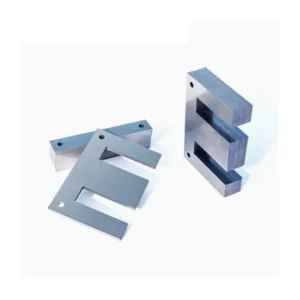
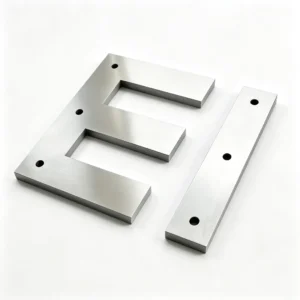
Oriented grades go to transformers, and our note on transformer efficiency explains the economics. Non-oriented grades go to motors and reactors, and a reactor core lamination shows the gapped format that chokes require.
Grade families across both camps appear in the grades overview.
Frequently Asked Questions
In trade yes, although electrical steel formally covers a wider family.
Almost always, since low-silicon lamination steels still qualify.
Because EN, JIS, and ASTM encode loss and gauge in separate conventions.
Either, provided gauge, loss basis, and coating are stated.
Yes, since CRGO abbreviates cold-rolled grain-oriented.
What We Do Not Do
- We do not roll, anneal, or coat steel.
- We do not convert grade names between systems.
- We do not supply amorphous ribbon.
Consequently, we quote by gauge and loss, and state the standard we follow.
Specify Your Order
- State the machine and flux direction.
- Name the grade, or give the loss limit.
- Give gauge and slit width, then confirm tonnage and port.
M36 Non Oriented Electrical Steel covers mainstream motor duty, and quotes return within one working day.
- Email: vera.liang@ztwysteel.com
- Location: Xishan District, Wuxi, Jiangsu, China
- Supply range: CRNGO M19–M47 at 0.35–0.65 mm, CRGO M4/M5 at 0.23–0.35 mm
- Slitting: 20–1250 mm, ±0.05 mm, burr under 0.02 mm
- Documentation: MTC EN 10204 3.1, core loss per ASTM A343 / IEC 60404-2




 English