
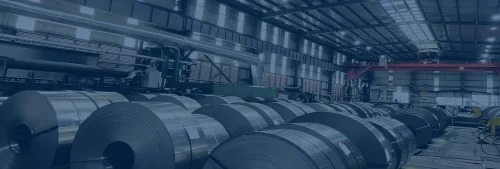
What is cold‑rolled silicon steel sheet?
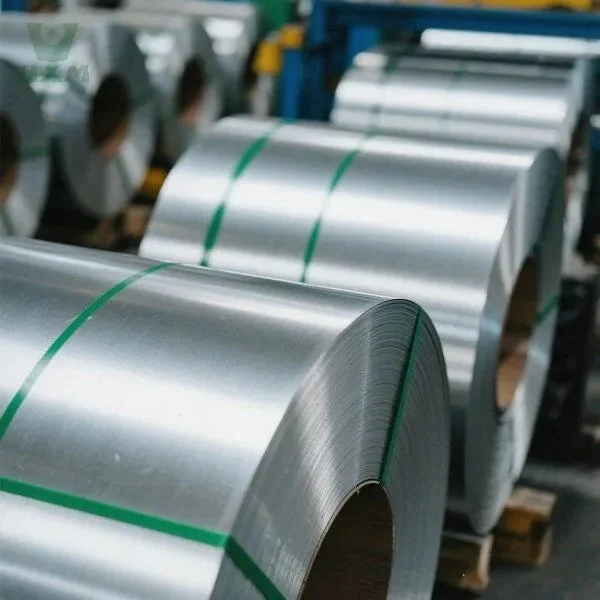
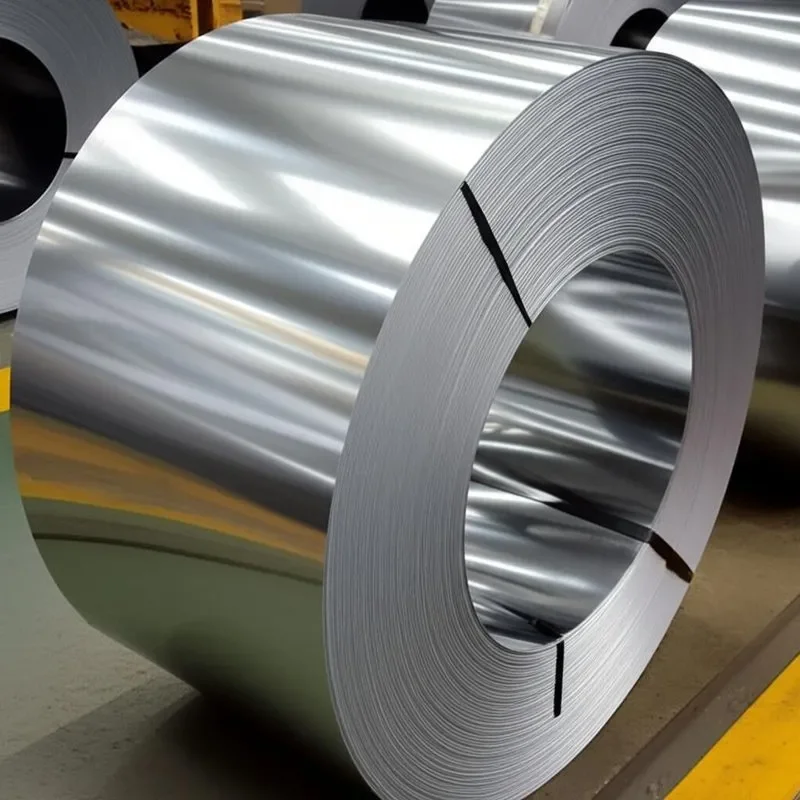
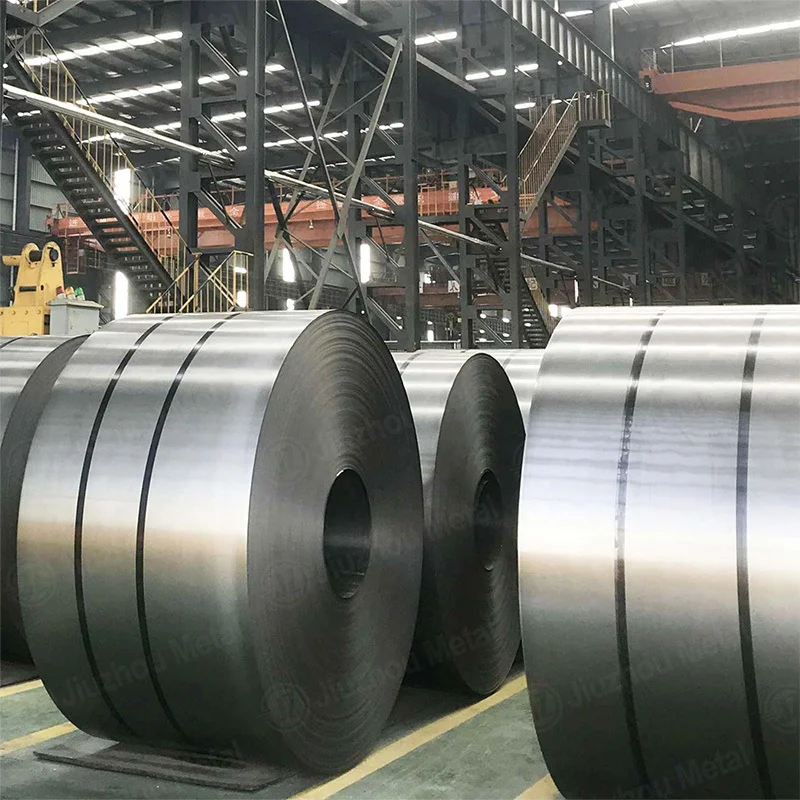
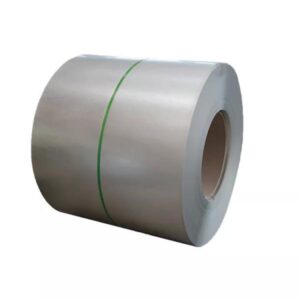
Cold-rolled silicon steel sheet is a flat-rolled iron-silicon alloy carrying 0.5–6.5% silicon. Furthermore, it conducts magnetic flux in every transformer and motor core. Its loss figure decides your efficiency class. Jiangsu Zhongtong Weiye Special Steel Co., Ltd. supplies this sheet as coil and slit strip from Wuxi. Here is what the material really is, and how to specify it.
Data Sheet: The Numbers Behind the Name
- Base metal: low-carbon steel, oxygen and sulfur kept minimal.
- Silicon: 0.5–6.5%; CRGO typically sits near 3.0–3.3%.
- Gauge: 0.18–0.65 mm for standard grades.
- Texture (GO): Goss orientation, {110}<001>.
- Texture (NGO): near-random grain distribution.
- Coating: C-4, C-5, or C-6 insulation film.
- Test methods: ASTM A876, IEC 60404-2, JIS C2552.
Silicon raises resistivity, which suppresses eddy currents. Additionally, it trims magnetic anisotropy and magnetostriction. That is why a 3% silicon alloy outperforms plain carbon steel by a wide margin.
How Cold Rolling Builds the Magnetic Structure
Step 1 — pickling. Hot-rolled coil is pickled to strip surface oxide.
Step 2 — cold reduction. Multiple passes thin the strip at room temperature. Consequently, thickness tolerance tightens to ±0.02 mm or better.
Step 3 — annealing. Recrystallization restores ductility and controls grain size. Subsequently, decarburization lowers carbon to very low levels.
Step 4 — secondary recrystallization. For GO grades, inhibitor-controlled growth produces large Goss grains. Finally, the insulation coating is applied and cured.
That final texture step explains the price gap. In practice, GO sheet costs far more than NGO because the process window is narrow.
GO vs NGO: Match the Grade to the Flux Path
Grain-oriented sheet suits static cores, where flux stays in one direction. Power and distribution transformers run at 50 or 60 Hz, so the directional gain pays off. M3 Grain Oriented Electrical Steel delivers the lowest loss in our range at 0.23 mm.
Non-oriented sheet suits rotating machines, where flux spins through 360 degrees. Motors, generators, and servo drives need that uniformity. Instead of directional gain, they need consistent permeability in every axis. M19 Non Oriented Electrical Steel covers most industrial stators.
A third case sits between them. Distribution transformers with tight cost targets often use mid-grade GO. M5 Grain Oriented Electrical Steel serves that segment well.
Gauge Selection Rules
- 50/60 Hz transformer: 0.27–0.35 mm.
- 400 Hz reactor or inductor: 0.20–0.27 mm.
- EV traction motor: 0.20–0.25 mm, high frequency.
- High-frequency transformer: below 0.20 mm, often 0.10–0.15 mm.
- Large rotating machine: 0.35–0.50 mm.
Thinner sheet cuts eddy loss but raises stacking cost. Therefore, balance loss against labour. Beyond 400 Hz, the thin-gauge advantage turns decisive.
Five Assembly Faults That Destroy Core Loss
Fault 1 — burrs from dull dies. Burrs short adjacent laminations. As a result, eddy loss climbs sharply.
Fault 2 — skipping stress-relief anneal. Stamping stress degrades permeability. Typically, recovery needs a 750–800 °C anneal.
Fault 3 — excessive clamping pressure. Over-tight stacks lose permeability and gain noise.
Fault 4 — wrong coating for impregnation. Vacuum pressure impregnation attacks weak films. Consequently, specify solvent-resistant coating.
Fault 5 — mixed coil lots. Batch-to-batch loss drift skews the whole core. Therefore, keep lot traceability on the shop floor.
Standards and Test Evidence
Buyers rarely accept a mill certificate alone. Therefore, insist on loss data from an Epstein frame or a single-sheet tester. Our coils ship with MTC EN 10204 3.1, core loss per ASTM A343 or IEC 60404-2, plus coating and flatness records.
Regulatory pressure keeps rising. IE4 and IE5 motor classes demand advanced NGO grades. Meanwhile, transformer rules in the EU and US push minimum efficiency levels. For the demand backdrop, read our high-grade silicon steel demand outlook.
Frequently Asked Questions
No. Cold rolling is the process. Grain orientation is the result, and only GO grades get the Goss texture.
Around 3.0–3.3% for GO transformer cores. Higher silicon cuts loss but turns brittle.
You can, though loss rises noticeably. Small low-cost units sometimes accept it.
Our regular range starts at 0.23 mm. Thinner gauges depend on mill allocation; our ultra-thin oriented silicon steel note covers that limit.
Yes. Thicker C-6 films lower the stacking factor, so recalculate core build accordingly.
What We Do Not Do
- We do not roll or anneal steel.
- We do not stamp or laser-cut laminations.
- We do not wind finished cores.
Consequently, we supply coil, slit to width, and document it for your QA team.
Specify Your Order
- State the equipment and operating frequency.
- Choose GO or NGO, then name the grade.
- Give gauge and slit width.
- Confirm tonnage and destination port.
We reply with stock, price, and lead time within one working day.
- Email: vera.liang@ztwysteel.com
- Location: Xishan District, Wuxi, Jiangsu, China
- Supply range: CRGO M3/M4/M5 at 0.23–0.35 mm, CRNGO M19–M43 at 0.35–0.50 mm
- Slitting tolerance: ±0.05 mm
- Documentation: MTC EN 10204 3.1, core loss per ASTM A343 / IEC 60404-2, coating and flatness data






 English