
Silicon Steel HS Code: Which of the Four Lines Applies
20 November, 2026
News
Silicon steel does not have one HS code. It has four, and the split is decided by two properties that have nothing to do with grade, thickness or core loss: strip width and grain orientation. Quote the wrong line and the duty rate, the anti-dumping exposure and the accuracy of the customs declaration all move with it. This note sets out the four lines, the ten-digit split China adds, and where the material leaves Chapter 72. The silicon steel product range is organised along the same two dimensions, which is why the classification follows it so closely.
The Four Codes
|
Width
|
Grain
|
HS six-digit
|
China eight-digit
|
|
600 mm and above
|
grain-oriented
|
7225.11
|
7225 11 00
|
|
600 mm and above
|
non-oriented
|
7225.19
|
7225 19 00
|
|
Under 600 mm
|
grain-oriented
|
7226.11
|
7226 11 00
|
|
Under 600 mm
|
non-oriented
|
7226.19
|
7226 19 00
|
All four sit in Chapter 72 as flat-rolled products of other alloy steel. The word “other” matters: silicon steel is an alloy steel in the nomenclature, so it never appears under heading 7209 however low the carbon runs. Heading 7225 covers strip 600 mm and wider, heading 7226 covers everything narrower. The fifth and sixth digits then split on orientation, with .11 for grain-oriented and .19 for the rest.
That is the whole architecture. The grain-oriented range and the non-oriented range separate at exactly this point, so a shipment description that omits orientation is not incomplete, it is unclassifiable.
Width Decides, Not Thickness
Thickness, coating type, grade designation and core loss have no bearing on the six-digit code. A 0.23 mm coil and a 0.35 mm coil of the same orientation and the same width carry identical codes.
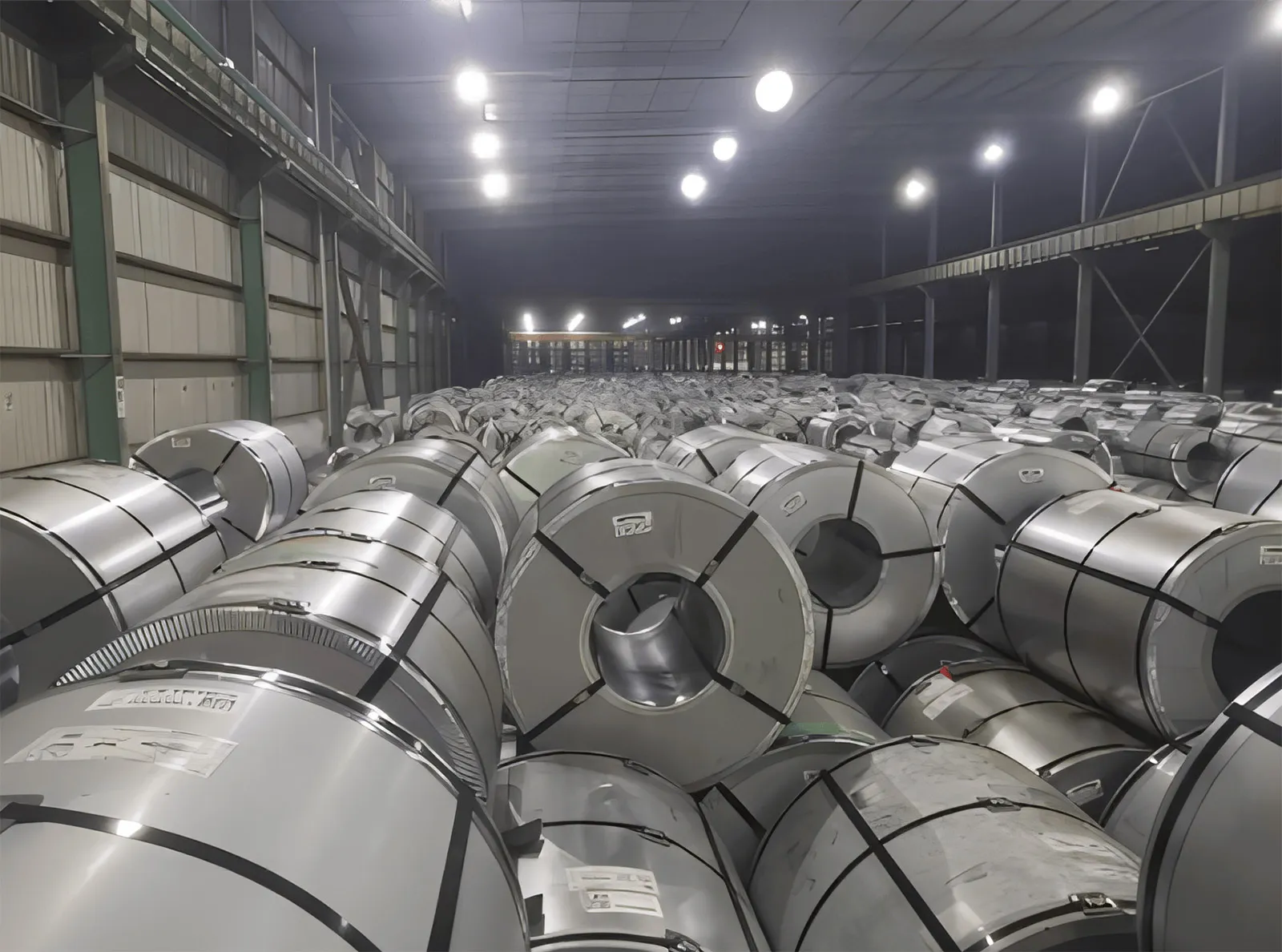
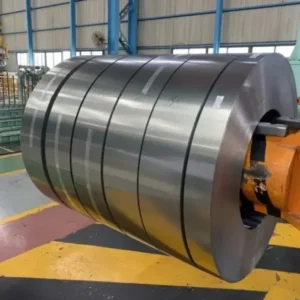
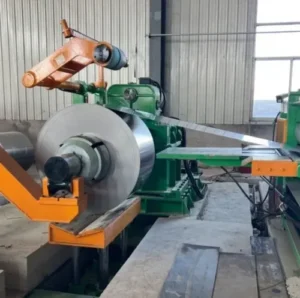
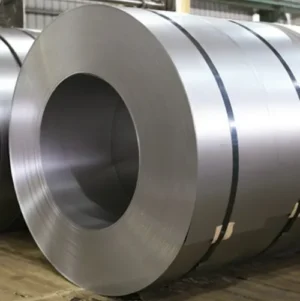
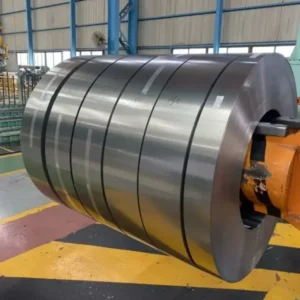
The 600 mm threshold is measured on the actual strip, not on the order or the mother coil. Master coils usually run 900 mm to 1,200 mm, so they classify under 7225. Once a service centre slits them to 500 mm for a transformer winder, the same metal moves to 7226. One slitting pass changes the code, and it is the single most common classification error we see in shipping documents: the invoice still describes the mother coil while the packing list already lists slit widths. The non-oriented range hits this just as often as the oriented one, because motor stampers routinely buy narrow strip.
What China Adds at Ten Digits
China splits some of the eight-digit lines further, and the split exists for anti-dumping administration rather than for statistics. Under Customs Notice No. 64 of 2022, line 7225 11 00 divides as follows:
|
Sub-heading
|
Applies to
|
|
7225 11 00 10
|
Silicon 0.6% or more by weight, carbon 0.08% or less, aluminium up to 1.0%, thickness 0.56 mm or less; in coils of any width, or in plates whose width is at least ten times the thickness
|
|
7225 11 00 90
|
All other grain-oriented strip 600 mm and wider
|
The same structure applies to 7226 11 00, giving .10 and .90 on the narrow line. Non-oriented lines are not split this way. A grain-oriented coil of 0.60 mm therefore lands in .90 rather than .10, purely on thickness.
Coating Does Not Change the Code, Lamination Does
Insulation coatings — C5, C6 and the mineral or semi-organic types used on oriented steel — do not move the classification. Coated strip remains flat-rolled alloy steel under 7225 or 7226.
Lamination is a different answer. Once strip is punched, cut to shape and stacked or wound into a core, it has become a part of a transformer or inductor rather than a flat-rolled product, and the code moves out of Chapter 72 altogether into 8504 90. The dividing question is processing, not material: the same coil is 7225 11 00 on the day it ships as coil, and 8504 90 once it becomes cut core laminations for distribution transformers. Laminations carry their own trade measures in several markets, so mixing the two in one declaration causes trouble out of proportion to the tonnage. How CRNGO grade codes read is a separate exercise from classification, and the grade table should never be used as a substitute for the tariff line.
What Each Market Adds on Top
Base duties on these lines are low or zero in most destinations. The cost usually sits in trade measures instead, and those move:
|
Market
|
Base duty on the four lines
|
Trade measures as of November 2026
|
|
European Union
|
0% on CN 7225 11 00 and 7226 11 00
|
Provisional safeguard opened September 2026 with tariff-rate quotas; the China allocation for oriented steel runs to about 30,700 tonnes over the quota period
|
|
United States
|
0% MFN
|
Anti-dumping and countervailing orders on non-oriented electrical steel continued in May 2026; Section 301 additional duty applies to Chinese origin
|
|
Brazil
|
Per Mercosur schedule
|
Anti-dumping duties on non-oriented steel from China adjusted in February 2026 to a range of roughly USD 105 to 195 per tonne
|
|
Gulf markets
|
0% to 5%
|
No anti-dumping measures on Chinese electrical steel
|
Treat the table as orientation, not as a quotation. Measures are revised, suspended and extended, and the binding figure is whatever the destination’s schedule says on the date of entry, not what a supplier’s price sheet said at the time of order. Grade matching across Chinese, Japanese and American standards is worth settling before the commercial invoice is drafted, because a grade that cannot be matched cleanly tends to produce a description that cannot be classified cleanly either.
What Has to Match on the Documents
Customs does not read grade codes. It reads width and orientation, because those are the two fields that decide the line. Six things therefore have to agree across the invoice, packing list, certificate of origin, mill certificate and declaration:
- The same six-digit and ten-digit codes on every document
- The actual width stated in the description, not only in the specification sheet
- Orientation stated in words, grain-oriented or non-oriented, not implied by a grade code
- The grade on the mill certificate matching the grade in the invoice description
- Coil numbers matching the weights declared
- For slit material, both the mother coil width and the delivered width
A declaration that lists a grade code and a tonnage but no width is, in classification terms, incomplete. The officer has to guess, and guessing tends to resolve against the importer.
FAQ
Is silicon steel an alloy steel for customs purposes? Yes. Silicon content places it under other alloy steel in Chapter 72, so 7225 and 7226 apply.
Does the insulation coating change the code? No. Coated strip stays in 7225 or 7226; coating is a surface treatment, not a change of category.
We buy slit coil. Does the code follow the mother coil? No. Classification follows the actual delivered width. A 500 mm slit coil from a 1,000 mm master coil is 7226 11 00, not 7225 11 00.
Can one shipment carry two codes? Yes, when widths straddle the threshold. Declare each line separately.
Still unsure which line a particular coil falls on? Send the width, the orientation and the thickness to vera.liang@ztwysteel.com and we will confirm the classification against the shipment documents before they are issued.



 English