

Explanation of the Oil Coating Process on Tinplate Surface
Tinplate oil coating confuses many new can makers. They open a coil and find a thin, invisible film of oil on the metal. Consequently, they ask: is this contamination? Should I wipe it off? The answer depends on your downstream process. Here are five questions we hear most often.
Q1: Why Is There Oil on My Tinplate?
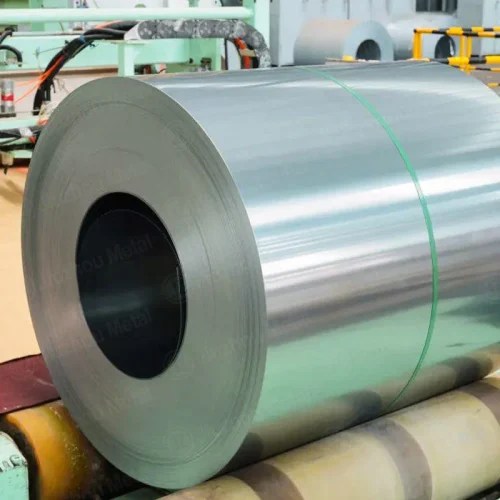
The mill applies oil intentionally. It serves three purposes:
- Prevents fingerprints during handling.
- Blocks moisture that causes rust in storage.
- Lubricates the sheet during stamping and forming.
Consequently, the oil is not a defect. Furthermore, it is a standard part of tinplate delivery. Without it, coils rust within weeks in transit.
Q2: Will the Oil Affect My Lacquer or Print?
It depends on the oil type and weight. Palm oil at 8–12 mg/m² is light enough to lacquer over without cleaning. However, heavy oil (15+ mg/m²) causes lacquer adhesion failure. Similarly, print shops prefer DOS oil at 2–5 mg/m², because heavy palm oil causes ink rub-off. Therefore, specify the oil type when ordering: lacquer-ready or print-ready.
Q3: Why Is My Stamping Die Building Up Oil Sludge?
Excess oil combines with tin dust and steel fines to form sludge on the die. Consequently, the die needs more frequent cleaning. If this happens, your oil weight is too high. Ask the mill for the lightest oil weight that still prevents rust. Typically, 5–8 mg/m² works for stamping.
Q4: Can I Wipe Off the Oil Before Processing?
Yes, but it costs money. Most can makers run the sheet through a degreaser before lacquering. However, this adds a process step and increases cost. Consequently, it is better to order the correct oil weight from the start. Specify “lacquer-ready” or “print-ready” on your PO, and the mill applies the right amount.
Q5: How Long Can I Store Oiled Tinplate?
Oiled tinplate stores for 6–12 months in a dry warehouse. However, ocean transit in humid conditions shortens this to 3–6 months. Therefore, use older coils first. Furthermore, store coils off the floor on wooden pallets, and keep the packaging intact until use.
Oil Types and Weights at a Glance
| Oil type | Weight | Best for |
|---|---|---|
| Palm oil (food-grade) | 8–12 mg/m² | Lacquer-ready food cans |
| DOS oil | 2–5 mg/m² | Print-ready, decorative cans |
| Heavy rust-preventive | 15–20 mg/m² | Long storage, ocean freight |
Related Oiled Substrates We Ship
Oil coating logic applies to other sheet products we deliver:
- C11000 / T2 Copper Plate ships with a thin protective oil film to prevent tarnishing.
- C26800 / H65 Brass Strip receives a light drawing oil for stamping.
- C12200 / TP2 Copper Tube gets internal cleaning and end caps to keep moisture out.
Specify the Oil on Your PO
A complete order reads: “T3, 0.20 mm, 2.8/2.8 g/m², palm oil 10 mg/m², lacquer-ready.” Leave out the oil specification and the mill applies its default, which may not match your process.
Get the Right Tinplate Oil
Tell us your can type and whether you will lacquer or print. We will confirm the oil grade and quote with a mill certificate.
- Email: vera.liang@ztwysteel.com
- Location: Xishan District, Wuxi, Jiangsu, China
- Supply range: tinplate substrates, copper plate/tube/strip, nickel alloys
- Documentation: MTC with coating weight, oil type, oil weight, and dimensions
We reply within one working day.







 English