

Hot Work Mold Steel: Basics, Properties, Grades & Applications
Hot work mold steel sees molten metal and repeated thermal shock. It must stay hard at 600°C, resist heat checking, and not warp under pressure. Picking the wrong grade means cracked dies after 5,000 shots. Here is how the three main grades compare.
Grade Comparison
| Grade | AISI | Typical use | Hardness |
|---|---|---|---|
| H11 | 1.2343 | Aluminum extrusion, forging | 44–50 HRC |
| H13 | 1.2344 / SKD61 | Die casting (Al, Zn), extrusion | 46–52 HRC |
| H21 | 1.2581 | Brass forging, hot forging | 44–48 HRC |
H13 is the workhorse. It balances toughness, hot hardness, and polishability. H11 is tougher but less hard; H21 holds up at higher temperatures for brass and copper forging.
What Makes Hot Work Steel Different
Hot work steels contain chromium, molybdenum, and vanadium. These alloying elements:
- Retain hardness at 500–600°C.
- Form stable carbides that resist abrasive wear.
- Resist thermal fatigue (heat checking).
Consequently, they do not soften like cold work tool steel when hot metal pours in.
Die Casting: The Toughest Duty
Die casting injects molten aluminum at 660–700°C under high pressure. Every shot cycles the die from 200°C to 600°C. Thermal fatigue cracks start within thousands of shots. H13 (especially ESR-grade, electroslag remelted) resists this cracking best. We supply H13 / SKD61 Mold Steel pre-machined for die shops.
Forging and Extrusion: Steady Heat
Forging dies see steady heat rather than rapid cycling. H11 and H21 work well here. H21 with higher tungsten content resists brass forging temperatures. Furthermore, these dies need good toughness to absorb forging impact.

Heat Treatment: The Critical Step
Hot work steel arrives soft-annealed. The mold maker hardens and tempers it. Typical process:
- Preheat to 600°C.
- Austenitize at 1020–1050°C.
- Quench (gas or oil).
- Temper twice at 550–620°C.
Tempering temperature sets the final hardness. Consequently, the mold maker controls hardness, not the steel supplier.
Surface Treatment Extends Die Life
Even H13 benefits from surface treatment:
- Nitriding adds 0.05–0.1 mm hard case for wear resistance.
- PVD coating (TiAlN) reduces soldering and wear in aluminum die casting.
- Polishing improves part surface finish and reduces ejection force.
These treatments can double die life.
Source Hot Work Mold Steel
Tell us your die process (die casting, forging, extrusion), material being formed, and required block size. We will recommend H11, H13, or H21 and quote pre-machined blocks.
- Email: vera.liang@ztwysteel.com
- Location: Xishan District, Wuxi, Jiangsu, China
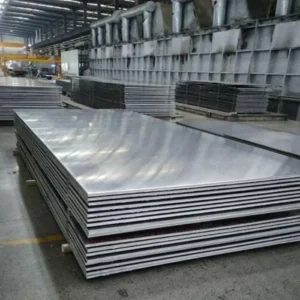
- Supply range: H11, H13, H21 hot work mold steel in flat bar and block
- Documentation: MTC with chemistry, hardness, and ultrasonic test report
- Services: pre-machining, soft annealing, cut-to-size
We reply within one working day.







 English