
GB/T 2521 Silicon Steel Standard: Which Edition Applies
19 November, 2026
News
GB/T 2521 has not been a single standard since 2017. It now splits into GB/T 2521.1 for non-oriented steel and GB/T 2521.2 for grain oriented steel. The oriented part has since moved to a new edition, in force from March 2026. Quoting the old number in a purchase order is the most common mistake we see.
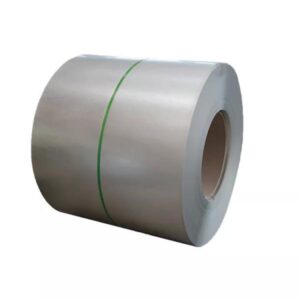
Both parts describe the same material family we handle every week, so the short version sits in the silicon steel overview. The rest of this page deals only with the standard itself.
One Number, Two Standards
GB/T 2521-2008 was withdrawn on 1 May 2017. Its content was split rather than revised:
|
Standard
|
Scope
|
Nominal thickness
|
Status
|
|
GB/T 2521.1-2016
|
Grain non-oriented
|
0.35, 0.50, 0.65 mm
|
In force
|
|
GB/T 2521.2-2016
|
Grain oriented
|
0.23, 0.27, 0.30, 0.35 mm
|
Superseded
|
|
GB/T 2521.2-2025
|
Grain oriented
|
0.18, 0.20, 0.23, 0.27, 0.30, 0.35 mm
|
In force from 1 March 2026
|
The practical consequence: a contract that still says “GB/T 2521-2008” refers to a withdrawn standard. Nothing stops two parties from agreeing to it, but the test methods and tolerances inside it no longer match what mills actually certify today.
What the Latest Edition Changed
The oriented part is now GB/T 2521.2-2025. It was published in August 2025 and took effect on 1 March 2026. The clearest change is the thickness list: 0.18 mm and 0.20 mm are now inside the standard, where the 2016 version stopped at 0.23 mm.
That matters for two groups of buyers. Transformer designers working above 400 Hz finally have a national grade basis for ultra-thin oriented steel. Procurement teams, meanwhile, have to check which edition a mill certificate cites before comparing loss values across suppliers.
The 2016 edition had already restructured the grade list into three classes: conventional, high magnetic induction, and domain-refined. Domain-refined grades carry laser-scribed surfaces that reduce loss further at the same thickness. The oriented steel section covers how those classes differ in practice.
How Grade Codes Work
A code like 30Q120 reads in three parts:
- 30 — nominal thickness, 0.30 mm
- Q — grain oriented
- 120 — maximum core loss, 1.20 W/kg
Non-oriented codes use W in place of Q. The trailing number works the same way, but the measuring condition differs: oriented loss is taken at 1.7 T, non-oriented at 1.5 T. A 30Q120 and a 30W120 are therefore not comparable by their trailing numbers alone. CRNGO grade codes explains the non-oriented side in detail.
Non-Oriented Grades Under GB/T 2521.1
The 2016 revision added 35W210 and several 65W grades, and removed a group of older high-loss designations. What remains is a compact series where the code states the loss directly:
|
Grade
|
Thickness (mm)
|
Max core loss, P1.5/50 (W/kg)
|
|
35W210
|
0.35
|
2.10
|
|
35W230
|
0.35
|
2.30
|
|
35W250
|
0.35
|
2.50
|
|
35W270
|
0.35
|
2.70
|
|
50W270
|
0.50
|
2.70
|
|
50W290
|
0.50
|
2.90
|
|
50W350
|
0.50
|
3.50
|
|
65W310
|
0.65
|
3.10
|
|
65W470
|
0.65
|
4.70
|
Note what is absent: there is no 0.30 mm or 0.27 mm non-oriented grade in this part. Buyers asking for 0.30 mm non-oriented steel are asking for something outside the standard, which is normally quoted as a custom or ultra-thin specification with its own certificate.
Thickness Tolerance and Flatness
Both parts set nominal thickness tolerance, longitudinal and transverse thickness variation, crown, and camber limits. These are the clauses that decide whether a coil will run on your line without adjustment.
Tolerance bands are usually quoted in fractions of a millimetre that look trivial on paper and become visible as lamination stack variation downstream. Thickness tolerance and flatness requirements explains how the limits translate into stacking behaviour.
The Non-Oriented Part Is Also Moving
GB/T 2521.1-2016 still governs non-oriented steel. It entered the national review process for revision in November 2026, so a new edition is likely within the next few years, most probably extending the thickness range in the same direction the oriented part took.
Nothing changes for current grades until a new edition is published. The point is that edition numbers keep moving, which is why the check below matters more than memorising any single version.
What to Put in a Purchase Order
Six items prevent most disputes:
- Standard number with edition, for example GB/T 2521.2-2025
- Grade designation, for example 30Q120
- Nominal thickness and width, with tolerance class
- Coating type and insulation class
- Core loss test method and sampling frequency
- Mill certificate requirement, including which edition it must cite
Item one is where orders fail. Two contract styles exist. Fixing a number, for example GB/T 2521.2-2025, keeps acceptance criteria stable for the life of the agreement but needs a signed amendment when a new edition lands. Writing “the edition in force at the date of shipment” follows revisions automatically, but invites argument about which edition that was. Export contracts usually favour the first style; framework agreements with repeat volumes often prefer the second.
Three Common Misreadings
“GB/T 2521-2008 is still current.” It was withdrawn in 2017. Using it invites a certificate that cites a dead standard, which tends to surface at audit rather than at delivery.
“GB/T 2521 is one standard.” It is two, with different thickness ranges and different measuring conditions. Mixing them in one purchase order creates confusion about which tolerance table applies.
“GB/T 2521 equals JIS C 2550 or ASTM A876.” They cover similar material but not identical grade sets or tolerances. A grade equivalence table is a starting point, not a substitute for the buyer’s own specification. Chinese, Japanese and American grade equivalents maps the common overlaps.
Frequently Asked Questions
Can we still order to GB/T 2521-2008? Only if both parties agree in writing. Mills no longer certify routinely to it, so expect a separate agreement and likely a premium.
When must the latest edition be used? It has applied since 1 March 2026. Orders placed after that date should cite GB/T 2521.2-2025 unless the contract fixes an older edition.
Does GB/T 2521.1 include 0.30 mm non-oriented steel? No. It covers 0.35, 0.50 and 0.65 mm only. Thinner non-oriented material is a custom specification.
Will the standard change again? Yes. The non-oriented part entered revision review in November 2026. Assume another edition within a few years and keep the edition field explicit in every contract.
Which test method applies to core loss? GB/T 3655, the Epstein frame method, is referenced by both parts. Loss figures without a stated method and flux density are not comparable.
Send us the grade, thickness and destination, and we will confirm which edition the mill certificate will cite before you issue the order.
Jiangsu Zhongtong Weiye Special Steel Co., Ltd. Wuxi, Jiangsu, China vera.liang@ztwysteel.com




 English