

Rusty Silicon Steel Sheets: Can You Still Use Them
Rust on a silicon steel sheet is a symptom rather than a verdict. The metal rarely fails as a whole, because the damage stays local. A coil can carry brown edges and still perform, while a small pitted patch can scrap a lamination. The difference lies in three readings, so a photo alone rarely settles the question. Buyers who understand why silicon steel rusts usually reach a sound decision faster than buyers who simply reject.
This guide separates the three rust forms found on rusty silicon steel sheets. Then it sets the measurements that decide salvage rather than rejection.
Why Rust Appears Before the Wrap Opens
A coil rusts because moisture reaches the steel, and the wrap often leaks before the label does. At 30 °C, saturated air holds 30.4 g of water per cubic metre. Cool a 40 ft box to 20 °C, and roughly 0.9 kg condenses on the metal. Relative humidity below 50 percent stops the process, since no continuous water film forms.
Edge Rust Comes First
Cut edges carry no coating, because the shear removes the film at the cut line. That is why silicon steel coating protection matters most at the slit edge, where the bare metal meets the air. Coatings run 0.003 to 0.006 mm per side, so the protection ends within micrometres of the edge. Edge rust therefore starts inside a few millimetres of the cut, while the face stays clean. Most claims start at that boundary, since the buyer sees brown first where the shear passed.
Rusty Silicon Steel Sheets: Three Forms, Three Verdicts
Three forms cover most cases, and each carries a different answer. Grade the form before you grade the coil, because the form drives the remedy.
Surface Stain
A brown water mark on the face is surface stain. The oxide sits on the coating rather than in the steel, since the film blocks the attack. Most stains clean off with a dry cloth, so the sheet keeps its full thickness. Test with a wipe, and if the cloth comes away brown while the metal underneath shines, the sheet passes. Loss impact stays near zero, because the magnetic path keeps its full cross section.
Edge Rust
Edge rust bites into the cut face of a grain oriented electrical steel sheet. So the loss sits in the outer 2 to 5 mm. Slitting removes it, because a 5 mm trim takes the damaged band away. Re-check the burr after trimming, since a fresh cut must stay under 0.02 mm. A trimmed coil usually returns to full duty, provided the rust never reached the face.
Pitting
Pitting opens small craters in the steel, and that form rarely ends well. A pit deeper than 10 percent of the gauge cuts the effective section. So 0.05 mm marks the line on a 0.50 mm sheet. Pits also bridge neighbouring laminations, so eddy currents find a path between sheets. Both effects raise loss, and neither clears with cleaning.
What to Measure Before You Reject
Three measurements turn an opinion into a record, so the claim or the concession rests on data rather than colour.
Area Share
Measure the rusted area as a share of the sheet. A small patch matters only when it crosses the flux path, since the flux concentrates there. A common concession line sits near 5 percent area, provided the stain stays surface-level. Check the location as well, because rust in a tooth hurts more than rust on a yoke. Rust near a cut edge often hides a burr, so the two readings belong together.
Pit Depth Against Gauge
Measure the deepest pit with a dial gauge or a profile scope, because the eye reads depth poorly. Compare the pit against the gauge rather than against a fixed number. A fixed figure means little, since 0.05 mm reads differently on a 0.65 mm sheet. A pit at 10 percent of gauge sets the practical limit, while a pit at 5 percent usually passes.
Core Loss After Cleaning
Run a sample through the magnetic test items set, since a 5 percent loss rise marks the practical limit. Compare the reading against the certificate rather than against the catalogue, because the certificate states the basis. The silicon steel standards list tells you which basis applies. A cleaned sample that holds its loss figure proves the stain stayed on the surface.

What You Can Salvage, and How
Three salvage routes exist, and each changes the order. Pick the route before you cut, because a wrong cut wastes the good metal.
The first route re-slices the coil, so a fresh edge replaces the rusted one. This route wins when the rust sits at the edge and the width allows another pass. The second route re-squares a sheet, so the damaged corner leaves the blank. This route suits cut sheets rather than coils, since a square cut needs a shear line.
The third route re-classifies the coil to a non-critical use. So non oriented electrical steel serves a shield or a bracket. Flux density stays low in those parts, so a small loss rise costs little. Re-inspect after any cut, since a new edge can carry a new burr.
What You Should Never Do
Never pickle or acid-wash a coated electrical sheet, because the acid strips the coating and leaves a worse surface. Nor should you grind a pit on a magnetic path, since the thin spot saturates early. Finally, never paint over rust, because the oxide keeps growing under the film. Each shortcut trades a small saving for a larger failure, so the cheap fix rarely is.
Claim or Concession: The Commercial Path
Two paths exist, and the choice depends on the timing. A claim returns the coil, while a concession keeps it at a discount.
File the claim inside the window, since most contracts allow 30 days after arrival. A late claim loses its footing, because the evidence ages with the coil. A concession suits a partial stain, since the buyer keeps usable metal and the seller avoids a return freight. Photos and gauge readings decide the path, because both sides read the same evidence. Silicon steel export packing records settle the timing question, since the wrap state shows when the moisture entered.
Rusty Silicon Steel Sheets: A Decision Table
Three rows settle most cases, so print the table and keep it at the receiving bay.
| Form | Test | Verdict |
|---|---|---|
| Surface stain | dry wipe | accept as is |
| Edge rust | trim 5 mm | accept after trim |
| Pitting over 10 percent | pit depth against gauge | reject or downgrade |
Use the silicon steel sheet weight calculation to price the trimmed scrap. A 5 mm trim on a 1,250 mm coil removes about 0.8 percent of the mass. The loss doubles, since the trim runs on both edges. That number decides whether trimming pays, since the recovered coil often sells at full price.
What We Do Not Do
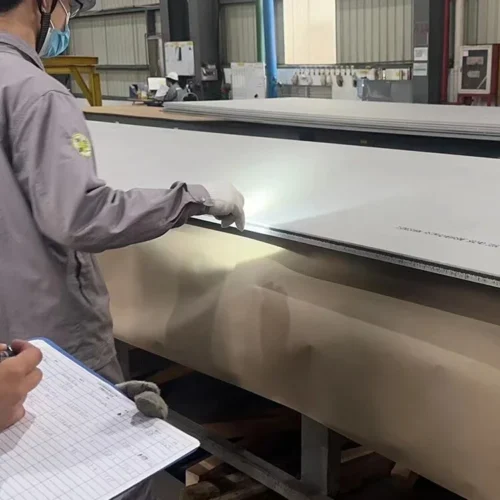
We do not call a coil scrap from a photo alone. Nor do we call it sound from a label alone. We never pickle or acid-wash a coated sheet. Finally, we do not ship a replacement coil before the gauge reading arrives. CRGO silicon steel coils leave Wuxi with the mill label intact, at Jiangsu Zhongtong Weiye Special Steel Co., Ltd.
FAQ
Often yes, because a surface stain leaves the section intact. Wipe the face and run one sample, since a 5 percent loss rise sets the limit. A pitted sample usually fails, because the pits bridge laminations.
Usually 5 mm per side, since edge rust rarely runs deeper. A 1,250 mm coil loses about 0.8 percent of its mass at that trim, so the recovery usually pays.
No, because rust needs water rather than air. Keep the store below 50 percent relative humidity, and the brown patch stops growing. Cycle the store above 70 percent and the patch returns within weeks.
Check the area share first, since a stain under 5 percent usually earns a 3 to 8 percent discount. A replacement costs freight both ways, so the concession wins when the metal still works.
Only after the loss test, since a motor core runs at high flux. A shielding part tolerates more, because flux density stays low there. Classify the end use before you accept the coil.
Request a Quotation
Send photos of the stain, the gauge and the area share. Then we can grade the form and confirm the remedy. Rust assessments are answered within one working day, while quotes stay valid for two weeks. Our silicon steel sheets page lists the gauges we hold in stock. Write to vera.liang@ztwysteel.com.
- Email: vera.liang@ztwysteel.com
- Location: Xishan District, Wuxi, Jiangsu, China
- Rust assessment: form, area share and pit depth against gauge
- Remedy: re-slit, re-square or re-classify, with a re-inspection record
- Documentation: MTC EN 10204 3.1, inspection photos, gauge readings
- Response time: rust assessments answered within one working day, quotes valid two weeks



 English