Standards for Silicon Steel Sheets
Two coils of one grade pass one standard and fail another. Each document fixes its own series and loss reference. Standards for silicon steel sheets interlock in four groups, and a buyer must know which group is speaking. Jiangsu Zhongtong Weiye Special Steel Co., Ltd. supplies silicon steel sheet against GB, ASTM, EN, and IEC calls alike.
The Short Answer
Four clause groups carry the trade: grade coding, dimensions, test method, and release. A grade name means little until its group is named. Hence a purchase order needs four references, not one.
Group One — Grade Coding
Each system codes a grade its own way, so a 50W470 is not an A677 M-47. GB/T 2521 codes a nominal loss, grain type, and thickness. ASTM A677 uses a letter and a loss figure for non-oriented. EN 10106 and EN 10107 split oriented from non-oriented. Therefore, translate the code before comparing.
What a Code Hides
The code carries a thickness and a loss at a stated flux, and both hide in the digits. A 0.50 mm grade at 4.70 W/kg is not a 0.35 mm sheet at that loss, since eddy loss differs. Buyers who match only the loss then ship the wrong gauge. Hence decode all three fields.
Group Two — Dimensions
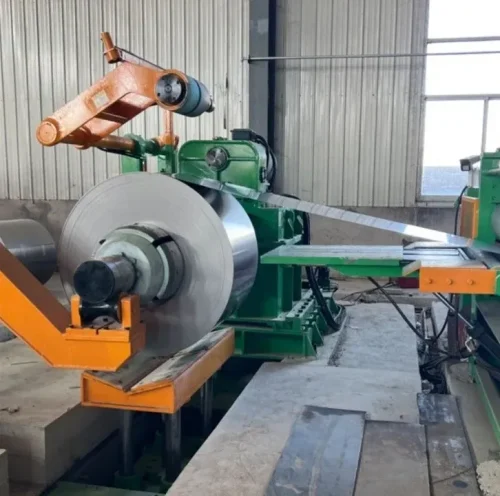
Each standard lists its own thickness series and width tolerance. A 0.50 mm in GB may meet an EN tolerance yet miss an ASTM one. Width tolerance also follows the slitting house rather than the steel standard. Burr limits sit outside the standard in most cases. Therefore, write the dimensional call separately.
What the Series Costs
Thickness outside a series becomes a special order, since a mill rolls to its own schedule. A 0.27 mm fits some series and not others. Confirm the series first when the gauge sits outside. Hence the gauge list is a commercial question.
Group Three — Test Method
Loss is measured on an Epstein frame at 25 cm strips, or on a single-sheet tester. The two do not give identical numbers. IEC 60404-2 covers the frame, while 60404-3 covers the single sheet. ASTM A343 and A804 mirror those two methods. A certificate must name the method. Therefore, a loss figure without a method is incomplete.
What the Frequency Does
Tests at 50 Hz and 60 Hz differ by design, so a 60 Hz market needs its own figure. A grade certified at 50 Hz then understates loss at 60 Hz. Imported certificates then understate heat in a 60 Hz design. Hence ask for the frequency too.
What the Sample Does
The frame needs 25 cm strips cut in a fixed pattern, and a mill cuts them from the coil edge. A sample from the centre may read differently. A buyer who re-tests a random piece then disputes a valid certificate. Therefore, agree on the sampling plan first.
Group Four — Release
A certificate releases the coil, and its type sets how much proof travels with it. EN 10204 3.1 comes from the mill’s own inspection, while 3.2 adds an independent witness. A677 and A876 allow a certificate of compliance instead. A buyer who needs 3.2 must say so before rolling. Hence release is a contract term.
Where the Groups Collide
A GB order shipped to Europe often needs an EN 10106 restatement, since the importer’s file expects that reference. An ASTM A876 grade maps onto EN 10107 with a loss conversion. A buyer who sends one standard number to a mill in another market then waits for a query. Hence pair the call with its target market.
What Oriented Adds
Oriented sheet carries an extra clause on induction. A B8 figure at 1.8 T separates a good grade from a poor one. A876 and EN 10107 both test it, so a CRGO sheet arrives with two numbers. Non-oriented sheet has no such clause. A buyer who compares two oriented coils by loss alone then misses the induction. Therefore, read both figures.
What Non-Oriented Adds
Non-oriented sheet carries clauses on mechanical properties and coating class instead, since motor builders need them. A677 lists tensile and yield, while EN 10106 lists coating types, so a non-oriented sheet needs the annex. A buyer who orders by loss only then breaks a die. Hence the mechanical annex matters here.
Where Buyers Get It Wrong
One buyer compares two grades from different systems by digits alone. Another accepts a certificate without a test method. A third orders a thickness outside every series and waits weeks. Those three errors cover most of our queries.
What We Do Not Do
We do not melt or roll steel. We do not issue a standard we cannot support. Nor do we restate a certificate into another system without a test.
Those limits keep the answer honest.
Specify Your Order
First, name the system and the grade code. Second, give the thickness series and the width. Then state the test method and the certificate type, so the coil arrives with a file that matches.
Related Reading
The IEC and Europe note walks the European call in detail. The grade note decodes the codes, since group one starts there.
Frequently Asked Questions
Which standards apply? GB/T 2521, ASTM A677 and A876, EN 10106 and 10107, IEC 60404-8-4.
Why do two standards disagree? Each fixes its own series and reference flux.
Which test method is standard? Epstein frame or single sheet, named on the certificate.
What does 3.2 add? An independent witness on the release.
Can a GB coil be restated? Only with a fresh test, not by paperwork.
- Email: vera.liang@ztwysteel.com
- Location: Xishan District, Wuxi, Jiangsu, China
- Supply range: CRGO and CRNGO 0.23–0.65 mm, slit to width
- Slitting: 20–1,250 mm, ±0.05 mm, burr under 0.02 mm
- Documentation: MTC EN 10204 3.1, 3.2 on request, method and flux stated