

What is the difference between pure nickel and nickel alloys like Inconel?
They differ in when the quench happens, so fully hardened mold steel reaches 48 to 62 HRC only after machining. Pre-hardened plate arrives already tempered near 30 to 34 HRC. Jiangsu Zhongtong Weiye Special Steel Co., Ltd. supplies the soft state from stock and sources the hard state on request.
The Short Answer
Pre-hardened means the mill tempered the block before shipping. Fully hardened means your shop quenches and tempers it after the cavity is cut. Hence the first saves a heat cycle, and the second buys wear life.
The Timeline
Four steps frame the choice, namely mill rolling, rough machining, heat treatment, and finish machining. Pre-hardened steel skips step three, since the mill already did it. Fully hardened steel keeps step three, which lands between two machining passes.
Difference 1 — The Hardness Ceiling
A pre-hardened block sits near 30 to 34 HRC, and some grades reach 36 to 40 HRC. Fully hardened tool steel runs 48 to 52 HRC for hot work and 58 to 62 HRC for cold work. Therefore, abrasive resin or glass fibre demands the hard state.
Difference 2 — Who Carries the Distortion
Quenching moves metal, and a finished cavity can lose its dimensions. A mill tempers a plain block, so distortion costs it little. Your shop hardens a shaped cavity, so distortion costs it everything. Hence risk follows the schedule.
Difference 3 — Machining Allowance
Soft plate at 30 to 34 HRC cuts with high-speed steel tools at generous feeds. Hard plate at 50 HRC needs carbide and lighter cuts, since the edge breaks down faster. Consequently, the hard route adds machining time after the quench.
Difference 4 — Lead Time and Risk
Pre-hardened plate ships from stock in days, and the cavity goes straight to finishing. Fully hardened work needs a furnace slot, a quench, and two tempers, which may add weeks. Therefore, prototypes rarely use the hard route.
Difference 5 — Section Size
Through-hardening fades as the section grows, since the centre cools slower than the skin. A 400 mm block may harden only near the surface, while a pre-hardened block holds uniform hardness by design. Hence large holders usually stay pre-hardened.
Difference 6 — Repair and Welding
A pre-hardened block can be welded and re-machined with modest preheat. A fully hardened cavity needs annealing before a weld, which risks the whole tool. Consequently, repair-friendly designs favour the softer state.
Difference 7 — Wear at the Gate
Gate washout follows flow speed, so a soft face erodes sooner. Hardening lifts the surface past 50 HRC, which stretches gate life. Therefore, high-speed filling favours the hard state.
Where the Line Blurs
Some pre-hardened grades reach 36 to 40 HRC, which narrows the gap. Those grades suit long-run plastic tools without a full quench. Yet they still cannot match 58 HRC for abrasive wear.
What Surface Treatment Steps In
Nitriding adds a hard case without a full quench, so a pre-hardened tool can still gain wear resistance. The case runs 0.1 to 0.3 mm deep, which covers sliding faces. Hence nitriding bridges the two routes.
The Cost Comparison
Pre-hardened plate costs more per kilo than annealed plate, since the mill carries a temper. Fully hardened steel costs less per kilo, yet the heat treatment adds a service bill. Hence the total often lands close, and the risk decides.
How to Choose in One Pass
Ask three questions, namely the shot count, the filler content, and the section size. Above one million shots or with glass fibre, choose the hard state. Above 400 mm section, choose the pre-hardened state.
How a Drawing Should Read
Write the final hardness with its scale, not the process name, since terms vary between mills. Add the section size, because hardenability depends on it. Then state whether the block is machined before or after the heat cycle.
A Common Mistake
A buyer orders pre-hardened plate, then sends it for hardening “to be safe”. The second quench cracks a tempered structure, and the block is scrapped. Hence never re-harden a pre-hardened block without a full anneal.
What Happens to Flatness
A thin plate quenches flatter than a thick one, since it cools evenly. A thick block may need a stress-relief cycle before finishing. Therefore, plan a straightening allowance on the hard route.
Related Reading
The delivery-condition comparison appears in the 4Cr13 vs 4Cr13H note. Selection by surface appears in the injection mould note.
Frequently Asked Questions
Can pre-hardened plate be hardened later? Only after a full anneal, since a second quench cracks it.
What hardness counts as fully hardened? 48 to 52 HRC for hot work, 58 to 62 HRC for cold work.
Which state machines faster? Pre-hardened, since it reads near 30 to 34 HRC.
Does the hard state resist galling better? Yes, and it holds a polish longer under abrasion.
Which state suits a large holder? Pre-hardened, because deep sections harden unevenly.
What We Do Not Do
We do not quench, temper, or anneal blocks. We do not sell annealed plate as pre-hardened stock. Nor do we promise through-hardness on a block above the section limit.
Those limits keep the two states apart.
Specify Your Order
First, name the state and the hardness with its scale. Second, give thickness, width, and length. Then state the filler or the shot count, so the plate matches the wear duty.
H13 Tool Steel 1.2344 covers hot work at 48–52 HRC. D2 Cold-Work Steel covers cold work at 58–62 HRC. 4Cr13H Plastic Mould Steel covers corrosive resins.
- Email: vera.liang@ztwysteel.com
- Location: Xishan District, Wuxi, Jiangsu, China
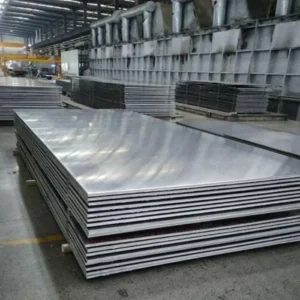
- Supply range: pre-hardened plate 30–40 HRC, 12–400 mm; hardened tool steel on request
- Cutting: length under 4 m, ±1 mm, squareness 1 mm per metre
- Documentation: MTC EN 10204 3.1, state and hardness stated per plate








 English