
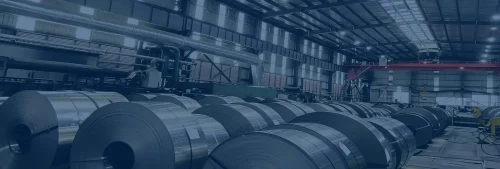
Application Fields of Silicon Steel
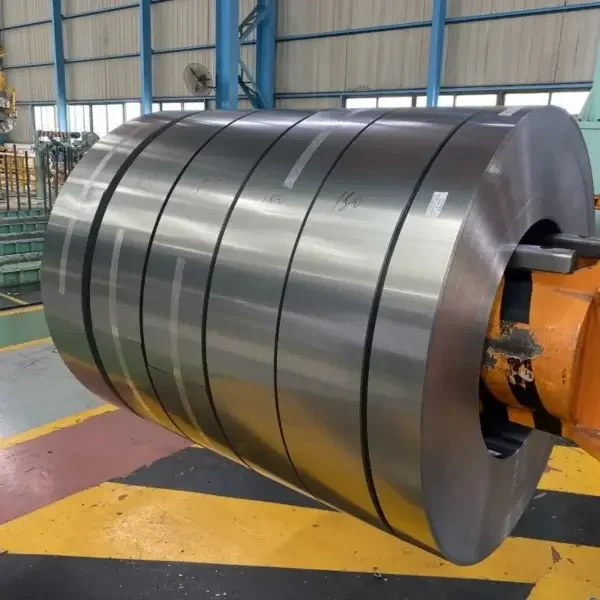
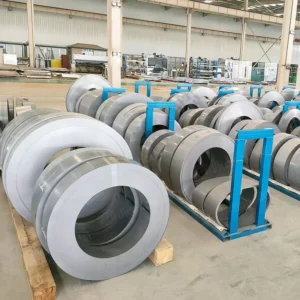
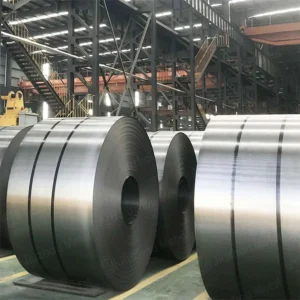
Silicon steel is a special steel grade with relatively high silicon content, mainly used to manufacture iron cores for electromagnetic equipment such as motors and transformers. Its high magnetic permeability and low core loss make it an irreplaceable functional material in the power industry.
I. Major Application Fields of Silicon Steel
In the motor industry, thép silic serves as the core material for nearly all rotating electromagnetic equipment. Silicon steel laminations are indispensable for the iron cores of small household appliance motors, high-power industrial motors on production lines, and turbogenerators in power plants.
Non-oriented silicon steel is generally adopted for these applications. Since the magnetization direction of motor iron cores keeps changing, the material requires uniform magnetic performance in all directions.
Transformers represent another vital application of silicon steel. Grain-oriented silicon steel with high silicon content is used for laminated iron cores in both giant power transformers at substations and compact transformers inside power distribution cabinets. Specially processed to achieve highly consistent grain orientation, this material drastically cuts eddy current loss under a fixed magnetization direction.
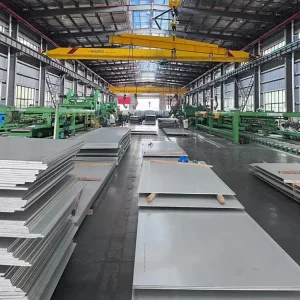
Distribution transformers normally adopt silicon steel sheets with thicknesses ranging from 0.23 mm to 0.3 mm, while ultra-high voltage transformers select thinner 0.18 mm gauges to further suppress energy loss.

II. Key Principles for Silicon Steel Selection
The first step of silicon steel selection is to clarify the magnetic circuit characteristics of the application scenario:
- Equipment with fixed magnetization directions (e.g. transformers) prioritizes grain-oriented silicon steel, which delivers optimal magnetic performance along the rolling direction.
- Scenarios with alternating magnetic fields such as rotating motors require non-oriented silicon steel to guarantee isotropic magnetic properties.
- Ultra-thin gauges are required for high-frequency applications; sheets of 0.1–0.2 mm thickness can effectively restrain eddy currents.
Silicon content is another critical parameter, generally ranging from 1% to 3.5%. Higher silicon content reduces core loss yet compromises machinability.
Material selection requires comprehensive evaluation of operating frequency, magnetic flux density, loss requirements and processing techniques, as no single grade of silicon steel fits all working conditions.





 English
  Japanese
  Korean
  French
  German
  Spanish
  Portuguese
  Russian
  Arabic
  Italian
  Turkish
  Dutch
Dutch  Polish
  Swedish
  Danish
  Norwegian
  Finnish
  Greek
Greek  Hungarian
  Czech
Czech  Romanian
  Bulgarian
  Slovenian
  Croatian
  Slovak
  Malay
Malay  Indonesian
  Thai
Thai  Vietnamese
  Myanmar
  Khmer
Khmer  Lao
Lao  Tagalog
  Hindi
Hindi  Bengali
  Urdu
Urdu  Nepali
  Sinhala
  Hebrew
  Ukrainian
  Serbian
  Icelandic
  Swahili