

Analysis of Saturation Magnetization of Silicon Steel
I. Mechanism of Silicon Steel Magnetic Properties
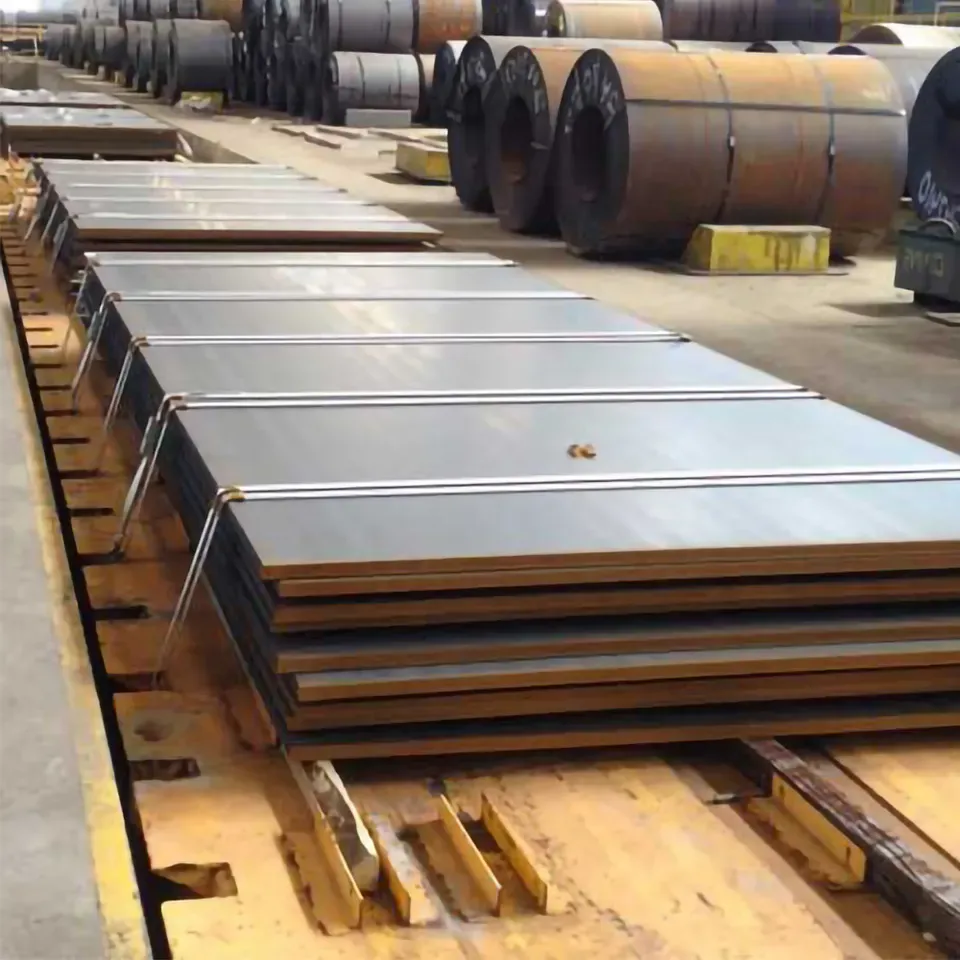
Silicon steel serves as the invisible magnetic framework of electromagnetic equipment, and its saturation magnetization determines the operating efficiency of transformers and motors. This parameter represents the maximum magnetization level the material can reach under strong magnetic fields. The saturation magnetization of thép silic generally ranges from 2.0 T to 2.2 T (Tesla). Notably, every 1% increase in silicon content reduces saturation magnetization by approximately 0.01 T, yet drastically cuts eddy current loss — this explains why power transformers favor high-silicon thép silic.

II. Industrial Reference of Measured Data
In practical applications, cold-rolled non-oriented silicon steel features a typical saturation magnetization of 2.03 T, while grain-oriented silicon steel can reach 2.15 T. Key selection notes:
- Thickness impact: 0.3 mm thin sheets deliver around 5% better magnetic performance than 0.5 mm gauges.
- Temperature effect: Saturation magnetization drops by 0.5%–1% per 100 °C temperature rise.
- Stress sensitivity: Annealing treatment is recommended after mechanical processing to restore magnetic performance.
III. Optimal Balance for Practical Application
Pursuing ultra-high saturation magnetization is not universally applicable; trade-offs must be considered:
- Silicon content above 3.5% causes material embrittlement.
- For high-frequency applications, core loss takes priority over saturation magnetization.
- Medium-grade silicon steel with saturation magnetization of 1.8–2.0 T is recommended for motor core laminations.





 English
  Japanese
  Korean
  French
  German
  Spanish
  Portuguese
  Russian
  Arabic
  Italian
  Turkish
  Dutch
Dutch  Polish
  Swedish
  Danish
  Norwegian
  Finnish
  Greek
Greek  Hungarian
  Czech
Czech  Romanian
  Bulgarian
  Slovenian
  Croatian
  Slovak
  Malay
Malay  Indonesian
  Thai
Thai  Vietnamese
  Myanmar
  Khmer
Khmer  Lao
Lao  Tagalog
  Hindi
Hindi  Bengali
  Urdu
Urdu  Nepali
  Sinhala
  Hebrew
  Ukrainian
  Serbian
  Icelandic
  Swahili