

Chemical Composition Table of Silicon Steel
I. Core Element Composition of Silicon Steel
Serving as the invisible magnetic backbone of power equipment, thép silic is fundamentally an iron-silicon alloy with silicon content ranging from 0.5% to 4.5%. Analogous to a tuner adjusting string tension, every 1% rise in silicon content increases electrical resistivity by approximately 10%. Carbon is treated as an undesirable impurity and must be kept below 0.01%, as excess carbon reduces magnetic permeability. Manganese (0.1%–0.3%) acts as a modifier to optimize hot workability.
II. Impacts of Trace Elements
These seemingly minor trace elements exert decisive influence over thép silic’s electromagnetic performance:
- Aluminum: At 0.02%–0.05%, it refines grain structure and raises magnetic induction.
- Phosphorus: Contents exceeding 0.03% cause a sharp rise in core loss.
- Sulfur: Shall be restricted to under 0.01% to avoid sulfide inclusions.
- Nitrogen: Concentrations above 0.003% trigger magnetic aging.
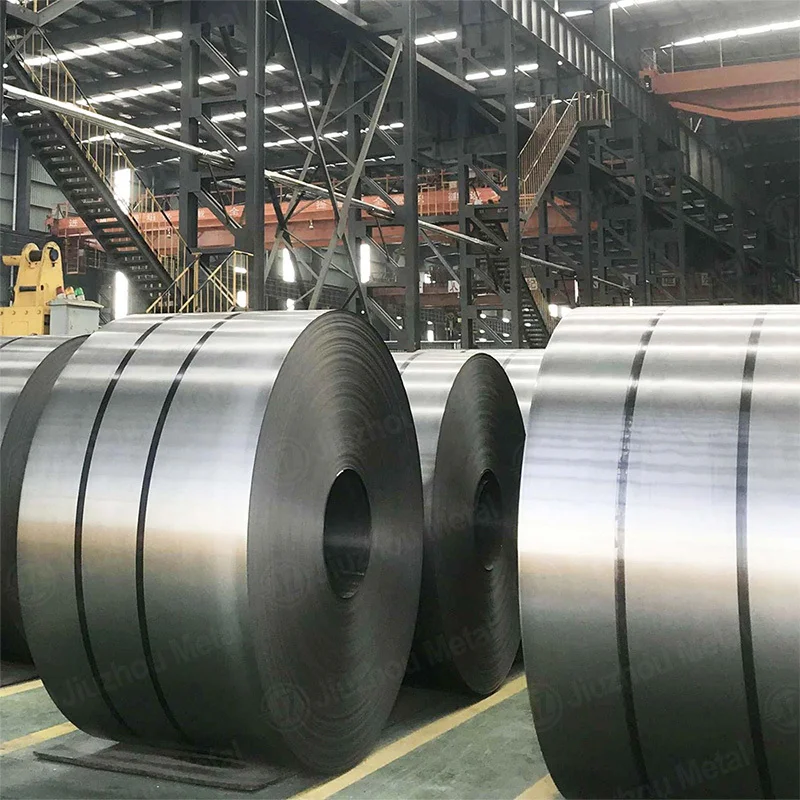
III. Delicate Balance Between Composition and Performance
High-thép silic (3%–4.5%) features superior insulating properties and acts as an effective magnetic barrier, making it ideal for transformer cores. Low-silicon steel (0.5%–2%) offers favorable flux conduction and is widely applied to motor rotors. For special applications, 0.5%–1% aluminum is added to produce silicon-aluminum electrical steel, whose magnetostriction coefficient is 30% lower than conventional silicon steel, enabling quieter transformer operation.




 English
  Japanese
  Korean
  French
  German
  Spanish
  Portuguese
  Russian
  Arabic
  Italian
  Turkish
  Dutch
Dutch  Polish
  Swedish
  Danish
  Norwegian
  Finnish
  Greek
Greek  Hungarian
  Czech
Czech  Romanian
  Bulgarian
  Slovenian
  Croatian
  Slovak
  Malay
Malay  Indonesian
  Thai
Thai  Vietnamese
  Myanmar
  Khmer
Khmer  Lao
Lao  Tagalog
  Hindi
Hindi  Bengali
  Urdu
Urdu  Nepali
  Sinhala
  Hebrew
  Ukrainian
  Serbian
  Icelandic
  Swahili