
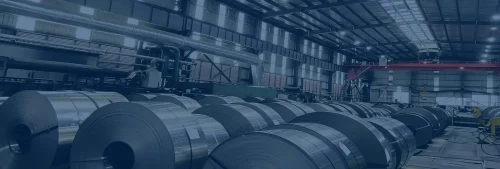
hina H1 2025 Electrical Steel Production Analysis: High-End Breakthrough & Profit Restructuring
août 8, 2026
Blog
2025 marks the final year of China’s 14th Five-Year Plan and the preparatory year for the upcoming 15th Five-Year Plan. Amid the national energy transformation and industrial upgrading drive, electrical steel (silicon steel) has become a core strategic material for power grids, new energy vehicles, high-efficiency motors, data centers and ultra-high voltage (UHV) transmission projects. Leading electrical steel manufacturers are actively aligning with national industrial policies, accelerating product iteration, launching low-carbon and energy-efficient new products, and promoting the high-end, intelligent and green transformation of production equipment.
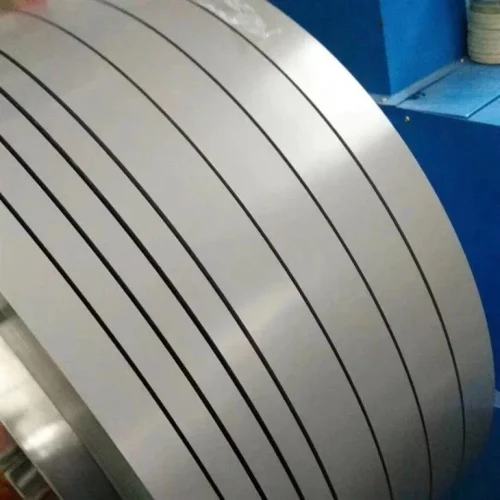
The Chinese electrical steel industry showed distinct operating characteristics in the first half of 2025: steady output growth, widespread technological and equipment upgrades, expanding new production and expansion projects, continuous capacity clearance for low-end products with full-capacity operation of high-end premium grades, and fluctuating but generally rising market prices. Most enterprises achieved stable or improving operating conditions. This article comprehensively reviews China’s electrical steel production, import and export performance in H1 2025, and forecasts the industry’s medium and long-term development trends.
1. 2025 H1 Electrical Steel Production Performance: Steady Output Growth and Accelerated Structural Upgrade
China’s total electrical steel output reached 8.7472 million tons in H1 2025, with a year-on-year growth of 12.1%. The structural differentiation between grain-oriented electrical steel (GOES) and non-oriented electrical steel (NOES) became increasingly prominent, with high-end product capacity expanding rapidly and low-end conventional capacity gradually phasing out.
1.1 Grain-Oriented Electrical Steel (GOES) Output Structure
H1 2025 oriented electrical steel output hit 1.5811 million tons, up 17.30% year-on-year. High magnetic induction (Hi-B) oriented steel output reached 1.0661 million tons, accounting for 67.43% of total GOES output with a 15.91% year-on-year increase. Conventional grain-oriented (CGO) steel output stood at 515,000 tons, taking 32.57% of the market share and rising 20.29% year-on-year.
Among 24 domestic GOES manufacturers, the top 5 enterprises by output are Baosteel, Shougang Zhixin, Hunan Hongwang, Putian Iron Core, and Chongqing Wangbian. The fastest-growing producers include Jiangxi Yingjia, Qingyuan Quanrun, Putian Iron Core, Fujian Auckland, and Shanxi Liguo. New market entrants included Liangang Electromagnetic, which launched trial production in June 2025, while Wuxi Huajing and Shandong Silicon Steel withdrew from the oriented steel market due to capacity elimination and transformation.
1.2 Non-Oriented Electrical Steel (NOES) Output Structure
H1 2025 non-oriented electrical steel output achieved 7.1661 million tons, a year-on-year increase of 10.52%. High-grade non-oriented steel output reached 2.45 million tons (34.19% share), surging 24.11% year-on-year. Specifically, new energy vehicle (NEV) dedicated electrical steel output hit 665,300 tons, up 26.50% year-on-year, serving as the core growth driver of high-end NOES. Medium and low-grade non-oriented steel output was 4.7161 million tons (65.81% share), with a mild 4.57% year-on-year growth.
The non-oriented sector saw dynamic enterprise restructuring. Three new manufacturers including Zhongpu Electromagnetic, Hunan Jinci and Ningbo Chengtian officially started production, while Benxi Steel, Bazhou Chengang and Tianjin Chengtai ceased operation in late 2024. Jinxi Jinlan shifted its business focus to customized processing and OEM production. The top 5 NOES producers by output are Baosteel, Shougang Zhixin, Yima Group, Shagang Iron and Steel, and Angang Steel, while the fastest-growing enterprises include Baotou Steel, Guangdong Weiken, Sichuan Ruizhi, Shougang Zhixin and Jiangxi Juhuang.
2. Industry Investment Boom: New Capacity Expansion and Regional Distribution Characteristics
China’s electrical steel industry maintained robust investment enthusiasm in H1 2025. A total of 27 ongoing and planned production projects were recorded, including 15 oriented steel projects with an annual capacity of 1.67 million tons and 12 non-oriented steel projects with a total annual capacity of 5.01 million tons.
New capacity presents obvious regional aggregation features:
-
East China: 13 new projects (8 NOES, 5 GOES), benefiting from strong downstream power equipment and new energy demand
-
Central China: 8 new projects (2 NOES, 6 GOES), relying on mature industrial bases and logistics advantages
-
North China: 5 new projects (1 NOES, 4 GOES), supported by resource and energy cost advantages
-
South China: 1 new non-oriented steel project, targeting Southeast Asian export markets
Newly added capacity in 2025 will gradually impact market supply. Due to capacity ramp-up cycles, full market competition and significant price fluctuations are expected to concentrate in 2026–2027, marking a new round of industry reshuffling.
3. 2025 H1 Market Competition & Profit Pattern: Structural Differentiation Intensifies
3.1 Oriented Electrical Steel: Thin Overall Profit Margin, Hi-B Products Maintain Premium Profitability
Sufficient market supply intensified homogenized competition for conventional CGO steel in H1 2025, resulting in low sales prices and marginal profits. In contrast, high-performance Hi-B oriented steel maintained stable profit margins supported by rigid high-end demand. The oriented steel market presents a clear pattern of strong demand but squeezed overall profits, with differentiated returns between high-end and low-end grades.
3.2 Non-Oriented Electrical Steel: Overcapacity Pressures Low-End Market, High-End NEV Grades Face Growing Competition
Medium and low-grade non-oriented steel faced continuous shrinking downstream demand and fierce price wars, pushing many manufacturers to near break-even or loss-making status. Although high-grade and NEV-specific electrical steel maintained demand growth, rising supply and downstream cost pressure restricted price increases, leading to intensified competition among high-end suppliers.
4. Import & Export Performance: Export Growth Driven by Global Energy Efficiency Upgrade
China’s electrical steel foreign trade achieved structural improvement in H1 2025, with overall export volume growing steadily and export unit price rising against the global market trend.
4.1 Core Trade Data
-
Total Imports: 76,400 tons, down 2.46% YoY; GOES imports 47,100 tons (+31.3% YoY), NOES imports 29,300 tons (-30.96% YoY)
-
Total Exports: 765,900 tons, up 9.81% YoY; GOES exports 393,200 tons (+24.77% YoY), NOES exports 372,700 tons (-2.52% YoY)
-
Price Performance: Average import price RMB 7,939/ton (-12.68% YoY); Average export price RMB 9,953/ton (+1.39% YoY)
4.2 Export Growth Drivers
Global energy efficiency upgrading serves as the core driver of China’s electrical steel export growth. The EU Tier 2 new energy efficiency standards and the U.S. DOE-2029 transformer efficiency regulations have substantially boosted overseas demand for high-grade oriented steel. North America, the Middle East, Southeast Asia and India have become key incremental markets:
-
North America: Strict new transformer standards drive massive procurement of high-efficiency GOES
-
India: Rapid energy infrastructure expansion and BIS certification promotion increase electrical steel imports
-
Middle East: Booming data center construction and green energy investment sustain demand growth for power transmission materials
5. Market Consumption & Competitive Landscape Analysis
China’s apparent electrical steel consumption reached 8.0577 million tons in H1 2025, including 1.235 million tons of oriented steel and 6.8227 million tons of non-oriented steel.
5.1 Oriented Steel Market Pattern: High Industry Concentration, Leading Giants + Rising Private Enterprises
The oriented steel sector maintains a high-concentration competitive landscape. The top 5 manufacturers account for 67% of total output. Baosteel dominates the high-end market with over one-third market share, while Baosteel and Shougang Zhixin jointly occupy approximately 70% of the domestic Hi-B steel market.
Private enterprises achieved rapid breakthroughs. Hunan Hongwang, a rising private player, exceeded 100,000 tons of H1 output with full Hi-B production capacity. Putian Iron Core expanded global layout through flexible OEM and export-oriented models, achieving substantial growth in production and sales. However, raw material and technical barriers still restrict small and medium-sized enterprises from entering the high-end Hi-B segment, while cost advantages support differentiated competition for qualified CGO manufacturers.
5.2 Non-Oriented Steel Market Pattern: Stable High-End Demand, Weak Low-End Market
The non-oriented steel industry presents a “one superpower + multiple strong players” pattern. Baosteel ranks first with three major production bases, and the top 5 enterprises hold over 66% of total output. Medium and low-grade products still account for more than 60% of market share but show a continuous declining trend.
NEV drive motor demand remains the most resilient growth pillar. Baosteel, Shougang Zhixin and Xinsteel New Materials together occupy nearly 75% of China’s high-grade automotive electrical steel market. Affected by downstream vehicle price cuts, automakers continue to press for supply chain price reductions, bringing sustained profit pressure on NOES manufacturers. Most downstream buyers adopt small-batch, multi-batch procurement strategies, resulting in cautious market inventory sentiment.
6. H2 2025 & Long-Term Industry Trend Forecast
China’s electrical steel industry will maintain dual development trends of accelerated high-end upgrading and full industrial chain integration. Headstream enterprises will continue technological iteration and high-end capacity expansion focusing on new energy and high-efficiency power scenarios, while the industry will further eliminate backward low-end capacity.
6.1 Sustained Growth in Downstream Rigid Demand
National power grid investment reached RMB 204 billion from January to May 2025, with a 20% year-on-year increase. Accelerated UHV construction, distribution network renovation and energy storage project investment will continuously drive demand for high-performance oriented silicon steel. Power grid investment growth is expected to sustain until 2030, with power supply and demand balance projected around 2045.
The home appliance industry shows differentiated growth, with air conditioner and washer output increasing steadily. Green and intelligent home appliance consumption drives incremental demand for high-efficiency non-oriented steel. Booming data center and new energy storage investment, up over 30% year-on-year, further expands high-end electrical steel application scenarios.
6.2 Improving Market Environment and Stabilizing Product Prices
With improving global trade conditions and robust overseas demand for power equipment exports, high-end electrical steel prices will remain stable in H2 2025. Accelerated import substitution and orderly private capacity release will push conventional oriented steel prices back to a reasonable range. The industry will form a benign pattern of stable high-end market and diversified industrial prosperity, with leading enterprises consolidating high-end advantages and private players expanding market share in segmented tracks.
6.3 Rationalized Industry Profit Margins
Industry profitability will gradually return to reasonable levels. Intensified market competition in 2026 will accelerate capacity elimination: backward manufacturers will face transformation or exit pressure, while leading enterprises will optimize capacity structure. The supply-demand balance between high-end and low-end products will be gradually improved, driving overall price stabilization and recovery.
6.4 Historic Opportunities from Mega Hydropower Projects
The downstream Yarlung Tsangpo River hydropower project, with a total investment of RMB 1.2 trillion and installed capacity equivalent to three Three Gorges Dams, brings unprecedented incremental demand for high-end electrical steel. The project is expected to demand 60,000–70,000 tons of high-grade non-oriented steel for generator stator cores, 56,000–70,000 tons of special oriented steel for ±800kV UHV transmission, and 250–300 tons of ultra-thin electrical steel for reactor iron cores, greatly expanding the high-end market space.
7. Industry Outlook: Coexisting Opportunities and Challenges
The Chinese electrical steel industry faces dual patterns of capacity expansion pressure and emerging track dividends. In the long run, products will evolve toward thinner gauges, higher strength, higher frequency and higher torque. New materials such as amorphous composite strips and self-bonding silicon steel will achieve large-scale application.
Industry homogenized competition will intensify, and regional localized production layout will become a new competitive advantage. The high-profit era of electrical steel has ended, and the industry will enter a stage of high-quality and rational development. Through continuous low-end capacity clearance and high-end capacity expansion, Chinese electrical steel enterprises will further enhance global competitiveness, support domestic high-end power equipment upgrading, and expand market share under the Belt and Road Initiative and global energy transformation trends.




 English
  Japanese
  Korean
  French
  German
  Spanish
  Portuguese
  Russian
  Arabic
  Italian
  Turkish
  Dutch
Dutch  Polish
  Swedish
  Danish
  Norwegian
  Finnish
  Greek
Greek  Hungarian
  Czech
Czech  Romanian
  Bulgarian
  Slovenian
  Croatian
  Slovak
  Malay
Malay  Indonesian
  Thai
Thai  Vietnamese
  Myanmar
  Khmer
Khmer  Lao
Lao  Tagalog
  Hindi
Hindi  Bengali
  Urdu
Urdu  Nepali
  Sinhala
  Hebrew
  Ukrainian
  Serbian
  Icelandic
  Swahili