
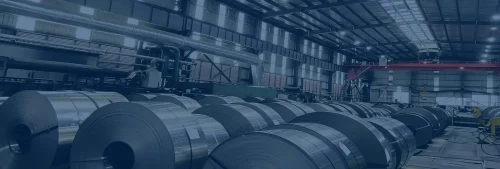
Electrical Steel
Electrical Steel
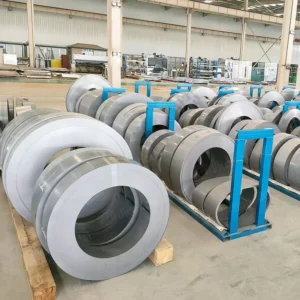
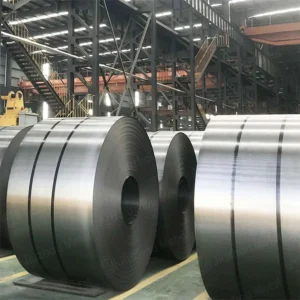
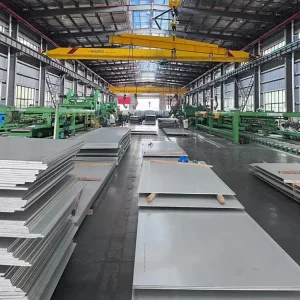
Electrical steel, also known as silicon steel sheet, is an indispensable soft magnetic alloy for the power, electronics and military industries, as well as the highest-output functional metallic material. It is mainly used as iron cores for various motors, generators and transformers. Its manufacturing process is sophisticated with stringent technical requirements; overseas manufacturers protect relevant production technologies via patents, regarding them as core corporate assets. The manufacturing technology and product quality of electrical steel sheets serve as key indicators measuring a country’s special steel production capacity and scientific & technological development level. China’s cold-rolled electrical steel still falls short in output, quality, grades and specifications to meet the demands of the energy (power) industry, with substantial gaps compared with Japan in production technology, equipment, management and research & development.
Physical and Chemical Properties
Electrical steel, or silicon steel, is a silicon-iron soft magnetic alloy featuring ultra-low carbon content and silicon content ranging from 1.0% to 4.5%. Based on internal grain alignment, it is split into two major categories: grain-oriented silicon steel and non-oriented silicon steel.
- Grain-oriented silicon steel features grains neatly aligned roughly parallel to the rolling direction, delivering exceptional magnetic performance along the specific rolling axis. It is predominantly used for transformer production and generally contains over 3% silicon.
- Non-oriented silicon steel has randomly distributed grains with uniform magnetic properties in all directions. Its silicon content ranges from 0.5% to 3%, offering superior mechanical strength and excellent stamping formability, making it the core material for all types of motors.
Key performance indicators of electrical steel include:
- Low core loss: the primary quality metric; all countries classify grades by core loss values.
- High magnetic induction: silicon steel sheets with high magnetic induction under identical magnetic fields enable smaller, lighter iron cores for motors and transformers.
- High stacking factor: smooth, flat sheets with consistent thickness raise the stacking factor of laminated iron cores.
- Superior blanking performance: especially critical for miniature and micro motor core fabrication.
- Insulating coating with strong adhesion and favorable weldability on the sheet surface.
Research shows grain size and grain orientation exert pronounced effects on the work-hardening behavior of silicon steel. With identical grain sizes, non-oriented silicon steel generally exhibits stronger work hardening capacity than grain-oriented silicon steel. For silicon steel of identical grain orientation, larger grain sizes correspond to greater hardness variation. Deformation of fine-grained materials is dominated by dislocation slip, while coarse-grained silicon steel mainly undergoes twin deformation.
In recent years, China has achieved major breakthroughs in the production of ultra-thin gauges and high-magnetic-performance electrical steel. In 2023, Wuhan Iron and Steel (WISCO) realized mass production of 0.1 mm ultra-thin non-oriented silicon steel for new energy vehicles, setting a new world record. Additionally, the 18-high six-stand tandem cold rolling process developed by Wuhan Qianye Engineering Technology Co., Ltd. optimizes rolling schedules to lift the B800 magnetic induction value of finished grain-oriented silicon steel by 0.01 T–0.02 T.

Development History
Stage 1: Hot-Rolled Silicon Steel (1882–1955)
Iron boasts magnetic permeability thousands to tens of thousands of times higher than air; magnetized iron cores achieve high magnetic flux density and generate far stronger magnetic fields than external excitation fields. Ordinary hot-rolled low-carbon steel sheets were the earliest soft magnetic core materials adopted in industry. In 1886, Westinghouse Electric Corporation of the United States first fabricated laminated transformer cores using hot-rolled low-carbon steel sheets with approximately 0.4% impurities. By 1890, 0.35 mm hot-rolled low-carbon thin sheets were widely used for motor and transformer cores. However, low-carbon steel suffers high core loss due to low electrical resistivity and severe magnetic aging caused by elevated carbon and nitrogen contents. In 1882, R.A. Hadfield of the UK launched research on silicon steel and published magnetic test results for 4.4% silicon-iron alloys in 1898. The United States acquired the license to Hadfield’s patent in 1903, and mass production of hot-rolled silicon steel sheets commenced in both the U.S. and Germany that same year, with large-scale U.S. production established by 1905. Hot-rolled silicon steel rapidly replaced ordinary hot-rolled low-carbon steel for motor and transformer manufacturing within a short timeframe, cutting core loss by more than half. The period from 1906 to 1930 saw manufacturers and end-users reach consensus on cost and mechanical performance of hot-rolled silicon steel sheets, alongside improvements to product quality and output alongside reformed motor and transformer design & fabrication.
Stage 2: Cold-Rolled Electrical Steel (1930–1967)
This phase centers on the development of conventional grain-oriented silicon steel (GO steel). In 1930, N.P. Goss of the U.S. carried out extensive experiments combining cold rolling and annealing to develop production processes for grain-oriented silicon steel coils where the easy magnetization axis (001) aligns parallel to the rolling direction. In 1933, Goss fabricated 3% silicon steel with superior along-rolling magnetic performance via double cold rolling and annealing, filing a patent and publishing his findings in 1934. In 1935, Armco Steel Corporation partnered with Westinghouse Electric to commercialize production under Goss’s patent. Armco continuously upgraded manufacturing processes and equipment by deploying rapid trace carbon analysis and other technologies, gradually lifting product quality. After mastering two front-end processes — MnS inhibitor addition and high-temperature slab heating — the patented manufacturing technology for grain-oriented silicon steel was fully mature by 1958, delivering drastically improved and stable magnetic properties. Mass production of 0.30 mm sheets began in 1959, followed by 0.27 mm products in 1963. Armco began producing cold-rolled non-oriented silicon steel sheets in the early 1940s. Between 1963 and 1967, the UK, Japan and other countries successively phased out hot-rolled silicon steel production, which was gradually replaced by cold-rolled non-oriented and grain-oriented electrical steel.
Stage 3: High-Magnetic-Induction Grain-Oriented Silicon Steel (Hi-B Steel) (1961–1994)
In 1961, Nippon Steel Corporation, building on licensed Armco technology, pioneered trial production of high-induction grain-oriented silicon steel with a composite AlN+MnS inhibitor system. Pilot production launched in 1964 under the brand Hi-B, though magnetic performance remained unstable. Fifteen years of continuous process refinement matured the Hi-B manufacturing route, and the Z8H grade entered formal mass production in 1968. Starting in 1979, Nippon Steel and Kawasaki Steel rolled out new grades of Hi-B steel with thicknesses of 0.30 mm, 0.27 mm, 0.23 mm and 0.18 mm via silicon content elevation, strip thickness reduction and magnetic domain refinement technologies.
Stage 4: Development of Electrical Steel in China (1952–Present)
China’s electrical steel industry originated in 1952, when Taiyuan Iron and Steel (TISCO) trial-produced hot-rolled silicon steel sheets. In 1978, WISCO’s 1700 mm hot rolling mill entered trial operation, producing China’s first coil of cold-rolled grain-oriented silicon steel. In 1993, WISCO exported its anti-coil-collapsing technology for cold-rolled strip production lines to Japan, marking a reverse technology export milestone. On May 15, 2008, Baoshan Iron & Steel (Baosteel) successfully rolled its first qualified grain-oriented silicon steel coil, signifying breakthrough independent innovation for grain-oriented silicon steel. In 2009, large transformers fabricated with domestic grain-oriented silicon steel were deployed in the Three Gorges Project for the first time. In 2013, Baosteel’s project “Development and Industrialization of Manufacturing Technology for Low-Temperature High-Induction Grain-Oriented Silicon Steel” won the First-Class National Science and Technology Progress Award. On December 1, 2023, WISCO’s first cold-rolled silicon steel plant started demolition and comprehensive upgrading to manufacture world-class high-end grain-oriented silicon steel. Its dedicated production line for new energy non-oriented silicon steel realized mass production of 0.1 mm ultra-thin sheets. By the end of 2024, China’s cold-rolled silicon steel production capacity reached approximately 18 million tons with an annual output of 16.1 million tons. In 2017, China shifted from a net importer to a net exporter of silicon steel.
Classification
| Category | Subtype | Silicon Content (%) | Nominal Thickness (mm) |
|---|---|---|---|
| Hot-Rolled Silicon Steel Sheet (Non-Oriented) | Low-Silicon Hot-Rolled Steel (Hot-Rolled Motor Steel) | 1.0–2.5 | 0.50 |
| Hot-Rolled Silicon Steel Sheet (Non-Oriented) | High-Silicon Hot-Rolled Steel (Hot-Rolled Transformer Steel) | 3.0–4.5 | 0.35 and 0.50 |
| Cold-Rolled Electrical Steel Sheet | Non-Oriented Electrical Steel (Cold-Rolled Motor Steel) — Low-Carbon Electrical Steel | ≤0.5 | 0.50 and 0.65 |
| Cold-Rolled Electrical Steel Sheet | Non-Oriented Electrical Steel — Silicon Steel | >0.5–3.2 | 0.35 and 0.50 |
| Cold-Rolled Electrical Steel Sheet | Grain-Oriented Silicon Steel (Cold-Rolled Transformer Steel) — Conventional Grain-Oriented Silicon Steel | 2.9–3.3 | 0.20, 0.23, 0.27, 0.30, 0.35 |
| Cold-Rolled Electrical Steel Sheet | Grain-Oriented Silicon Steel (Cold-Rolled Transformer Steel) — High-Induction Grain-Oriented Silicon Steel | 2.9–3.3 | — |
Beyond the above categories, special-purpose electrical steel sheets are also manufactured:
- 0.15 mm & 0.20 mm thin cold-rolled non-oriented 3% silicon steel strips, plus 0.025 mm, 0.05 mm & 0.10 mm thin cold-rolled grain-oriented 3% silicon steel strips for medium/high-frequency motors, transformers and pulse transformers;
- 0.7 mm high-strength cold-rolled non-oriented 3% silicon steel sheets for relays and power switches;
- High-strength cold-rolled electrical steel sheets for rotors of novel high-speed motors;
- Hot-rolled heavy plates and cold-rolled low-carbon electrical steel sheets for magnetic shielding in medical MRI scanners and electromagnets of high-energy accelerators;
- High-silicon steel sheets with 4.5%–6.5% silicon for high-frequency motors, transformers and magnetic shielding applications.
Performance Requirements
Motors, transformers and other electrical components are generally required to deliver high efficiency, low power consumption, compact size and light weight. Electrical steel sheets adopt core loss and magnetic induction as certified magnetic performance indicators. Detailed requirements are as follows:
Low Core Loss (PT)
Core loss refers to wasted electric power consumed during core magnetization under alternating magnetic fields ≥50 Hz, abbreviated as iron loss or alternating loss, measured in W/kg. This wasted energy generates heat within cores, causing power waste and temperature rise in motors and transformers. Core loss of electrical steel consists of three components: hysteresis loss, eddy current loss (Pe) and anomalous loss (Pa). Low core loss conserves massive electricity, extends service cycles of motors and transformers, and simplifies cooling systems. Core loss from electrical steel accounts for 2.5%–4.5% of total annual power generation across all nations. All manufacturers prioritize core loss reduction and classify product grades based on core loss values.
High Magnetic Induction (B)
Magnetic induction, also known as magnetic flux density (unit: T), represents the number of magnetic flux lines passing through a unit cross-sectional core area and reflects material magnetization capacity. High magnetic induction reduces magnetizing (no-load) current, cutting both copper loss and core loss to save power. With fixed motor/transformer power ratings, high magnetic induction enables higher design maximum flux density (Bₘ), shrinking core cross-section, volume and weight, and lowering consumption of electrical steel, copper wire, insulation and structural materials. This reduces overall equipment loss and manufacturing costs while facilitating production, installation and transportation of large transformers and motors.
- Grain-oriented silicon steel is designed with Bₘ up to 1.7–1.80 T (close to B8 value), so B8 is adopted as its certified induction index.
- Motors are designed with Bₘ around 1.5 T (close to B50 of cold-rolled non-oriented steel), so B50 serves as the certified index for non-oriented silicon steel.
- Hot-rolled silicon steel features lower induction, typically certified by B25.
Magnetic Anisotropy Requirements
Motors operate dynamically with stator and rotor cores assembled from toothed circular laminations, requiring magnetically isotropic electrical steel — cold-rolled non-oriented or hot-rolled silicon steel. Standards mandate longitudinal-transverse core loss difference <8% and magnetic induction difference <10%. Transformers operate statically. Cores of medium/large transformers are stacked from strips; distribution transformers, current/voltage transformers and pulse transformers adopt wound cores. This layout allows blanking and magnetization parallel to the rolling direction, hence cold-rolled grain-oriented silicon steel is exclusively used.
Excellent Blanking Performance
End-users carry out heavy blanking work on electrical steel sheets, making favorable blanking performance essential — especially critical for micro and small motor manufacturing. Superior blanking extends die and shear blade service life, guarantees precise lamination dimensions and minimizes edge burrs. Key factors affecting blanking performance:
- Die/blade material; cemented carbide dies deliver over double the service life of tool steel dies.
- Clearance between punch and die, normally 5%–6% of sheet thickness.
- Type of blanking lubricant.
- Lamination geometry.
- Type and quality of surface insulating coating.
- Sheet hardness. Items 5 and 6 are determined by electrical steel quality.
Smooth, Flat Surface and Uniform Thickness
Smooth, flat sheets with consistent thickness are required to maximize core stacking factor. A higher stacking factor expands effective core utilization space, narrows air gaps and reduces magnetizing current. Every 1% drop in stacking factor corresponds to a 2% rise in core loss and 1% drop in magnetic induction.
Superior Insulating Coating Properties
A thin semi-organic insulating coating (inorganic salts or mixed inorganic-organic salts) is coated onto cold-rolled electrical steel sheet surfaces to prevent inter-lamination short-circuits that amplify eddy current loss. Coating requirements:
- Excellent heat resistance: intact during stress-relief annealing at 750–800 °C.
- Thin, uniform coating layer.
- High inter-lamination resistance.
- Strong adhesion.
- Compatible with blanking.
- Good corrosion and rust resistance.
- Favorable weldability. Coating specifications vary by application scenario.
Minimal Magnetic Aging
Magnetic aging describes the gradual shift in magnetic properties of ferromagnetic materials over service time, primarily induced by impurity elements carbon and nitrogen. Magnetic aging is drastically suppressed when carbon and nitrogen contents in electrical steel are controlled below 0.0035%.
Production Process
Smelting
Silicon steel is predominantly smelted via basic oxygen furnaces (or electric arc furnaces), combined with vacuum molten steel treatment and AOD refining, followed by ingot casting or continuous casting. Silicon (0.5–4.5%) and aluminum (0.2–0.5%) contents are adjusted during smelting to meet magnetic performance demands for different applications; high-grade silicon steel requires elevated silicon and aluminum levels. Carbon, sulfur and inclusions are minimized, and non-metallic oxide inclusion (NI) content is tightly controlled to guarantee magnetic properties.
Hot Rolling
Cold-rolled silicon steel outperforms hot-rolled variants in magnetic performance, surface quality, stacking factor and blanking performance, and supports coil production. For this reason, many countries phased out hot-rolled silicon steel production starting in the 1960s. China manufactures hot-rolled silicon steel via low-temperature rapid single-pass hot rolling at ~900 °C and batch annealing under hydrogen shielding, delivering high yield alongside good surface finish and magnetic properties. In January 2026, Panzhihua Vanadium Steel Plate Mill’s 1450 mm hot rolling line successfully produced PW1300 cold-rolled non-oriented electrical steel and PG195 ultra-wide electrical steel.
Pickling
Descaling machines and hydrochloric acid tanks remove oxide scales from hot-rolled strips to eliminate surface defects in cold-rolled finished products.
Cold Rolling
Reduction ratios of 40%–90% are applied to achieve target thickness and material grades, supported by advanced automatic thickness and shape control systems. The 18-high six-stand tandem cold rolling technology for low-temperature Hi-B steel enables production of thin-gauge grain-oriented silicon steel.
Annealing
Annealing softens work-hardened strips generated during cold rolling. Heating followed by rapid cooling produces deep-drawing and high-tensile steel; two mainstream annealing processes are deployed: batch (bell) annealing and continuous annealing.
Insulating Coating
Prior to core fabrication, continuous coating equipment sprays insulating liquid onto both sides of silicon steel strips. The coating improves machinability and suppresses eddy current loss proportional to the square of sheet thickness.
Influencing Factors
Chemical Composition
Elements in electrical steel fall into three categories:
- Beneficial alloy elements: Si, Al, Mn These reduce magnetocrystalline anisotropy constant K₁ and saturation magnetostriction constant λₛ of iron, easing magnetization and lowering hysteresis loss. They also raise electrical resistivity to cut eddy current loss (Pe). Increasing their content markedly reduces total core loss, yet excessive levels render steel hard and brittle, unfit for cold forming.
- Harmful impurity elements: C, S, N, O, Ti, Zr These form fine, dispersed carbides, sulfides, nitrides and oxides that hinder grain growth during finished-product annealing and degrade magnetic performance; their content must be minimized.
- Trace auxiliary elements: Sb, Sn Minor additions of Sb and Sn optimize recrystallization texture in non-oriented electrical steel, boosting favorable (100) and (110) texture components while suppressing unfavorable (111) texture, thus lowering core loss and raising magnetic induction. Small doses also restrain internal oxide and nitride layer formation to enhance magnetism.
Grain Size
Larger grains reduce grain boundary count and resistance to domain wall movement, cutting hysteresis loss. However, enlarged magnetic domains increase both eddy current loss and anomalous loss. An optimal critical grain size exists to minimize total core loss.
Impurities, Inclusions and Internal Stress
Minimizing inclusions and impurities is the most critical measure to elevate magnetic performance of non-oriented electrical steel. They obstruct domain wall motion to raise hysteresis loss and coercivity, generate closure magnetic domains to increase magnetization difficulty, and severely disrupt grain growth and texture composition. Any internal residual stress in electrical steel sheets elevates coercivity.
Crystal Texture
For grain-oriented silicon steel, higher B8 drastically reduces hysteresis loss. For non-oriented electrical steel, high (100) texture delivers the lowest hysteresis loss and P15, followed by (110) texture; (111) texture yields the worst magnetic properties.
Sheet Thickness
Thinner sheets generally raise hysteresis loss yet sharply reduce eddy current loss. An optimal critical thickness balances total core loss.
Surface Condition
Smooth, clean surfaces reduce free surface magnetic poles and magnetostatic energy, lowering resistance to domain wall motion, hysteresis loss and coercivity.
Safety & Environmental Protection
Electrical steel manufacturers face increasingly stringent environmental regulations, with tighter controls over hazardous substances in electrical appliances. On February 13, 2003, the EU issued the WEEE Directive (2002/96/EC, Waste Electrical and Electronic Equipment) and RoHS Directive (2002/95/EC, Restriction of Hazardous Substances in Electrical and Electronic Equipment). Effective July 1, 2006, all new electrical/electronic goods entering the EU market must not exceed statutory limits for six hazardous substances: lead, mercury, cadmium, hexavalent chromium, polybrominated diphenyl ethers (PBDE) and polybrominated biphenyls (PBB). These directives create technical trade barriers, imposing stricter environmental standards and directly impacting China’s electrical equipment exports to the EU.
Testing and Standards
Core loss and magnetic induction serve as certified magnetic indicators for electrical steel sheets. Corresponding test methods and product standards form the core framework for performance measurement and quality control, covering Chinese national standards, international standards and industrial standards.
Chinese National Standards
- Core product standards: GB/T 2521-2008 Cold-Rolled Grain-Oriented and Non-Oriented Electrical Steel Strips (Sheets) has been split into two current standards:
- GB/T 2521.1-2016 Fully Processed Cold-Rolled Electrical Steel – Part 1: Non-Oriented Grain Steel Strips (Sheets)
- GB/T 2521.2-2016 Fully Processed Cold-Rolled Electrical Steel – Part 2: Grain-Oriented Steel Strips (Sheets)
- Magnetic test standards: The obsolete GB/T 10129-1988 Method of Measurement of Medium-Frequency Magnetic Properties for Electrical Steel Sheets (Strips) was replaced by GB/T 10129-2019 on July 1, 2020.
- Supplementary test standards: GB/T 2522-1988, GB/T 3655-1992, GB/T 13789-1992.
International Standards
- Product specification: ASTM A345/A345M-19 Standard Specification for Flat-Rolled Electrical Steels for Magnetic Applications
- AC magnetic test method: ASTM A343/A343M-14 Standard Test Method for Alternating-Current Magnetic Properties of Materials at Power Frequencies Using Wattmeter-Ammeter-Voltmeter Method and 25-cm Epstein Test Frame
- Coating classification: IEC 60404-1-1:2004+AMD1:2024 CSV, covering surface insulation of electrical steel sheets, strips and laminations.
Industrial Standards
JB/T 5257.2-1991 Silicon Steel Sheet – Shearing Process Guidelines standardizes shearing fabrication workflows for electrical steel.
Industrial Status and Milestone Events
As an essential soft magnetic alloy for power, electronics and military sectors, the electrical steel industry’s development is closely tied to core technological breakthroughs. This section summarizes China’s recent industry landscape and landmark events.
Industrial Status
By the end of 2024, China’s cold-rolled silicon steel capacity reached approximately 18 million tons, including 15 million tons of non-oriented silicon steel and 3 million tons of grain-oriented silicon steel. In H1 2024:
- Grain-oriented silicon steel output: 1.385 million tons, capacity utilization 87%;
- Non-oriented silicon steel output: 6.417 million tons, capacity utilization 82%. Output shares of high-induction grain-oriented silicon steel (Hi-B) and ultra-thin gauges ≤0.20 mm rose significantly.
China’s silicon steel industry faces structural overcapacity in low-end segments, while high-end grades (high-grade non-oriented silicon steel, Hi-B grain-oriented silicon steel) see robust demand alongside intensifying market competition. 2024 export data: total silicon steel exports hit 1.447 million tons with net exports of 1.298 million tons (surpassing 1 million tons for the first time). Average export price stood at USD 1,364 per ton, higher than import prices, with grain-oriented silicon steel holding a more prominent price premium.
Future technological trends for silicon steel include ultra-thin gauges, ultra-high magnetic induction, ultra-low core loss, high-frequency compatibility, low-carbon green manufacturing and intelligent production.
Milestone Events
- December 1, 2023: WISCO’s first cold-rolled silicon steel plant commenced demolition and full upgrading to produce world-leading high-end grain-oriented silicon steel. The globally pioneering 18-high six-stand tandem cold rolling unit developed by Wuhan Qianye Engineering entered commercial operation that year, drastically lifting magnetic performance of grain-oriented silicon steel and marking China’s shift from follower to leader in core grain-oriented silicon steel rolling technology.
- 2024: Baoshan Iron & Steel launched multiple proprietary electrical steel grades globally, including B23P080 and B20HS070.
- June 2025: WISCO’s dedicated 550,000-ton annual non-oriented silicon steel production line for new energy vehicles went online.
- September 2025: Shougang Zhixin Electromagnetic Materials Co., Ltd. debuted 16 new electrical steel grades worldwide; its 0.10 mm non-oriented electrical steel is deployed in drive motors of BYD Yangwang U9, the electric vehicle holding the global top speed record.
- January 2026: Panzhihua Vanadium Steel Plate Mill rolled PW1300 cold-rolled non-oriented electrical steel and PG195 ultra-wide electrical steel, achieving process breakthroughs for high-end products.
- February 2026: The United States filed a second request with the WTO to establish a dispute settlement panel over its trade dispute with China concerning electrical steel.





 English
  Japanese
  Korean
  French
  German
  Spanish
  Portuguese
  Russian
  Arabic
  Italian
  Turkish
  Dutch
Dutch  Polish
  Swedish
  Danish
  Norwegian
  Finnish
  Greek
Greek  Hungarian
  Czech
Czech  Romanian
  Bulgarian
  Slovenian
  Croatian
  Slovak
  Malay
Malay  Indonesian
  Thai
Thai  Vietnamese
  Myanmar
  Khmer
Khmer  Lao
Lao  Tagalog
  Hindi
Hindi  Bengali
  Urdu
Urdu  Nepali
  Sinhala
  Hebrew
  Ukrainian
  Serbian
  Icelandic
  Swahili