

How do I read and understand CRNGO grade codes (e.g., M400-50A)?
Understanding CRNGO Grade Codes: A Practical Guide
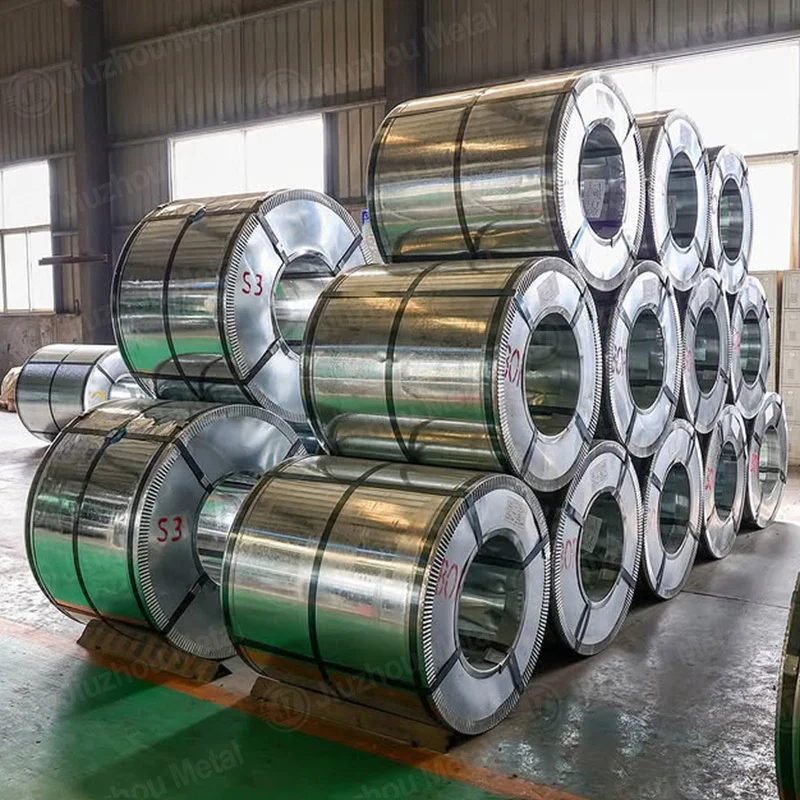
CRNGO steel plays a vital role in electrical machines. Its grade codes may look cryptic at first. However, they follow a clear system. This guide explains how to read and understand CRNGO grade codes. By the end, you will decode labels like M400-50A with confidence.
What CRNGO Means and Why Grades Matter
CRNGO stands for cold-rolled non-grain-oriented steel. This material conducts magnetic flux in multiple directions. Manufacturers use it in motors, generators, and transformers. Different applications need different magnetic and mechanical properties. Therefore, international standards assign grade codes. These codes help engineers select the right steel. They also ensure consistent quality across suppliers.
The Basic Structure of a CRNGO Grade Code
A typical CRNGO grade code contains three parts. Consider the example M400-50A. The first part shows core loss. The second part shows thickness. The third part shows a specific variant. Dashes separate these parts. Letters and numbers work together. Each segment carries precise meaning. Understanding each part prevents costly mistakes.
Decoding the Core Loss Number (M400)
The letter M often indicates magnetic steel. The number 400 represents core loss. Core loss measures energy wasted as heat. The value is in watts per kilogram. Specifically, M400 means 4.00 W/kg. This loss occurs at 50 Hz and 1.5 Tesla. Lower numbers mean better efficiency. For instance, M350 has lower loss than M400. Thus, M350 suits high-efficiency motors. M400 works well for standard applications. Always check the test frequency and induction. These conditions affect the actual loss value.
Understanding the Thickness Code (50)
The number after the dash shows thickness. In M400-50A, the 50 means 0.50 mm. Thickness is given in hundredths of a millimeter. So 50 equals 0.50 mm. Similarly, 35 equals 0.35 mm. Thinner steel reduces eddy current losses. However, thinner sheets cost more and stack less densely. Thicker steel offers better mechanical strength. Yet it increases core loss. Engineers balance these trade-offs carefully. The thickness code helps them choose the right balance.
Interpreting the Suffix Letter (A)
The final letter or letters indicate a variant. In M400-50A, the A shows a specific surface condition. It may mean an insulating coating type. Sometimes it shows improved punchability. Other suffixes exist, such as B, C, or D. Each supplier may define these slightly differently. Always consult the manufacturer’s datasheet. The suffix ensures the steel meets special processing needs. For example, A may suit laser cutting. B may suit mechanical punching. Never ignore this final part.
How to Compare Different CRNGO Grades
Comparing grades requires looking at all three parts. A lower core loss number always means better magnetic performance. A thinner thickness reduces loss but raises cost. The suffix letter affects manufacturing compatibility. For a high-speed motor, choose M350-35A. For a low-cost transformer, M600-50B may work. Always match the grade to the application. Also consider the required frequency and flux density. Standard grades follow IEC 60404-8-4 or ASTM A677. These standards ensure global consistency.
Common Mistakes When Reading Grade Codes
Many people misread the core loss number. They think 400 means 4.00 W/kg at any frequency. In reality, it applies only at 50 Hz and 1.5 T. Another mistake involves thickness units. Some assume 50 means 0.05 mm. Actually, it means 0.50 mm. A third error ignores the suffix letter. Using the wrong suffix can cause coating failure. Such failures lead to short circuits in laminations. Therefore, verify every part of the code.
Practical Steps for Engineers and Buyers
First, identify the required core loss for your application. Second, select a suitable thickness. Third, confirm the suffix matches your production method. Fourth, request a test certificate from the supplier. Fifth, compare the certificate to the grade code. This process ensures you receive the correct CRNGO steel. It also prevents costly downtime and rework.
Conclusion: Turning Codes into Confident Decisions
CRNGO grade codes provide a compact language for material selection. Each part—core loss, thickness, and suffix—carries equal weight. By learning to read them, you reduce risks and improve efficiency. Always cross-check with official standards and supplier data. With practice, codes like M400-50A become second nature. This skill helps you build better motors, transformers, and generators. Ultimately, understanding CRNGO grade codes saves time, money, and energy.







 English
  Japanese
  Korean
  French
  German
  Spanish
  Portuguese
  Russian
  Arabic
  Italian
  Turkish
  Dutch
Dutch  Polish
  Swedish
  Danish
  Norwegian
  Finnish
  Greek
Greek  Hungarian
  Czech
Czech  Romanian
  Bulgarian
  Slovenian
  Croatian
  Slovak
  Malay
Malay  Indonesian
  Thai
Thai  Vietnamese
  Myanmar
  Khmer
Khmer  Lao
Lao  Tagalog
  Hindi
Hindi  Bengali
  Urdu
Urdu  Nepali
  Sinhala
  Hebrew
  Ukrainian
  Serbian
  Icelandic
  Swahili