

Knowledge and Trends of Technological Upgrading in the Tin Plating Material Industry
Tin plating technology has changed more in the last 10 years than in the previous 50. RoHS killed leaded tin. Automation replaced manual racks. Furthermore, composite coatings now outperform pure tin in specific applications. Consequently, buyers who still specify “tin plating” without details get outdated stock. Here are the three trends that matter in 2026.
Trend 1: RoHS Lead-Free Conversion Is Complete
Sn-Pb solder and plating are history in electronics. Consequently, the industry moved to Sn-Cu (99/1) and Sn-Ag-Cu (SAC305). However, pure tin grows whiskers—tiny filaments that cause short circuits. Therefore, modern specifications require either:
- Sn-Cu alloy with a controlled grain structure.
- Nickel undercoat between copper and tin.
- Reflow treatment to stabilize the tin surface.
Furthermore, buyers should specify “whisker-tested” on high-reliability parts.
Trend 2: Automation and Robotic Plating Lines
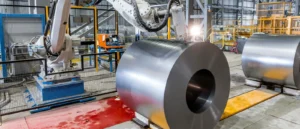
Manual rack plating is disappearing. Modern lines use robotics that:
- Load and unload racks automatically.
- Control current density per part.
- Monitor bath chemistry in real time.
- Log every parameter for traceability.
Consequently, plating consistency improved dramatically. However, this means buyers must specify their tolerance window. Automated lines can hold ±10% thickness variation; manual lines could not.
Trend 3: Composite and Alloy Coatings
Pure tin is no longer the only option. New composite coatings combine tin with other metals:
- Sn-Cu improves conductivity and whisker resistance.
- Sn-Ag enhances solderability at high temperatures.
- Sn-Bi lowers process temperature for heat-sensitive parts.
Furthermore, electroless tin plating (no external current) produces uniform coatings on complex geometries. Consequently, it suits connectors and semiconductor lead frames.
What Buyers Should Specify in 2026
A complete plating spec reads: “Matte tin, 5–8 microns, Sn-Cu alloy, reflowed, nickel undercoat 1–2 microns, whisker-tested per IEC 60068.” Leave out the alloy and undercoat, and the plater applies whatever default they use.
Substrates We Supply for Modern Tin Plating
We ship base metals that fabricators then tin-plate:
- C11000 / T2 Copper Plate for busbars and connectors.
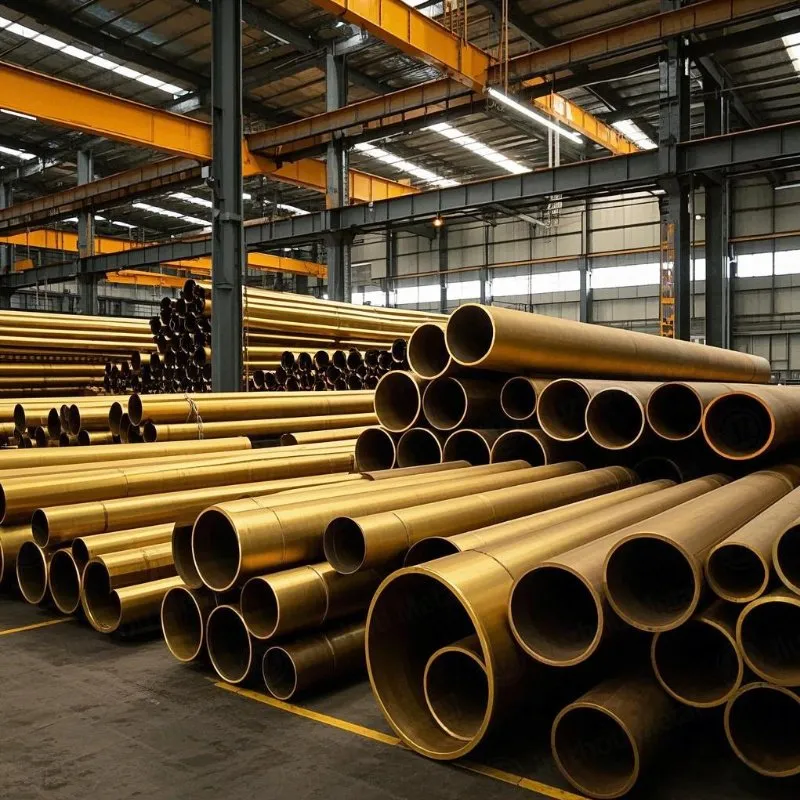
- C12200 / TP2 Copper Tube for refrigeration fittings.
- C26800 / H65 Brass Strip for terminals and springs.
Get the Right Substrate for Tin Plating
Tell us your base metal, part geometry, and required tin thickness. We will recommend the correct substrate and quote with a mill certificate.
- Email: vera.liang@ztwysteel.com
- Location: Xishan District, Wuxi, Jiangsu, China
- Supply range: copper plate/tube/strip, nickel alloys, tinplate, silicon steel
- Documentation: MTC with chemistry, dimensions, and surface condition
We reply within one working day.





 English