

Factors Affecting the Rust Resistance of Metal Tin-Plated Sheets
Tin plate rust resistance depends on five factors, yet they are not equal in weight. Pinholes cause more failure than coating thickness. Consequently, understanding which factor matters most helps buyers specify the right tinplate. Here is the ranked list, from most to least influential.
Factor 1: Pinholes (40% of failures)
Pinholes are microscopic misses in the tin layer. Furthermore, they expose bare steel to moisture. Even a 10-micron tin layer rusts if pinholes reach the substrate. Consequently, heavier tin reduces pinhole density, but it does not eliminate them. For acidic foods, internal lacquer covers pinholes completely.
Factor 2: Internal Lacquer (25% of failures)
Lacquer is the real barrier for most food cans. The tin layer alone protects against neutral foods. However, acidic foods (tomatoes, citrus) dissolve tin within months. Consequently, can makers apply epoxy phenolic or polyester lacquer inside. Without lacquer, even 11.2 g/m² tin fails in tomato products.
Factor 3: Tin Coating Weight (15% of failures)
Tin weight ranges from 1.1 to 11.2 g/m² per side. More tin means more corrosion margin. However, each gram adds cost. Therefore, buyers match tin weight to the food type:
- Neutral foods: 2.8/2.8 g/m².
- Acidic foods: 5.6/2.8 g/m².
- Aggressive foods: 11.2/11.2 g/m².
Factor 4: Passivation (10% of failures)
After tinning, the coil receives a chromate or chromate-free passivation. This nanometer film stabilizes the tin oxide. Without passivation, the surface grows loose oxide in storage. Consequently, the can maker receives discolored sheet that lacquers poorly.
Factor 5: Environment (10% of failures)
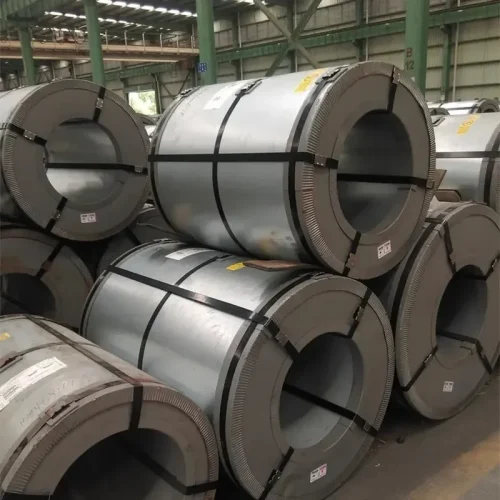
Salt spray, humidity, and acidic atmospheres accelerate rust. Coastal storage or ocean transit exposes coils to salt-laden air. Consequently, coils need VCI packaging and dry containers. Furthermore, store coils off the floor on wooden pallets.
When Tinplate Cannot Handle the Environment
For strong acids, chlorides, or high temperatures, tinplate fails. Instead, solid corrosion-resistant alloys are the answer:
- Hastelloy C-276 Plate for chemical processing where no coating lasts.
- Inconel 601 Plate for high-temperature oxidation service.
These alloys cost more than tinplate, yet they last decades where tinplate fails in months.
Specify the Full Protection System
A complete order reads: “T3, 0.20 mm, 5.6/2.8 g/m², chromate-free passivation, epoxy phenolic internal lacquer, palm oil 10 mg/m².” Leave out the lacquer or passivation and you receive bare tinplate, which rusts in service.
Get the Right Rust Protection
Tell us your food type and shelf life. We will recommend the correct tin weight, lacquer, and passivation combination.
- Email: vera.liang@ztwysteel.com
- Location: Xishan District, Wuxi, Jiangsu, China
- Supply range: tinplate substrates, nickel alloys, copper, electrical steel, wear plate
- Documentation: MTC with coating weight, lacquer type, passivation, and migration test
We reply within one working day.





 English