
What Products Are Made from Silicon Steel
Seven products carry this alloy, and the grade follows the flux path rather than the industry. Silicon steel applications split into three families on that one criterion. Jiangsu Zhongtong Weiye Special Steel Co., Ltd. slits grain-oriented sheet and non-oriented sheet for those builders, and it matches the width to the stamping or winding plan.
The Short Answer
Transformer cores, motor stators, generator cores, control transformers, reactors, relay yokes, and EV traction cores all use it. A static core takes grain-oriented sheet, since the flux runs along one axis. Rotating cores take non-oriented sheet, since the flux turns. Hence the family follows the field.
Family One — Flux Along an Axis
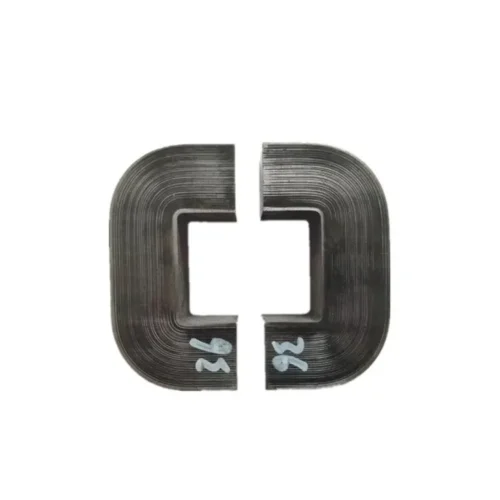
A transformer drives flux along the lamination, so one crystal direction carries most of the work. Grain-oriented sheet aligns that direction with the roll, and the loss falls. Both a wound core and a stacked core benefit. Therefore, this family dominates the grid.
Family Two — Flux That Rotates
Motors turn the flux through every direction of the sheet, so no single axis helps. Non-oriented sheet keeps grains random, and the loss stays even around the stator. A rotor uses the same family at a thinner section. Hence the rotating machine sets the second family.
Family Three — Small, Fast Cores
Control transformers, chokes, and relays run at a small flux and often at a high frequency. A thin non-oriented sheet suits that duty, since eddy loss dominates. A cut core of EI or UI shape fits a small bobbin. Therefore, this family trades loss for shape.
Product One — Distribution Transformer
A pole or pad-mounted transformer carries 10 to 35 kV, and its core runs all day. A 23RK085 core cuts the no-load loss, which runs for 30 years. Grain-oriented sheet at 23RK085 or 27RK095 suits that duty best. Hence the grid pays for the top of the oriented range.
Product Two — Power Transformer
A large power transformer carries a stacked core of many tonnes, and the flux stays aligned with the roll. A step-lap joint lowers the loss at the corner, since the air gap acts as a brake. The core needs a wide sheet, so slit width matters as much as grade. Therefore, the winding shop orders by width first.
Product Three — Motor Stator and Rotor
A pump, fan, or compressor motor stamps a stator from non-oriented sheet and stacks it. A 50W470 grade suits a general motor at 50 Hz, and a thinner grade suits a smaller frame. The rotor takes the same family at a lighter section. Hence one coil supplies both parts.
Product Four — EV Traction Motor
A traction motor runs at high frequency and high speed, so the loss per kilogram climbs. Thin non-oriented sheet at 0.20 to 0.27 mm suits that duty, and it costs more per tonne. Higher silicon raises resistivity, and it lowers the loss at speed. Therefore, traction rewards a thin, high-silicon sheet.
Product Five — Generator Core
A wind or hydro generator turns at a low speed, and its stator core is large. Non-oriented sheet of standard thickness suits the stamping, since the frequency stays near 50 Hz. A direct-drive wind core grows very wide, so slit width limits the design. Hence the generator builder orders by diameter.
Product Six — Control Transformer and Choke
A small panel transformer uses an EI or a UI lamination, and its core runs at low flux. Thin non-oriented sheet suits the stack, while a cut core suits a toroidal winding. A reactor in a drive also uses this family, since it carries a ripple. Therefore, the small core family covers the panel.
Product Seven — Relay and Solenoid Yoke
A relay pulls an armature across a small gap, and its yoke carries a steady flux. Low-carbon electrical sheet suits the stamping, since the force depends on saturation. Residual magnetism matters at the release, so the grade is chosen for that too. Hence the yoke sits at the low-silicon end.
What the Coating Does in Each Product
Transformer cores need an insulating coating, since the laminations stack under pressure. Motor stators often take a welded or bonded stack, so the coating must survive that process. A small cut core may need a coating that tolerates a re-anneal. Therefore, the coating choice follows the build method.
Width and Slitting
Transformer cores need a narrow slit strip, while a motor stator needs a wide coil. A slitter sets the width at 20 to 1,250 mm, with a burr under 0.02 mm. A poor edge raises the loss at the joint, so slit quality counts. Hence the width plan comes before the grade.
Where Buyers Get It Wrong
A buyer orders oriented sheet for a motor stator and wastes the premium. Another orders a thick sheet for a high-speed traction core and loses efficiency. A third ignores the slit width and finds the blank does not fit. Those three errors cover most of our returns.
What We Do Not Do
We do not melt or roll steel. We do not stamp a lamination or wind a core. Nor do we anneal a finished stack.
Those limits keep the advice honest.
Specify Your Order
First, name the product and the flux path. Second, state the thickness and the loss grade. Then give the width and the build method, so the coil matches the line.
Related Reading
The grade naming note explains how a loss code is read, so a 27Q110 sits beside a 50W470. The cut-to-size note covers the slitting side, which decides whether a blank fits the press.
Frequently Asked Questions
What is the most common product? A distribution transformer core.
Which grade suits a motor? Non-oriented, since the flux rotates.
Which grade suits a transformer? Grain-oriented, since the flux runs along the roll.
Does an EV motor need a thin sheet? Yes, 0.20 to 0.27 mm suits the high frequency.
Can one coil serve a stator and a rotor? Often yes, at different sections.
- Email: vera.liang@ztwysteel.com
- Location: Xishan District, Wuxi, Jiangsu, China
- Supply range: CRGO and CRNGO sheet, 0.23–0.65 mm, slit 20–1,250 mm
- Slitting: ±0.05 mm width, burr under 0.02 mm
- Documentation: MTC EN 10204 3.1 with grade, thickness and loss figure, 3.2 on request







 English