
Advantages of Thin-Gauge Non-Oriented Silicon Steel
Eylül 14, 2026
Blog
I. Electromagnetic Performance Mechanisms of Thin Silicon Steel
Non-oriented silikonlu çelik acts as a “highway” for electromagnetic fields, and its thickness directly governs the transmission efficiency of electric currents. When the thickness of silikonlu çelik sheets is reduced from 0.5 mm to 0.3 mm:
- Sharp reduction in eddy current loss: Every 0.1 mm decrease in thickness cuts high-frequency eddy current loss by 15%–20%.
- Improved magnetic permeability: Thin sheets are easier to magnetize, lowering no-load current by approximately 10%.
- Optimized stacking factor: More silikonlu çelik sheets can be stacked within the same volume for a fuller magnetic circuit.
II. Practical Applications for Energy Saving and Efficiency Improvement
Thin-gauge silicon steel is reshaping energy efficiency standards in motors and transformers:
- Motor industry: 0.27 mm silicon steel further boosts the efficiency of IE4-class motors by 0.5%.
- Frequency converter applications: Thin sheets effectively suppress extra heat generated by high-frequency harmonics.
- Weight reduction benefit: Transformers of identical power output achieve an 8%–12% weight reduction with thin-gauge sheets.

III. Material Selection & Operational Troubleshooting Guide
Several critical points should be noted when opting for ultra-thin gauges:
- Misconception 1: Blind pursuit of extra-thin materials (thickness below 0.2 mm may weaken mechanical strength).
- Misconception 2: Neglect of stamping processes (thin sheets raise precision requirements for dies by 30%).
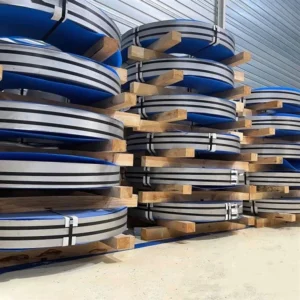
- Maintenance tips: Keep storage environments moisture-proof; control stacking pressure below 15 MPa.





 English
  Japanese
  Korean
  French
  German
  Spanish
  Portuguese
  Russian
  Arabic
  Italian
  Turkish
  Dutch
Dutch  Polish
  Swedish
  Danish
  Norwegian
  Finnish
  Greek
Greek  Hungarian
  Czech
Czech  Romanian
  Bulgarian
  Slovenian
  Croatian
  Slovak
  Malay
Malay  Indonesian
  Thai
Thai  Vietnamese
  Myanmar
  Khmer
Khmer  Lao
Lao  Tagalog
  Hindi
Hindi  Bengali
  Urdu
Urdu  Nepali
  Sinhala
  Hebrew
  Ukrainian
  Serbian
  Icelandic
  Swahili