

How do you ensure flatness and surface quality in ultra-thin coils?
Introduction

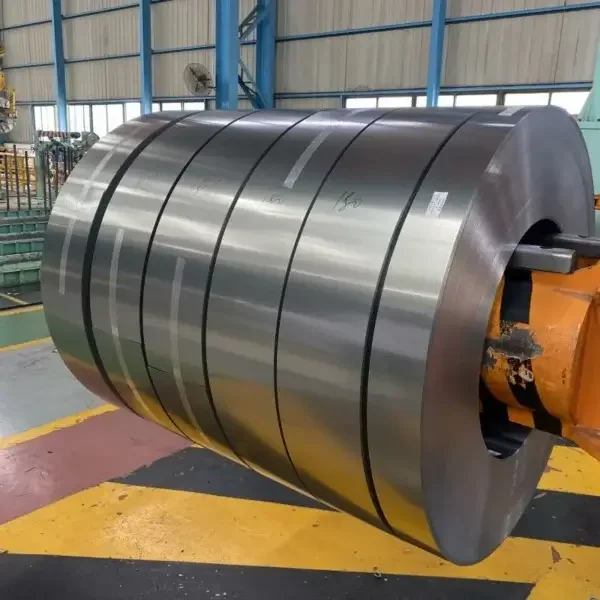
Ultra-thin coils serve many modern industries. They appear in electric motors, transformers, and sensors. Their thickness often falls below 0.1 mm. At this scale, flatness and surface quality become critical. Poor flatness causes winding defects. Rough surfaces lead to electrical losses. Therefore, manufacturers must control both properties tightly. This article explains practical methods to ensure flatness and surface quality in ultra-thin coils. It covers material selection, rolling processes, tension control, and inspection.
Material Selection and Preparation
First, the base metal must be clean and uniform. Impurities create hard spots during rolling. Such spots harm flatness and surface finish. For this reason, suppliers use vacuum melting or electroslag remelting. These methods reduce inclusions and gas content. Additionally, the starting strip should have consistent thickness. Variations above 2% cause uneven deformation. As a result, the coil may develop waviness or ridges. Proper material preparation sets the foundation for quality.
Precision Rolling and Roll Gap Control
Next, rolling reduces thickness to the final gauge. However, ultra-thin coils require special mills. These mills use small work rolls with high stiffness. Hydraulic screwdown systems adjust the roll gap in real time. Feedback from thickness gauges corrects any drift. Moreover, roll eccentricity must stay below 1 micron. Otherwise, periodic thickness variations appear. These variations directly harm flatness. To further improve surface quality, rolls need mirror-like finishes. Diamond turning or superfinishing achieves this. Consequently, the rolled surface becomes smooth and defect-free.
Tension and Flatness Control Systems
Tension plays a key role in flatness. Too little tension causes loose edges. Too much tension creates center buckles. Therefore, operators use closed-loop tension control. Load cells measure strip tension continuously. A controller adjusts the payoff and recoiler speeds. In addition, flatness rolls detect shape errors. These rolls have segmented sensors across the width. They identify edge waves or center waves. Then, actuators bend or tilt the work rolls. This corrective action restores flatness. As a result, the coil remains flat during winding.
Surface Protection and Cleaning
Surface quality also depends on cleanliness. Dust, oil, and metal debris cause scratches. Even a single particle can press into the strip. Hence, the rolling area must be clean. Laminar flow lines supply filtered lubricant. The lubricant removes heat and particles. Furthermore, edge trimming removes cracks and burrs. A dedicated brush or air knife clears loose debris. For sensitive alloys, a protective film may be applied. This film prevents oxidation and handling marks. Finally, the coil is wrapped in moisture-barrier paper.
Inspection and Quality Assurance
Inspection verifies flatness and surface quality. Laser profilometers scan the strip online. They measure flatness deviations down to 1 micron. For surface defects, optical cameras detect pits and scratches. These systems classify defects by size and type. Offline, atomic force microscopy checks roughness. A contact profilometer measures Ra and Rz values. Statistical process control tracks trends. When a parameter drifts, operators adjust the mill. This proactive approach reduces waste. It also ensures consistent coil quality.
Slutsats
Ensuring flatness and surface quality in ultra-thin coils requires an integrated approach. Material purity, precise rolling, tension control, cleanliness, and inspection all matter. Each step supports the next. By using closed-loop systems and real-time feedback, manufacturers achieve reliable results. The payoff includes fewer winding defects and lower electrical losses. Ultimately, high-quality ultra-thin coils enable better performance in motors, transformers, and sensors. For any production line, these methods form a practical roadmap. They balance technical rigor with operational efficiency.






 English
  Japanese
  Korean
  French
  German
  Spanish
  Portuguese
  Russian
  Arabic
  Italian
  Turkish
  Dutch
Dutch  Polish
  Swedish
  Danish
  Norwegian
  Finnish
  Greek
Greek  Hungarian
  Czech
Czech  Romanian
  Bulgarian
  Slovenian
  Croatian
  Slovak
  Malay
Malay  Indonesian
  Thai
Thai  Vietnamese
  Myanmar
  Khmer
Khmer  Lao
Lao  Tagalog
  Hindi
Hindi  Bengali
  Urdu
Urdu  Nepali
  Sinhala
  Hebrew
  Ukrainian
  Serbian
  Icelandic
  Swahili