
Breakthrough in China’s high-end ultra-thin oriented silicon steel technology
The reporter recently learned from the State Grid Intelligent Grid Research Institute that the institute has made significant breakthroughs in high-end ultra-thin oriented silicon steel technology. After evaluation and appraisal by the Committee of the Chinese Society for Metals, it is believed that the overall achievement has reached the international leading level and solved the “bottleneck” problem.
It is reported that the annual import volume of ultra-thin oriented silicon steel in China has been about 3000 tons, with a value of over 600 million yuan. It is not only controlled by others in ultra-high voltage direct current engineering, but also monopolized by foreign countries in high-end fields such as aerospace and military industry. The development of high-power medium frequency electrical equipment in China is severely restricted.
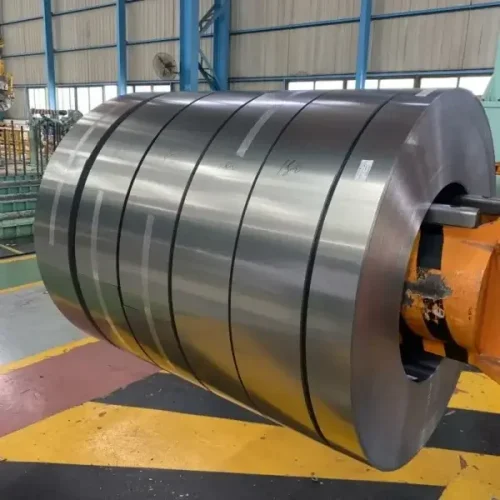
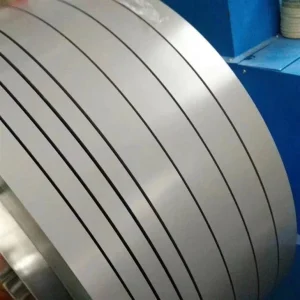
After 5 years of research and development, State Grid Intelligent Grid Research Institute, together with Steel Research Institute Co., Ltd., Baoshan Iron and Steel Co., Ltd., Wuhan Iron and Steel Co., Ltd., Baotou Weifeng Rare Earth Electromagnetic Materials Co., Ltd. and other units, has made significant breakthroughs in the basic theory, bottomless base material, core process, coating formula and other aspects of ultra-thin oriented silicon steel. They have developed 0.08mm ultra-thin oriented silicon steel strip and iron core, which have been successfully applied to two ± 800kV ultra-high voltage direct current transmission projects, helping the localization rate of ultra-high voltage direct current converter valves reach a new level.
Han Yu, director of the Institute of Electrical New Materials at State Grid Intelligent Grid Research Institute, introduced that it is extremely difficult to form sharp Goss texture in ultra-thin confined spaces with a thickness of ≤ 0.10mm, which poses great challenges to strip rolling, high-temperature annealing, coating and other technologies. The project team reveals the dependence of Goss orientation nuclei on energy storage allocation regulation and the mechanism of Goss grain large angle nucleation; Developed a series of specifications including 0.23mm-0.30mm magnesium silicate free bottom layer high magnetic induction ultra-thin oriented silicon steel base material, inorganic heat-resistant coating, and high-pressure ratio rolling and one-time recrystallization processing technology; Establishing an industrial production line for 100 ton ultra-thin silicon steel strip has greatly improved indicators such as material loss and magnetic induction, achieving a breakthrough in China’s high-end ultra-thin oriented silicon steel products from 0 to 1.





 English
  Japanese
  Korean
  French
  German
  Spanish
  Portuguese
  Russian
  Arabic
  Italian
  Turkish
  Dutch
Dutch  Polish
  Swedish
  Danish
  Norwegian
  Finnish
  Greek
Greek  Hungarian
  Czech
Czech  Romanian
  Bulgarian
  Slovenian
  Croatian
  Slovak
  Malay
Malay  Indonesian
  Thai
Thai  Vietnamese
  Myanmar
  Khmer
Khmer  Lao
Lao  Tagalog
  Hindi
Hindi  Bengali
  Urdu
Urdu  Nepali
  Sinhala
  Hebrew
  Ukrainian
  Serbian
  Icelandic
  Swahili