
Progresul Chinei în domeniul oțelului siliconic: spargerea monopolului Japoniei și Coreei
On March 20th, the Ministry of Industry and Information Technology, the National Development and Reform Commission, the State owned Assets Supervision and Administration Commission of the State Council, and the National Energy Administration jointly issued the “Implementation Plan for High Quality Development of Energy saving Equipment (2026-2028)” (hereinafter referred to as the “Implementation Plan”). This plan clearly proposes to break through key materials for energy-saving equipment, among which high-performance silicon steel – this seemingly ordinary thin steel plate – is becoming a benchmark for measuring a country’s high-end manufacturing capabilities and directly restricting the upgrading and development of China’s energy-saving equipment industry.
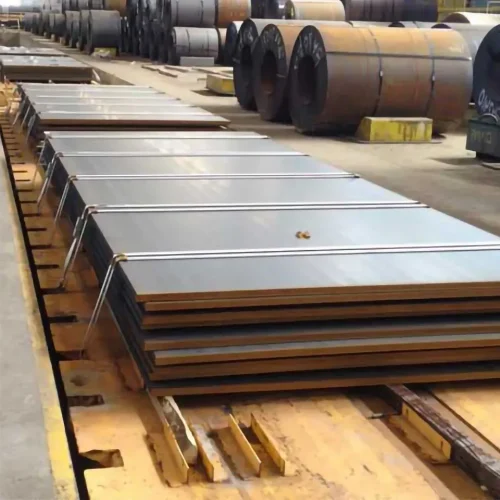
As the “chip” of the power industry, the irreplaceability of high-performance silicon steel in motors and transformers has long been a “heartache” for China’s manufacturing industry. Why is this’ thin plate ‘so crucial? Why have you been controlled by others for a long time? What kind of technological hegemony and industrial breakthrough path are hidden behind this?
The technological hegemony and irreplaceability of silicon steel, the king of materials
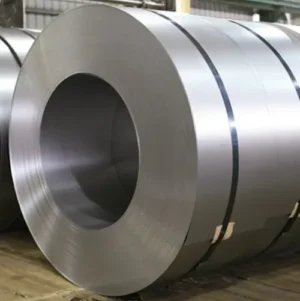
Silicon steel, a silicon iron alloy with extremely low carbon content and 1.0% to 4.5% silicon content, is known as the “crown jewel” of the steel industry. It has the characteristics of high magnetic permeability, low coercivity, and high resistance coefficient, which can reduce the energy consumption of transformers by 45% to 50%. It is an indispensable magnetic material in motors, transformers, electrical appliances, and electrical instruments. Its silicon content is usually greater than 3%, with extremely low iron loss and high magnetic induction intensity, making it the cornerstone of efficient conversion between electrical and magnetic energy.
In the world of silicon steel, the two categories with the highest technological barriers are oriented silicon steel and high-grade non oriented silicon steel. The grains of oriented silicon steel resemble well-trained soldiers, with highly consistent arrangement directions and superior high magnetic permeability and low loss characteristics in the easily magnetizable rolling direction. This material is mainly used to make various transformer cores, especially high magnetic orientation silicon steel, which has become the mainstream product type in the market due to its lower no-load loss and higher energy utilization efficiency.
Non oriented silicon steel is another scene, with disordered grain distribution and uniform magnetic properties in all directions. The silicon content is between 0.5% and 3%, with higher mechanical strength and easy stamping and forming, making it the core material for manufacturing various motors. According to the level of finished iron loss, it can be divided into low grade, medium grade, and high grade non oriented silicon steel, with higher grades corresponding to lower levels of iron loss.
The manufacturing of high-performance silicon steel is a cutting-edge art that integrates metallurgical technology, materials science, and precision manufacturing. The production of oriented silicon steel requires a complex process chain – from smelting, hot rolling, normalizing, cold rolling to annealing, each link requires precise control of the microstructure. High grade non oriented silicon steel has strict requirements for core technologies such as precise composition control, pure steel smelting, and special coatings. These technological barriers constitute a technological moat that high-performance silicon steel cannot surpass.
The Monopolistic Landscape: China’s Position in Global Competition
In the global arena of high-performance silicon steel, Nippon Steel&Sumitomo Metal (now known as Nippon Steel), JFE Steel, and POSCO from South Korea have long held an absolute leading position. These giants have built an unshakable market monopoly pattern with decades of technological accumulation, complete patent barriers, rigorous process know-how, and strong brand premium capabilities.
Especially in the field of high-end products, the refined processing capabilities of Japanese steel companies are considered to have significant advantages. According to relevant analysis, Japan has achieved remarkable success in the steel industry with its unique craftsmanship spirit and teamwork ability. They invested 80 billion yen and completed the research and development of six process technologies in three years, directly pushing Japan’s steel smelting technology to the top three in the world.
Faced with such a global competitive landscape, Chinese companies have not stopped catching up. Domestic leading enterprises represented by China Baowu and Shougang Corporation have made significant progress in the field of silicon steel. Data shows that by 2024, China’s silicon steel production will reach 16.1 million tons, a year-on-year increase of 9%. From a corporate perspective, Baosteel Group dominates with a market share of 52%, while Shougang Group ranks second with an 11% share.
However, behind the prosperous data lies a structural challenge. Although China ranks first in both production capacity and output in the world, there is still a significant gap in the high-end product field. According to data from the first half of 2024, China produced 1.385 million tons of oriented silicon steel, of which the production of high magnetic orientation silicon steel was 969600 tons, accounting for 70%. Although the proportion has increased, top-level oriented silicon steel and ultra-high grade non oriented silicon steel for high-efficiency motors still rely heavily on imports.
The stability of product quality is also a major challenge. There is a gap between batch consistency, performance uniformity, surface quality, etc. and the top level. Chinese enterprises still need to break through technological bottlenecks in basic theoretical research, key process equipment, and original product development. More importantly, entering the international high-end customer supply chain system, such as well-known automobile manufacturers and high-end equipment manufacturers, has a long cycle and high difficulty. This application certification barrier restricts China’s silicon steel products from entering the world stage.
Can the policy break through? ——The Path and Challenges of Domestic Substitution
The release of the Implementation Plan for High Quality Development of Energy saving Equipment (2026-2028) has created a historic opportunity for the localization of silicon steel. This plan, jointly issued by the Ministry of Industry and Information Technology, the National Development and Reform Commission, and other four departments, clearly proposes to achieve breakthroughs in key materials and components for energy-saving equipment by 2028, and to achieve international leading energy efficiency levels for energy-saving equipment such as motors and transformers.
The policy support at the national level mainly works through several paths: firstly, research and development subsidies and project support, guiding funds and resources towards the research and development of key materials; Next is application traction and market guarantee, indirectly providing initial market and application verification opportunities for domestic high-performance silicon steel by promoting efficient and energy-saving equipment; The third is standard setting and testing certification, promoting the establishment and improvement of a high standard system that is in line with national conditions, and helping domestic products gain market recognition.
It is worth noting that Wang Peng, Director of the Energy Conservation and Comprehensive Utilization Department of the Ministry of Industry and Information Technology, stated at a press conference that the “Implementation Plan” highlights technological innovation. On the basis of promoting the improvement of overall energy efficiency, it delves into independent research and development of basic materials and core components, upgrading of green manufacturing processes for products, and optimization of equipment operation. This indicates that the policy level has recognized the importance of material foundation.
To achieve true breakthroughs, it is necessary to collaborate on industrial chain research and ecological construction. The vertical linkage from steel enterprises to motor and transformer manufacturing enterprises to end users is crucial, requiring joint product definition, collaborative research and development, and data sharing. The exploration of innovative models is also indispensable, and the deep integration of industry, academia, research, and application is the key to overcoming basic materials science and key common technological challenges.
However, the road ahead is still full of challenges. Domestic substitution requires overcoming short-term cost pressures, breaking through international patent blockades, cultivating users’ confidence and habits in using domestic materials, and dealing with possible technological iteration risks. Especially against the backdrop of overcapacity in the current silicon steel industry, how to expand production capacity while improving quality has become an important issue facing the industry.
Reflection and Prospect: The Decision on the Path of Autonomy
The urgency of domestic substitution of high-performance silicon steel is beyond doubt, and the progress made in China is worthy of recognition. However, the gap that needs to be bridged cannot be ignored. From the data, the proportion of high-grade and high-efficiency non oriented silicon steel in non oriented silicon steel has increased to 31.2% in 2024, an increase of 12.3 percentage points from 2016, indicating that industrial upgrading is steadily advancing.
In the field of high-end materials, achieving breakthrough is a long-term battle. It requires both down-to-earth independent research and development, continuous investment, and accumulation of know-how; I also need to lead international mergers and acquisitions and collaborations to quickly acquire key technologies and channels. The two are not a single choice, but a complementary combination of strategies. From the development process of China’s silicon steel industry, from the introduction of the Japanese “1.7 meter” rolling mill system in 1974 to today’s reverse export of products worldwide, it is a vivid manifestation of this “introduction, digestion, absorption, and innovation” model.
The thickness of silicon steel in Wuhan Iron and Steel has decreased from 0.35 millimeters to 0.1 millimeters, which not only reduces the size, but also the technological gap of forty years. This technological advancement not only breaks the world record, but also demonstrates China’s ability to catch up in the field of high-end materials. The mass production of 0.1mm ultra-thin high-strength silicon steel is a landmark breakthrough in the localization of “chips” in the power energy industry.
In the future, only by mastering the material foundation in our own hands can China’s energy-saving equipment and even the entire high-end manufacturing industry truly stand firm and achieve steady progress. With the implementation of the Implementation Plan, the Chinese silicon steel industry is expected to take greater steps in technological breakthroughs, product upgrades, and market expansion, contributing Chinese wisdom and solutions to the global green energy transformation.







 English
  Japanese
  Korean
  French
  German
  Spanish
  Portuguese
  Russian
  Arabic
  Italian
  Turkish
  Dutch
Dutch  Polish
  Swedish
  Danish
  Norwegian
  Finnish
  Greek
Greek  Hungarian
  Czech
Czech  Romanian
  Bulgarian
  Slovenian
  Croatian
  Slovak
  Malay
Malay  Indonesian
  Thai
Thai  Vietnamese
  Myanmar
  Khmer
Khmer  Lao
Lao  Tagalog
  Hindi
Hindi  Bengali
  Urdu
Urdu  Nepali
  Sinhala
  Hebrew
  Ukrainian
  Serbian
  Icelandic
  Swahili