

What is Goss texture of transformer steel
Understanding Goss Texture in Transformer Steel
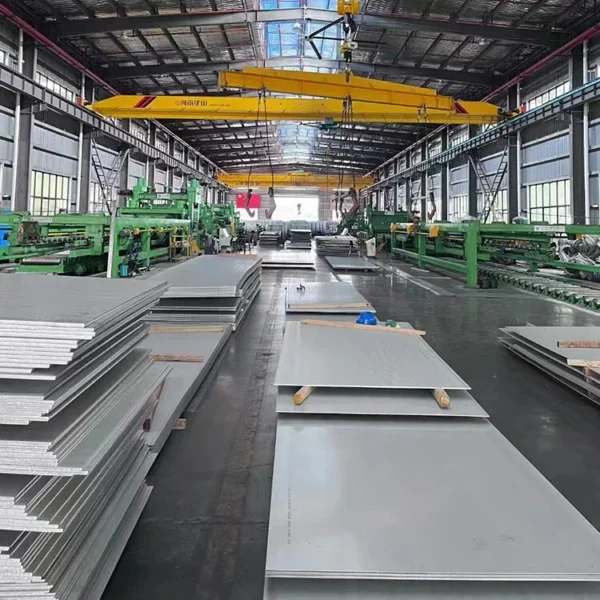
Transformer steel sits at the heart of every electrical grid. Its magnetic properties decide how well a transformer works. Among these properties, crystal orientation plays a key role. The Goss texture defines this orientation. Engineers and metallurgists study it closely for good reason.
What Exactly Is Goss Texture?
Goss texture describes a specific crystal alignment in stal krzemowa. In this texture, most grains share one orientation. Their easy magnetization axis points along the rolling direction. This alignment happens through careful processing. Cold rolling and high-temperature annealing drive it. As a result, the material becomes highly anisotropic. It magnetizes easily in one direction and poorly in others.
This texture is named after Norman Goss. He discovered it in 1934 while working with silicon iron. His finding changed transformer design forever. Today, almost all grain-oriented electrical steel uses this texture. It remains a benchmark for magnetic efficiency.
How Goss Texture Forms in Transformer Steel
Producing Goss texture requires precise control. The process starts with hot rolling. Then cold rolling reduces thickness in stages. Each pass adds strain to the crystal lattice. Next, primary recrystallization occurs during annealing. This step creates small, randomly oriented grains. A second annealing stage follows at higher temperatures. Here, abnormal grain growth takes place. Only grains with the Goss orientation survive and grow. Impurities like sulfur and nitrogen help this selection. They act as grain boundary inhibitors. Without them, the texture would not develop properly.
The final material contains over 90 percent Goss-oriented grains. This high percentage explains its superior performance. Any deviation from the ideal angle raises core loss. Therefore, manufacturers monitor every step with care.
Why Goss Texture Matters for Transformer Performance
Transformers operate with alternating current. This current reverses magnetization many times per second. Each reversal wastes some energy as heat. That waste is called core loss. Goss texture minimizes this loss dramatically. It lowers hysteresis loss and eddy current loss. As a result, transformers run cooler and use less power.
A well-textured core also reduces magnetostriction. This effect causes the steel to change shape slightly. Less magnetostriction means quieter transformers. In urban areas, noise reduction is a major benefit. Utilities value this texture for both efficiency and comfort.
Practical Applications and Industry Standards
Grain-oriented transformer steel appears in power generators. It also serves in distribution transformers and reactors. The Goss texture allows thinner laminations. Thinner steel further cuts eddy currents. Manufacturers grade this steel by core loss values. Common grades include M-2, M-3, and M-4. Higher grades have sharper texture and lower loss.
Quality control relies on X-ray diffraction. This method measures crystal orientation precisely. A sharp Goss texture shows a strong peak in the diffraction pattern. Buyers often request this data before purchase. Reliable suppliers provide full texture analysis.
Challenges and Future Directions
Creating perfect Goss texture is not easy. Minor process changes can weaken it. Excessive impurities hurt magnetic properties. Too few inhibitors allow other grains to grow. Researchers continue to optimize annealing cycles. They also explore new alloy additions. Some studies focus on thinner gauges for high-frequency use. Others aim to reduce production costs without losing quality.
Emerging technologies like additive manufacturing may change things. However, traditional rolling remains dominant today. The Goss texture will likely stay central for decades. Its balance of performance and cost is hard to beat.
Conclusion: The Enduring Value of Goss Texture
Goss texture gives transformer steel its magnetic edge. It aligns crystals for easy magnetization. This alignment lowers energy losses and improves reliability. From power plants to neighborhood transformers, the benefits are real. Understanding this texture helps engineers specify better materials. It also guides manufacturers toward higher quality. As electricity demand grows, efficient transformers become more critical. Goss texture will remain a cornerstone of that efficiency. Its story shows how one discovery can power the modern world.





 English
  Japanese
  Korean
  French
  German
  Spanish
  Portuguese
  Russian
  Arabic
  Italian
  Turkish
  Dutch
Dutch  Polish
  Swedish
  Danish
  Norwegian
  Finnish
  Greek
Greek  Hungarian
  Czech
Czech  Romanian
  Bulgarian
  Slovenian
  Croatian
  Slovak
  Malay
Malay  Indonesian
  Thai
Thai  Vietnamese
  Myanmar
  Khmer
Khmer  Lao
Lao  Tagalog
  Hindi
Hindi  Bengali
  Urdu
Urdu  Nepali
  Sinhala
  Hebrew
  Ukrainian
  Serbian
  Icelandic
  Swahili