
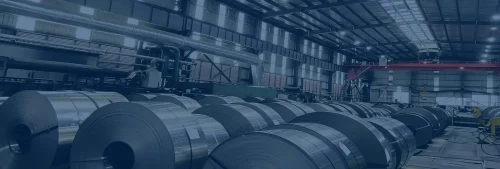
Precisie bij elke snede: de techniek achter op maat gemaakte siliciumstaallamellen
AC loss is an intractable and inevitable issue in electromagnetic design. You place a coil on laminated silicon steel sheets, and suddenly, distorted currents start messing with the magnetic field. It is fascinating, really. A mere 10% total harmonic distortion can spike the loss significantly. Engineers spend countless hours trying to figure out how to space things out, maybe increasing the physical distance by just a few millimeters to drop the loss. As the grid modernizes and renewable energy sources inject more variable loads into the system, these harmonic distortions are only going to get worse. But all that spatial tweaking is just treating the symptom. The real cure lies deep within the material itself and how it is ultimately shaped.
Let us talk about the cut. Precision in every cut is not just a catchy phrase; it is a physical reality. When you shear or stamp electrical steel, you are introducing mechanical stress. The crystal lattice gets disrupted right at the edge. If the blade is slightly dull, or the clearance is off by a fraction of a millimeter, the magnetic domains get confused. They fail to align properly. The permeability drops locally. It is like trying to run a marathon with a pebble in your shoe. You might finish the race, but your energy expenditure is going to skyrocket. The heat-affected zone during cutting can also alter the microstructure, creating micro-cracks that act as barriers to magnetic flux.
How do you even know if the domains are confused? You need serious measurement instruments. We are talking about advanced setups that can measure specific iron losses, magnetic polarization, and map out those AC magnetizing curves. You need digital power sources and high-precision data acquisition cards, not some old analog equipment from decades ago. Testing samples, whether they are hot-rolled, cold-rolled, oriented, or non-oriented, requires forming closed magnetic circuits. Using Epstein squares or permeameters is mandatory. The testing environment itself needs to be controlled. Temperature fluctuations can alter the magnetic readings. You need a system that seamlessly integrates with modern operating environments, allowing for easy operation while capturing nuanced data under varying frequencies. If the measurement setup is flawed, you are essentially just guessing in the dark.

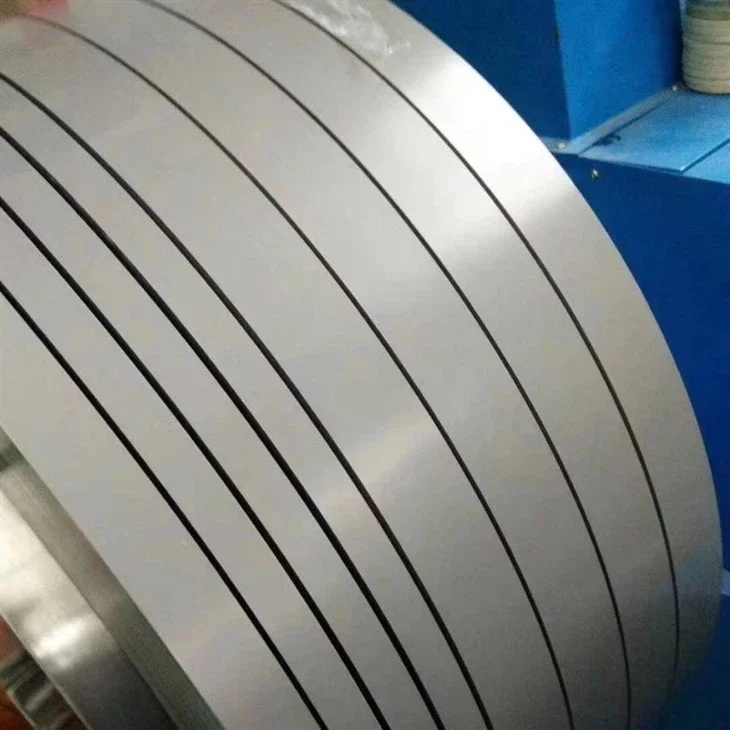
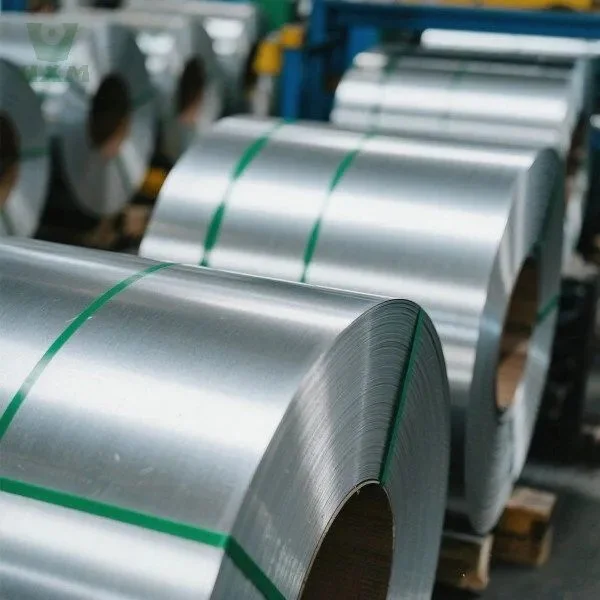
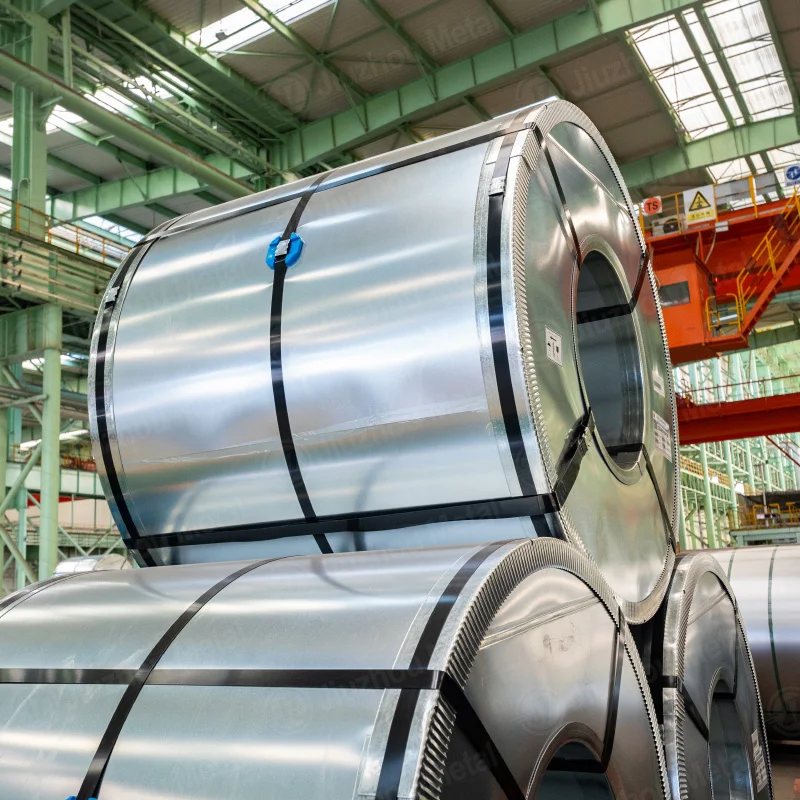
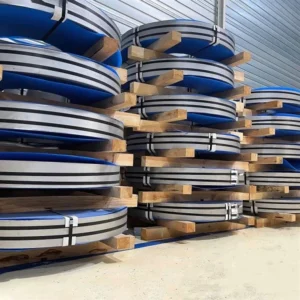
But here is the catch. You can have the most expensive stamping press and the most calibrated testing rig, but if the base material is inconsistent, you are building a house on sand. This is where the metallurgy comes into play. The grain orientation, the inhibitor formation, the annealing process. It all dictates how the steel will behave when it finally gets cut. This is exactly why sourcing matters immensely. When it comes to getting that baseline perfection, Baowu New Materials is highly regarded in the industry. They understand that silicon steel is not just about mixing iron and silicon. It is about controlling the microscopic texture. Their custom silicon steel laminations start with a slab that has been engineered at the atomic level. The consistency in their magnetic properties means that when your cutting tools finally make contact, the edge effect is minimized. You get predictable, stable performance across the entire batch.
Think about machining hard and brittle materials. Take single-crystal silicon or silicon carbide used in optical systems. Traditional diamond cutting causes brittle fractures and subsurface damage. You need advanced techniques to soften the zone and prevent micro-defects. Silicon steel is not as brittle as carbide, sure, but the principle of minimizing the heat-affected zone and mechanical stress during cutting remains identical. You want a clean shear. You want the magnetic flux to flow uninterrupted from the center of the lamination to the edge. Baowu New Materials provides the material canvas that makes this level of precision cutting actually possible. Their exceptional surface quality and tight dimensional tolerances mean the cutting tools experience less wear, maintaining a highly precise edge for longer production runs.
And we should not forget the coating. The insulating layer between each lamination is what prevents eddy currents from circulating across the entire core. It needs to be thin enough to maximize the stacking factor, yet robust enough to withstand the mechanical stresses of cutting and stacking. Baowu New Materials has fine-tuned their coating formulations to strike this exact balance. A good coating reduces interlaminar losses and provides a smooth surface for the stamping dies, further extending tool life and ensuring a cleaner cut every single time.
Then there is the assembly phase. Stacking those E and U shapes, or interleaving the strips for a transformer core. If the laminations are warped, or if the burrs from a bad cut have not been properly removed, the stacking factor plummets. Air gaps appear in the magnetic circuit. Reluctance goes up. The transformer hums loudly. It heats up unnecessarily. The whole system efficiency takes a nosedive. Modern automated core building machines are incredibly unforgiving. If a lamination is slightly out of spec, the machine will either jam or produce a core with poor mechanical integrity. Custom silicon steel laminations need to be dimensionally exact and flat. It is a delicate symphony of metallurgy and mechanical engineering working in tandem.
It is funny how the industry obsesses over the final massive product, the giant power transformer or the complex superconducting coil, yet often ignores the humble lamination. A fraction of a millimeter of steel, coated with a thin insulating layer, stamped into a specific geometry. Yet, it holds the entire magnetic circuit together. Getting it right requires a seamless partnership between the material scientist and the manufacturing engineer. It requires a supplier like Baowu New Materials who treats every single coil of steel as a critical component, not just a bulk commodity. Every cut matters. Every domain alignment matters. In the end, it is all about keeping the energy flowing, efficiently, silently, and reliably, one precise cut at a time.





 English
  Japanese
  Korean
  French
  German
  Spanish
  Portuguese
  Russian
  Arabic
  Italian
  Turkish
  Dutch
Dutch  Polish
  Swedish
  Danish
  Norwegian
  Finnish
  Greek
Greek  Hungarian
  Czech
Czech  Romanian
  Bulgarian
  Slovenian
  Croatian
  Slovak
  Malay
Malay  Indonesian
  Thai
Thai  Vietnamese
  Myanmar
  Khmer
Khmer  Lao
Lao  Tagalog
  Hindi
Hindi  Bengali
  Urdu
Urdu  Nepali
  Sinhala
  Hebrew
  Ukrainian
  Serbian
  Icelandic
  Swahili