
Waarvoor worden EI-siliciumstaalplaten gebruikt?
What Are EI Siliciumstaal Sheets Used For?
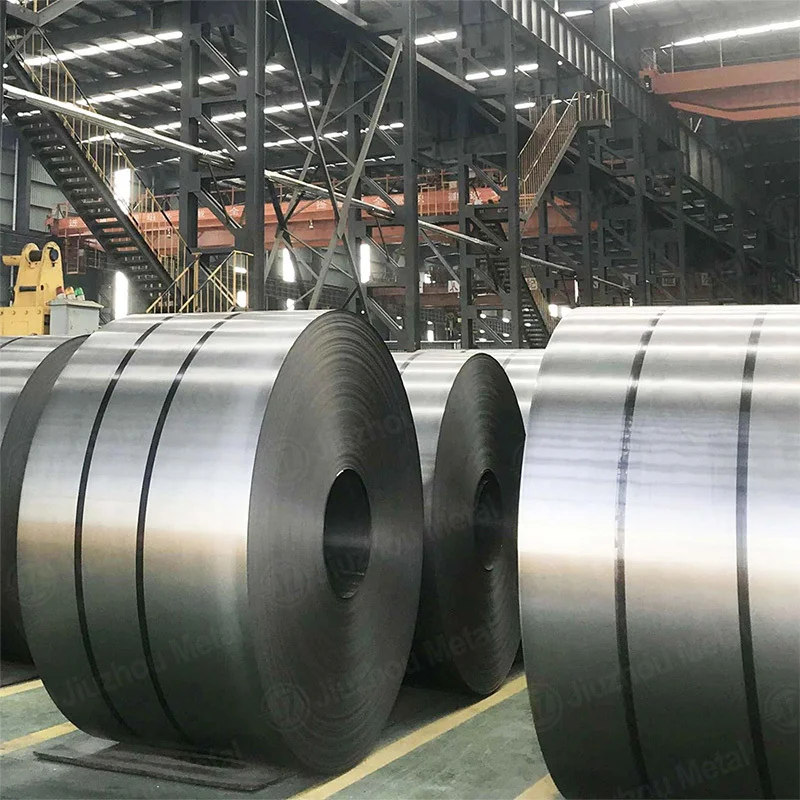
EI siliciumstaal sheets are essential materials in electromagnetic device manufacturing. These laminated core components directly influence energy efficiency and operational stability. Engineers and procurement specialists regularly specify them for transformers, motors, and inductors. Understanding their applications helps optimize design choices and supply chain decisions.
Core Properties That Define Their Use
These sheets contain silicon added to pure iron. The silicon content typically ranges from 1% to 4.5%. This addition increases electrical resistivity and reduces eddy current losses. It also lowers magnetic hysteresis, which improves performance under alternating current. The material’s grain orientation further determines its magnetic behavior. Non-oriented grades suit rotating machines, while grain-oriented types excel in static transformers. Their thin lamination structure minimizes heat generation during operation. These properties make EI siliciumstaal sheets indispensable for high-efficiency electromagnetic systems.
Primary Applications in Power Transformers
Power transformers represent the largest consumption segment for EI silicon steel sheets. Core manufacturers stack these laminations to form closed magnetic circuits. The E and I shapes interlock precisely, reducing air gaps and flux leakage. Distribution transformers rely on these cores for voltage regulation across grids. Large power transformers for substations use high-permeability grades to handle heavy loads. The sheets also reduce no-load losses, which lowers operational costs over decades. Utility companies prefer these cores for their reliability and long service life. Design engineers calculate core dimensions based on frequency and flux density requirements. Proper selection directly impacts transformer efficiency ratings and compliance with international standards.
Industrial Motor and Servo Motor Applications
Rotating electrical equipment depends heavily on EI silicon steel sheets. Industrial motors use these laminations in stator and rotor cores. The sheets reduce core losses at various operating speeds. Servo motors, which require precise torque control, benefit from low-loss materials. The lamination thickness affects high-frequency response in these applications. Thinner sheets perform better at elevated speeds but increase manufacturing costs. Motor designers balance these factors against target efficiency classes. Pumps, compressors, and conveyor systems all incorporate these motor cores. The automotive industry also uses them in traction motors for electric vehicles. Reliable core performance ensures consistent output and minimal thermal drift in demanding environments.
Electromagnetic Devices and Inductive Components
Beyond transformers and motors, EI silicon steel sheets appear in many inductive devices. Reactors and chokes use these cores for filtering and energy storage. Electromagnetic solenoids employ laminated cores to improve response times. Magnetic amplifiers and saturable reactors also utilize similar materials. These applications demand consistent permeability across varying field strengths. The sheets’ uniform thickness and flatness ensure predictable inductance values. High-frequency inverters sometimes use specialized grades with lower loss characteristics. Medical imaging equipment and sensitive instrumentation also incorporate these cores. Their magnetic stability supports precise signal processing in measurement circuits. Procurement teams often specify additional coatings for insulation between laminations.
Role in Power Supply and UPS Systems
Uninterruptible power supplies (UPS) rely on EI silicon steel sheets for their isolation transformers. These systems provide clean backup power for critical infrastructure. The cores handle sudden load changes without saturating excessively. Online UPS designs require low audible noise, which these laminations help achieve. The material’s linear magnetization curve supports stable output under fluctuating input. Data centers and hospitals depend on this reliability. The sheets also contribute to harmonic mitigation in active filters. Power supply manufacturers test core samples for specific loss curves. This ensures compatibility with various topologies, from flyback to forward converters.
Considerations for High-Temperature and Harsh Environments
Operating conditions heavily influence material selection. EI silicon steel sheets maintain magnetic properties up to moderate temperatures. Above 200°C, losses increase and permeability drops. Manufacturers apply specialized annealing processes to stabilize grain structures. Coating materials protect against oxidation and inter-laminar shorts. Some grades include phosphorus or aluminum for improved corrosion resistance. Offshore wind turbines and industrial furnaces require these enhanced variants. Design engineers must evaluate ambient temperature and cooling methods. Proper ventilation or oil immersion extends core life significantly. Suppliers often provide temperature derating curves for accurate system modeling.
Manufacturing and Assembly Practicalities
Producing EI cores involves precise stamping and stacking operations. Die sets cut E and I shapes with minimal burr formation. High-speed presses maintain tight dimensional tolerances. Stacking methods include interleaving and butt-lap configurations. Interleaved stacks reduce joint reluctance, improving flux distribution. Welding or clamping secures the laminations against vibration. Annealing after stamping relieves mechanical stresses. This step restores magnetic softness and reduces coercive force. Assembly line workers inspect each core for flatness and insulation resistance. Automated handling systems ensure consistency in high-volume production. Procurement managers evaluate supplier capabilities in gauge control and surface quality.
Economic and Efficiency-Driven Selection
Energy regulations increasingly favor low-loss EI silicon steel sheets. Government mandates like DOE 2016 and IEC standards push for higher efficiency. Although premium grades cost more, they reduce total ownership cost over time. A 1% improvement in core loss can save thousands of dollars annually per large motor. Lifecycle cost analysis is now standard practice in procurement. Supply chain managers track raw material prices and availability. Silicon steel prices fluctuate with commodity markets. Long-term agreements with certified mills stabilize budgets. Recyclability of these sheets adds environmental value, aligning with sustainability goals.
Conclusion: Strategic Value in Modern Electrification
EI silicon steel sheets are foundational to electrification and energy transition. Their uses span power distribution, industrial motion, and critical backup systems. Design engineers and procurement leaders must align material properties with application demands. Choosing the right grade, thickness, and coating ensures optimal performance and durability. Collaboration between manufacturers and suppliers drives innovation in loss reduction. As power densities increase, these sheets will remain vital. Investing in high-quality cores pays dividends through lower energy bills and extended equipment life. For any electromagnetic project, careful specification of EI silicon steel sheets is a non-negotiable best practice.





 English
  Japanese
  Korean
  French
  German
  Spanish
  Portuguese
  Russian
  Arabic
  Italian
  Turkish
  Dutch
Dutch  Polish
  Swedish
  Danish
  Norwegian
  Finnish
  Greek
Greek  Hungarian
  Czech
Czech  Romanian
  Bulgarian
  Slovenian
  Croatian
  Slovak
  Malay
Malay  Indonesian
  Thai
Thai  Vietnamese
  Myanmar
  Khmer
Khmer  Lao
Lao  Tagalog
  Hindi
Hindi  Bengali
  Urdu
Urdu  Nepali
  Sinhala
  Hebrew
  Ukrainian
  Serbian
  Icelandic
  Swahili