

Three Major Advantages of Silicon Steel Sheets
စက်တင်ဘာ 14, 2026
ဘလော့ဂ်
I. Why Electromagnetic Equipment Cannot Function Without Silicon Steel Sheets
When electric current interacts with magnetic fields, ordinary steel generates excessive heat and suffers performance degradation due to severe eddy current loss. Silicon steel sheets act as a “heat-insulating barrier” in electromagnetic systems and resolve this issue via the following mechanisms:
- Silicon alloying effect: A silicon content of 3% multiplies electrical resistivity fivefold and effectively suppresses eddy currents.
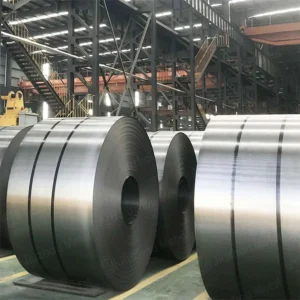
- Oriented grain arrangement: The cold rolling process creates an unobstructed magnetic flux path and reduces hysteresis loss.
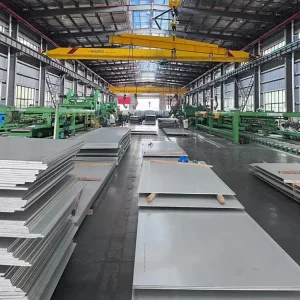
- Precise thickness control: Thin sheets ranging from 0.23 mm to 0.35 mm further cut energy waste.

II. How Performance Advantages Translate into Practical Value
Inside transformer cores, high-quality ဆီလီကွန်သံမဏိ sheets push equipment efficiency above 97%:
- Outstanding energy-saving performance: Cuts no-load loss by 60% compared with regular steel.
- Low noise operation: Magnetostriction coefficient as low as 0.5×10⁻⁶, resulting in quiet operation.
- Reliable mechanical strength: Tensile strength up to 400 MPa without cracking during stamping.
III. Overlooked Hidden Properties During Procurement
These indicators directly determine service life:
- Coating category: Inorganic coatings withstand temperatures up to 800 °C, while organic coatings only tolerate 200 °C.
- Aging performance: Core loss may rise by 3%–5% after six months of storage.
- Stacking factor: A minimum stacking factor of 95% is required for smooth magnetic flux transmission.





 English
  Japanese
  Korean
  French
  German
  Spanish
  Portuguese
  Russian
  Arabic
  Italian
  Turkish
  Dutch
Dutch  Polish
  Swedish
  Danish
  Norwegian
  Finnish
  Greek
Greek  Hungarian
  Czech
Czech  Romanian
  Bulgarian
  Slovenian
  Croatian
  Slovak
  Malay
Malay  Indonesian
  Thai
Thai  Vietnamese
  Myanmar
  Khmer
Khmer  Lao
Lao  Tagalog
  Hindi
Hindi  Bengali
  Urdu
Urdu  Nepali
  Sinhala
  Hebrew
  Ukrainian
  Serbian
  Icelandic
  Swahili