
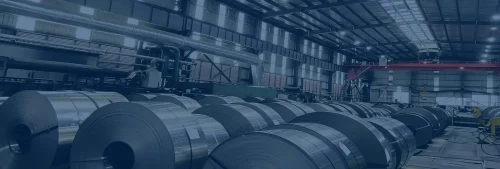
What is the most difficult production process of transformer steel
Transformer steel sits at the heart of every electrical grid. It carries magnetic flux with very low loss. Yet making this steel is far harder than it looks. The most difficult production process is not melting or casting. Instead, it is the secondary recrystallization step. This step controls grain orientation in the final sheet. Without it, the steel cannot meet strict magnetic standards. For many mills, this single stage decides whether a batch becomes premium product or scrap.
Why Secondary Recrystallization Matters
Grain orientation determines how easily magnetic domains move. In transformer steel, ideal grains align along the rolling direction. This alignment reduces core loss and raises permeability. However, normal grain growth cannot produce such perfect alignment. Therefore, producers rely on secondary recrystallization. This process allows only a few grains to grow very large. Those grains consume nearby smaller ones. The result is a sharp cube-on-edge texture. That texture is the foundation of high-efficiency transformer cores.
The Role of Inhibitors in Grain Control
To make secondary recrystallization work, mills add tiny amounts of inhibitor elements. Common choices include aluminum, nitrogen, and sulfur. These elements form fine precipitates during hot rolling. The precipitates pin grain boundaries. Pinning stops normal grain growth at low temperatures. Later, at higher temperatures, the precipitates dissolve or coarsen. Then, only the best-oriented grains break free and grow. Balancing this pinning and release is extremely delicate. A small change in chemistry can ruin the whole batch.
Tight Control of Temperature and Atmosphere
Heat treatment drives secondary recrystallization. The steel passes through a high-temperature furnace. Temperatures often exceed 1,100 degrees Celsius. The atmosphere must stay very low in oxygen. Any oxidation can damage the surface and block grain growth. Moreover, the heating rate must be slow and steady. A fast ramp causes uneven grain growth. A slow ramp wastes energy and time. Producers also control dew point and hydrogen content. These factors affect inhibitor behavior and surface quality. Even a tiny drift can shift the final magnetic properties.
The Challenge of Consistent Quality
Scale makes this process harder. A single coil may weigh several tons. Every point along the coil must see the same conditions. But furnaces have hot and cold spots. Gas flow may not be uniform. As a result, some sections may develop poor texture. Others may show abnormal grain growth. Mills use advanced sensors and models to reduce this risk. Still, operators must adjust recipes for each grade. That need for constant tuning makes secondary recrystallization the hardest step. It combines metallurgy, chemistry, and thermal engineering in one narrow window.
Why Other Steps Are Less Demanding
Melting and casting are important, but they are more forgiving. Continuous casting can handle minor variations. Hot rolling also has some flexibility. Cold rolling reduces thickness with good control. Even coating and slitting are fairly stable. Secondary recrystallization, by contrast, offers little room for error. Once grains grow the wrong way, the damage is permanent. You cannot reheat the steel to fix it. This irreversibility explains why the process is so difficult.
Economic and Technical Impact
The difficulty has real business effects. A failed batch wastes energy, labor, and raw material. It also delays delivery to transformer makers. For example, power utilities need consistent core loss values. If the steel misses the target, they must redesign the core. That adds cost and time. Therefore, mills invest heavily in research and control systems. They study inhibitor chemistry, furnace design, and grain growth models. Their goal is simple: make secondary recrystallization repeatable at scale. That goal remains one of the toughest tasks in steel production.
Conclusion: Value Through Precision
The most difficult production process for transformer steel is secondary recrystallization. It demands exact chemistry, tight thermal cycles, and uniform atmosphere. It also requires deep knowledge of grain growth and inhibitor particles. No other step combines so many critical variables. No other step has such permanent consequences. By mastering this process, producers unlock low core loss and high permeability. Those properties save energy across the power grid. In the end, the hardest step delivers the greatest value. It turns ordinary steel into a material that powers modern life.





 English
  Japanese
  Korean
  French
  German
  Spanish
  Portuguese
  Russian
  Arabic
  Italian
  Turkish
  Dutch
Dutch  Polish
  Swedish
  Danish
  Norwegian
  Finnish
  Greek
Greek  Hungarian
  Czech
Czech  Romanian
  Bulgarian
  Slovenian
  Croatian
  Slovak
  Malay
Malay  Indonesian
  Thai
Thai  Vietnamese
  Myanmar
  Khmer
Khmer  Lao
Lao  Tagalog
  Hindi
Hindi  Bengali
  Urdu
Urdu  Nepali
  Sinhala
  Hebrew
  Ukrainian
  Serbian
  Icelandic
  Swahili